
How to Calculate Your Portfolio’s Average Cost
Learn how to calculate your portfolio’s average cost per share: add up every dollar you invested, including fees, then divide by the total shares owned.
Learn how to calculate your portfolio’s average cost per share: add up every dollar you invested, including fees, then divide by the total shares owned.

Dollar-cost averaging vs lump-sum investing: lump sum wins on average historically, while DCA lowers timing risk and eases the emotions. See which fits you.
Learn how to calculate return on investment with the ROI formula, step-by-step math, worked examples, and the one limitation you should know.
ROI vs annualized return: total ROI is your whole-period gain, while annualized return (CAGR) turns it into a yearly rate so you can compare investments fairly.
What is a good ROI? It depends on risk, asset, and time. A common benchmark is the S&P 500 near 10 percent a year before inflation over the long run.
Learn how to calculate the future value of your savings with the plain FV formula, a worked example, and a 30-year projection table you can follow.

How often should interest compound? More frequent compounding, daily over monthly, lifts your effective yield, but the gains shrink toward a fixed limit.
APR vs APY explained simply: APR is the plain yearly rate for loans and credit, while APY includes compounding for savings, so APY is always the higher number.
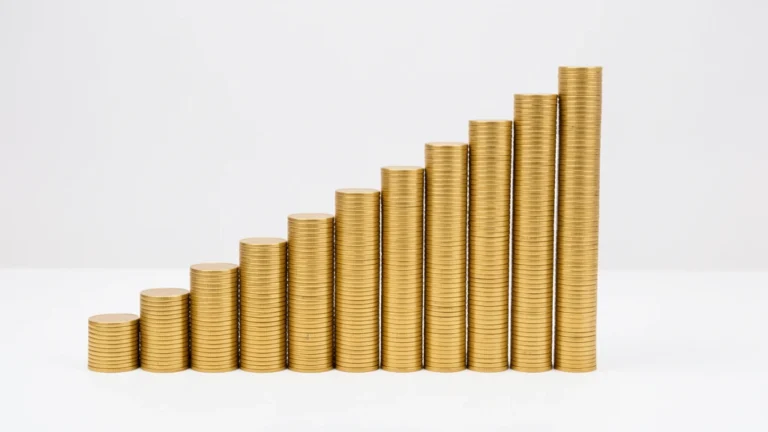
Compound vs simple interest: simple grows on principal alone in a straight line, while compound grows on principal plus interest and speeds up. See the gap.

The Rule of 72 is a mental shortcut: divide 72 by your rate of return to estimate the years to double your money. At 8 percent, about 9 years. See the math.