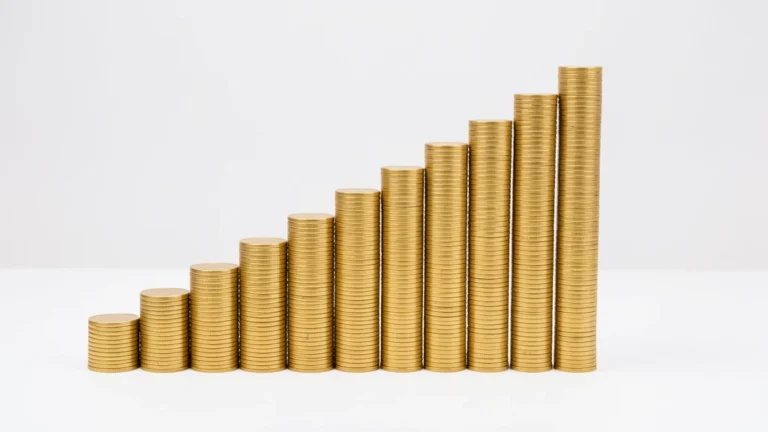
Simple interest is calculated only on your original principal, so it grows in a straight line by the same amount every period. Compound interest is calculated on your principal plus the interest already added, so it grows faster and faster over time. That single difference means compounding works in your favor when you save or invest, and against you when you borrow.
Simple interest only ever charges or pays on the starting amount, producing steady, straight-line growth that is easy to predict. Compound interest pays or charges interest on the growing balance, so the curve steepens the longer money sits. Over short periods the two look almost identical, but over years and decades compound pulls far ahead. When you are saving or investing, you want compound working for you. When you are borrowing, compound is the version that costs you more, so shorter terms and extra payments matter.
The Core Difference in Plain Terms
Both methods answer the same question, how much interest is added to a balance, but they measure that balance differently.
Simple interest is figured on the principal alone for the entire life of the loan or deposit. If you put down a fixed amount, every interest charge is based on that same starting figure, no matter how much interest has already piled up. The result is a flat, even climb: the balance rises by the exact same dollar amount each period.
Compound interest is figured on the principal plus all the interest that has already been added. Once interest is credited, it becomes part of the balance and starts earning interest of its own. This is often described as earning interest on your interest, and it is why the U.S. Securities and Exchange Commission calls compounding one of the most powerful forces behind long-term growth. Because the base keeps expanding, each period adds a little more than the one before, and the balance follows an upward curve instead of a straight line.
The gap is invisible at the start. In the first period, both methods charge interest on the same principal, so they produce identical numbers. The divergence only appears once interest starts earning interest, and it widens with every period that follows.
The Formulas and Growth Shapes Side by Side
The two formulas look similar, but the small structural difference drives everything. The table below lines them up so you can see where they split.
| Attribute | Simple Interest | Compound Interest |
|---|---|---|
| Formula | Interest = P x r x t | Balance = P x (1 + r/n) raised to (n x t) |
| What it charges on | Original principal only | Principal plus accumulated interest |
| Growth shape | Straight line, equal steps | Upward curve, steepening over time |
| Where you see it | Many auto loans, some personal loans, short-term notes | Savings accounts, most credit cards, investments, mortgages |
| Effect over time | Predictable and slower | Accelerates the longer money is left |
In both formulas, P is the principal, r is the annual rate as a decimal, and t is the number of years. In the compound formula, n is the number of times interest is added per year. Notice that neither method is inherently good or bad. Compounding is the same math whether it is building your savings or inflating your debt; the direction of benefit depends entirely on which side of the transaction you are on.
A Worked Example: $10,000 at 6% for 10 Years
Numbers make the difference concrete. Imagine you place $10,000 at a 6 percent annual rate for 10 years. Under simple interest you earn a flat $600 each year, because 6 percent of the original $10,000 never changes. Under compound interest that compounds once a year, each year’s 6 percent is figured on a slightly larger balance, so the yearly gain keeps rising.
| End of Year | Simple Interest Balance | Compound Interest Balance | Gap |
|---|---|---|---|
| Year 1 | $10,600 | $10,600 | $0 |
| Year 3 | $11,800 | $11,910 | $110 |
| Year 5 | $13,000 | $13,382 | $382 |
| Year 10 | $16,000 | $17,908 | $1,908 |
At the end of year one the two are identical, both landing at $10,600. By year five compound is ahead by about $382. By year ten the simple balance reaches $16,000 in total interest earned of $6,000, while the compound balance reaches roughly $17,908, an interest gain of about $7,908. That is nearly $1,908 more from the same deposit, the same rate, and the same 10 years, purely because the interest was allowed to earn interest.
Stretch the timeline further and the gap grows dramatically, because the curve keeps steepening. This is the mechanism behind long-term wealth building, and you can test any principal, rate, and term with our compound interest calculator to see the curve for your own numbers.
When Compounding Helps You and When It Hurts
The exact same force that grows a nest egg also grows a debt. Which outcome you get depends on whether you are the one earning the interest or the one paying it.
When you save or invest, compounding is your ally. Money left in a compounding account, a retirement fund, or a reinvested investment builds on itself, and the earlier you start, the more periods it has to snowball. A modest amount left alone for decades can outgrow a much larger amount added late, simply because it had more time to compound.
When you borrow, compounding is the version that costs you. Most credit cards compound interest, often daily, on any balance you carry, which means unpaid interest starts accruing its own interest. The Consumer Financial Protection Bureau explains that card issuers commonly apply a daily periodic rate to your balance, so a balance you do not pay off quietly grows faster than a flat simple-interest charge would. That is why paying more than the minimum, and paying sooner, saves disproportionately on compounding debt.
Why Compounding Frequency Matters
With compound interest, how often interest is added changes the result. The more frequently a balance compounds, the more often interest starts earning interest, and the higher the effective return or cost. The same 6 percent rate produces a slightly larger balance when compounded monthly than annually, and larger still when compounded daily.
This is exactly why savings products are often advertised with an annual percentage yield rather than a plain rate, because the yield already bakes in the effect of compounding frequency. If you want to understand how a stated rate turns into a real yearly figure, our companion guide on APR vs APY breaks down how frequency changes the number you actually earn or pay. For a deeper look at the mechanics of the snowball itself, see our explainer on how compound interest works.
How to Use This When Saving or Borrowing
The practical takeaway is simple. When money is working for you, favor accounts and investments that compound, start as early as you can, and leave the interest in place so it can keep compounding. When money is working against you, treat compounding debt as urgent, because time makes it worse, not better.
If your loan or note uses simple interest, such as many auto loans, you can model the flat interest cost with our dedicated simple interest calculator. If you are projecting savings, investment growth, or a compounding debt, the compound tool will show you the curve. Running both side by side for the same principal and rate is the fastest way to feel how far the two methods drift apart over time.
Want to see the exact gap for your own numbers? Plug your principal, rate, term, and compounding frequency into our Compound Interest Calculator to watch the curve build, then compare it against a flat simple-interest result to see how much compounding adds.
FAQs About Compound and Simple Interest
What Is the Main Difference Between Simple and Compound Interest?
Simple interest is calculated only on the original principal, so it adds the same amount each period and grows in a straight line. Compound interest is calculated on the principal plus interest already earned, so the balance grows by a larger amount each period and follows an upward curve.
Which Is Better, Simple or Compound Interest?
It depends on your role. If you are saving or investing, compound interest is better because it earns interest on your interest and grows faster over time. If you are borrowing, simple interest is usually cheaper, because compound interest charges interest on unpaid interest and costs you more.
How Do You Calculate Simple Interest?
Multiply the principal by the annual rate as a decimal by the number of years, or P x r x t. For example, $10,000 at 6 percent for 10 years earns $10,000 x 0.06 x 10, which is $6,000 in total interest, added evenly across the term.
How Do You Calculate Compound Interest?
Use Balance = P x (1 + r/n) raised to the power of n times t, where P is principal, r is the annual rate, n is how many times per year it compounds, and t is the number of years. Subtract the principal from the balance to find the interest earned.
Does a Higher Compounding Frequency Earn More?
Yes. The more often interest is added, the more often it starts earning its own interest, so daily compounding produces a slightly larger balance than monthly, and monthly beats annual, even at the same stated rate. The annual percentage yield captures this frequency effect in one number.
Do Credit Cards Use Simple or Compound Interest?
Most credit cards use compound interest, and many compound daily on the balance you carry. That means unpaid interest begins accruing its own interest, so a revolving balance can grow faster than a flat simple-interest charge would. Paying more than the minimum reduces this compounding cost.
Why Do Simple and Compound Interest Look the Same at First?
In the first period, both methods charge interest on the same starting principal, so the numbers match exactly. The gap only appears once interest is added to the balance and begins earning interest of its own, and it widens with every period that follows.
Sources
Authoritative Sources Used in This Article
- U.S. Securities and Exchange Commission (Investor.gov): Compound Interest Calculator
- U.S. Securities and Exchange Commission (Investor.gov): Compound Interest Glossary Entry
- U.S. Securities and Exchange Commission (Investor.gov): Save and Invest
- Consumer Financial Protection Bureau: How Does My Credit Card Company Calculate the Amount of Interest I Owe?
This article is for general educational purposes only and is not financial, tax, or investment advice. Rates, compounding terms, and product features vary, so confirm the details of any account or loan with the provider before acting. Content reviewed for accuracy by Prof. Dr. Khalil Mudassar, PhD. Last updated September 10, 2026.
Author

Shakeel Muzaffar is the Founder and Editor-in-Chief of MultiCalculators.com, bringing over 15 years of experience in digital publishing, product strategy, and online tool development. He leads the platform's editorial vision, ensuring every calculator meets strict standards for accuracy, usability, and real-world value. Shakeel personally oversees content quality, formula verification workflows, and the platform's commitment to publishing tools that are genuinely useful for students, professionals, and everyday users worldwide.