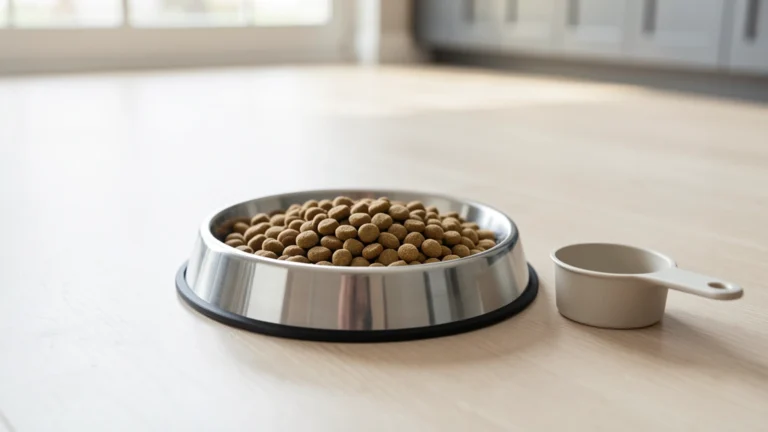
The number on the dog food bag is a guess, not a rule made just for your dog. Your dog’s real portion depends on their weight, age, activity level, and a few other factors working together. This guide walks through what actually changes a feeding amount, how to read a food bag chart the right way, and how to spot the early signs of over- or underfeeding.
There is no single feeding amount that fits every dog. The right portion depends on your dog’s current weight, age, activity level, breed size, and whether they are spayed or neutered. Bag charts are a starting point, not a guarantee, so you still need to watch your dog’s body shape and energy over time. Treats should stay under about 10 percent of daily calories. Puppies and senior dogs almost always need a different plan than a healthy adult. For a personalized starting estimate, try the Dog Nutrition Calculator, then confirm any changes with your veterinarian.
Why Feeding Amount Is Not One Size Fits All
Two dogs of the same breed can need very different amounts of food. Body size is the biggest factor, since a larger dog simply needs more energy to fuel a bigger body.
Age matters too. Growing puppies burn energy quickly, while many senior dogs slow down and need fewer calories to avoid gaining weight.
Activity level shifts things further. A dog that runs and plays for hours needs more food than a dog that naps most of the day.
Breed also plays a role, since some breeds are naturally more energetic or have a faster metabolism than others. Finally, spaying or neutering can lower a dog’s calorie needs, because the surgery tends to reduce metabolic rate slightly in many dogs.
Because so many factors interact at once, no single chart can capture your dog exactly. That is why feeding amounts always need some personal adjustment.
How to Read the Feeding Guidelines on the Bag
Every dog food bag has a chart, usually organized by your dog’s weight. Find the row closest to your dog’s current weight and read across for the daily amount.
That number is a starting point, not a fixed prescription. Bag charts are built from averages across many dogs, so your dog can easily need more or less.
Most charts also assume a fairly active adult dog. If your dog is less active, older, or already overweight, the listed amount is often too high for their real needs.
The daily amount on the bag is usually meant to be split across two or more meals, not fed all at once. Splitting meals helps with digestion and can reduce begging between feedings.
Use the bag chart to get close, then adjust based on how your dog actually looks and feels over the following weeks. Your veterinarian can help you fine-tune the amount at a regular checkup.
Signs You Might Be Overfeeding Your Dog
Weight gain is the clearest sign of overfeeding. You should be able to feel your dog’s ribs with light pressure, without deep digging or heavy padding over them.
From above, a healthy dog usually has a visible waist that narrows behind the ribs. If that waist disappears and the body looks more oval, extra weight may be building up.
Low energy can also point to overfeeding. A dog carrying extra weight often tires faster on walks and seems less eager to play.
If you notice these signs, do not cut food drastically on your own. Talk to your veterinarian about a safe, gradual plan to adjust your dog’s portions.
Signs You Might Be Underfeeding Your Dog
Underfeeding can be harder to notice than overfeeding, but it still shows up in the body. Ribs, spine, or hip bones that are clearly visible from a distance are a common warning sign.
A tucked-up belly with very little muscle or fat covering the ribs can also point to too little food. This look is different from a normal, athletic waistline.
Oddly enough, low energy shows up here too. A dog that is not getting enough food may seem tired, less playful, or slower to recover after activity.
If your dog seems underweight, do not simply pile on more food without guidance. A vet visit can rule out a medical cause and confirm a safe way to add calories back.
Treats and Calorie Budgets: The 10 Percent Rule
Treats are a normal part of training and bonding, but they still count as calories. A common guideline is to keep treats under about 10 percent of your dog’s total daily calories.
The other roughly 90 percent should come from a complete and balanced dog food. That balance is what supplies the vitamins and minerals your dog needs, which most treats do not fully provide.
Small, low-calorie treats work well for frequent training sessions. Breaking larger treats into smaller pieces can stretch a reward further without adding extra calories.
If your dog gets a lot of treats during training, consider reducing their regular meal slightly that day. This helps keep the overall calorie total on track.
Puppies Need a Different Feeding Plan
Puppies grow fast, and growing takes a lot of energy. Most puppies need more calories per pound of body weight than a full-grown adult dog.
Puppies also do better with smaller, more frequent meals. Very young puppies often eat three or four times a day, tapering to two meals as they approach adulthood.
Large-breed puppies need extra care, since growing too fast can strain developing joints. A puppy-specific or large-breed puppy food is usually the safer choice for these dogs.
If you are trying to plan ahead for a growing puppy, our guide on the puppy weight predictor explains how vets estimate adult size. Once you have a sense of that adult weight, the Dog Nutrition Calculator can help you plan feeding amounts as your puppy grows.
Senior Dogs Need Adjustments Too
As dogs age, many become less active and burn fewer calories each day. Feeding the same amount as their younger years can quietly lead to weight gain.
Some senior dogs lose muscle or appetite instead, which can call for a different kind of adjustment. This is one reason senior dogs benefit from more frequent veterinary checkups.
Breed size affects when a dog is considered a senior, since larger breeds tend to age faster than smaller ones. Our sibling article on dog years to human years by breed size explains that difference in more detail.
A senior-formula food, adjusted portions, or a vet-recommended supplement can all play a role. Any change like this should be guided by your veterinarian rather than guesswork.
Ready for a personalized starting point? The Dog Nutrition Calculator uses your dog’s weight, age, and activity level to estimate a daily feeding amount, so you are not just guessing from the bag chart alone.
Using the Dog Nutrition Calculator as Your Starting Point
Bag charts and general rules are useful, but they are built for an average dog, not your specific dog. The Dog Nutrition Calculator takes your dog’s own numbers and turns them into a clearer daily estimate.
You enter details like weight, age, and activity level, and the calculator gives you a starting portion size. It is designed to save you from doing the math by hand every time your dog’s weight or routine changes.
Treat the result as a smart starting point, then watch your dog’s body condition and energy over the following weeks. Bring any concerns, and the estimate itself, to your veterinarian at your dog’s next checkup.
Frequently Asked Questions About Feeding Your Dog
How Much Should I Feed My Dog Each Day?
The right amount depends on your dog’s weight, age, activity level, and breed. Start with the feeding chart on your dog’s food bag, then adjust based on their body condition over time. The Dog Nutrition Calculator can give you a more personalized starting estimate.
Are the Feeding Charts on Dog Food Bags Accurate?
Bag charts are a reasonable starting point, but they are based on averages across many dogs. Your dog’s real needs can be higher or lower depending on activity level, metabolism, and whether they are spayed or neutered. Always adjust based on how your dog actually looks and feels.
What Are the Signs of Overfeeding a Dog?
Common signs include steady weight gain, a disappearing waistline, and ribs that are hard to feel under a layer of fat. Overweight dogs may also tire more quickly on walks. If you notice these signs, ask your veterinarian about a safe way to adjust portions.
What Are the Signs of Underfeeding a Dog?
Underfeeding often shows up as visible ribs, spine, or hip bones, along with a tucked-up belly. Low energy can appear here too, since a dog without enough calories may seem tired or slow to recover from play. A vet visit can help find the cause.
How Many Treats Can I Give My Dog Per Day?
A common guideline is to keep treats under about 10 percent of your dog’s total daily calories. The rest should come from a complete and balanced dog food. Small, low-calorie treats work well for frequent training without adding too many extra calories.
Do Puppies Need to Eat More Than Adult Dogs?
Yes, most puppies need more calories per pound of body weight than adult dogs because growth takes a lot of energy. Puppies also typically eat smaller meals more often, tapering down to two meals a day as they reach adulthood.
Do Senior Dogs Need Less Food?
Many senior dogs become less active and need fewer calories to avoid gaining weight. Others lose muscle or appetite and may need a different kind of adjustment instead. Because needs vary, senior dogs benefit from regular veterinary checkups to guide any feeding changes.
Sources
Authoritative Sources Used in This Article
This article is for general education only, not veterinary or medical advice. Every pet is different, so always confirm feeding amounts, medications, and health decisions with a licensed veterinarian. Reviewed for accuracy by Prof. Dr. Khalil Mudassar, PhD. Last updated September 15, 2026.
Author

Shakeel Muzaffar is the Founder and Editor-in-Chief of MultiCalculators.com, bringing over 15 years of experience in digital publishing, product strategy, and online tool development. He leads the platform's editorial vision, ensuring every calculator meets strict standards for accuracy, usability, and real-world value. Shakeel personally oversees content quality, formula verification workflows, and the platform's commitment to publishing tools that are genuinely useful for students, professionals, and everyday users worldwide.