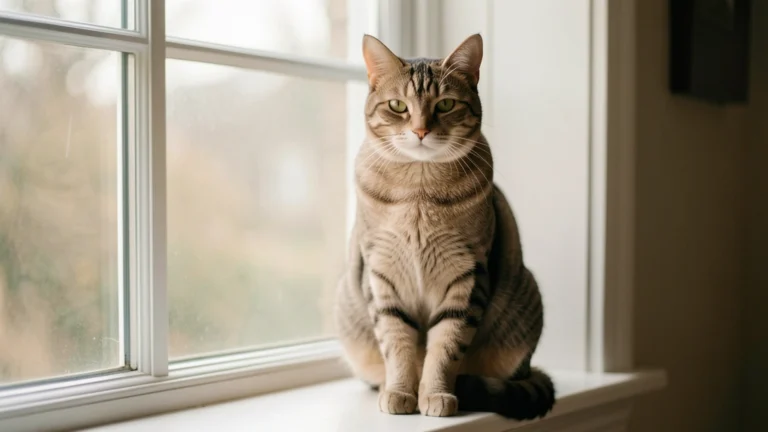
Your cat is not aging at the same steady pace you are. A kitten becomes a teenager in a matter of months, and a 1-year-old cat is already roughly a 15-year-old in human terms. After that first fast sprint, cat aging slows down a lot, settling into a much gentler climb. This guide breaks down the real cat aging curve, gives you a full age chart, and explains why regular vet visits matter more as your cat gets older.
A 1-year-old cat is about 15 human years old, and a 2-year-old cat is about 24. After age 2, most cats age roughly 4 human years for every additional cat year. This is much faster than the old “multiply by 7” myth, and it is very different from how dogs age. Start by calculating your cat’s exact age in years with our Age Calculator, then apply the conversion table below. These figures are general estimates, not a medical assessment, so always ask your veterinarian about your specific cat.
Why Cats Age So Fast at First
Kittens grow up at a startling pace. A cat reaches most of its physical growth within the first year of life, which is why that single year covers so much aging ground.
By around 6 months old, a kitten is roughly equal to a 10-year-old child in development. Bones, teeth, and muscles are still forming fast, and the body is racing toward adult size.
By the first birthday, most cats are physically close to adult humans in their mid teens. They can reproduce, they have most of their adult teeth, and their growth plates are nearly finished.
The second year adds more maturity, bringing a 2-year-old cat to roughly 24 human years. After that, the pace changes completely. Instead of leaping years at a time, aging settles into a steady, slower climb of about 4 human years for each cat year that passes.
This two-phase pattern, a fast sprint early and a slow climb later, is the real shape of cat aging. It is very different from the flat “1 year equals 7 years” rule many people still repeat.
The Cat Age Conversion Table
Use this table as a general guide, not an exact science. Individual cats vary based on breed, health, and lifestyle, but this pattern holds true for most house cats.
| Cat’s Age | Human Years Equivalent |
|---|---|
| 6 months | About 10 |
| 1 year | About 15 |
| 2 years | About 24 |
| 3 years | About 28 |
| 4 years | About 32 |
| 5 years | About 36 |
| 7 years | About 44 |
| 10 years | About 56 |
| 12 years | About 64 |
| 15 years | About 76 |
| 18 years | About 88 |
| 20 years | About 96 |
Notice how the jump from 1 to 2 years is huge, roughly 9 human years in a single cat year. After age 2, each extra cat year adds only about 4 human years. That slower, steadier pace continues for the rest of a cat’s life.
Why the “Multiply by 7” Rule Fails for Cats
The old rule says one cat year equals seven human years, no matter the cat’s age. It is easy to remember, but it does not match how cats actually grow.
Under that rule, a 1-year-old cat would only be 7 years old, which does not match the physical and reproductive maturity a 1-year-old cat has already reached. The flat rule badly understates how fast kittens mature.
It also gets things wrong at the other end. A flat multiplier keeps adding 7 years for every cat year, which makes very old cats seem far older in human terms than they really are.
The two-phase pattern in the table above, fast early years and a slower climb later, is much closer to how veterinary researchers actually describe cat development. Think of it as a curve, not a straight line.
Start by calculating your cat’s exact age in years and months with our Age Calculator, then match that number to the closest row in the table above for a general human-years estimate.
Indoor vs Outdoor Cat Lifespan
Where a cat spends its life has a big effect on how long that life tends to be. Indoor cats generally live noticeably longer than cats that roam outdoors.
Indoor cats are commonly reported to live somewhere in the range of 13 to 17 years on average, and many live even longer with good care. They are shielded from traffic, predators, fights with other animals, and many contagious diseases.
Outdoor cats face a much rougher set of risks. Cars, other animals, extreme weather, poisoning, and disease spread from other cats all shorten the average outdoor lifespan, sometimes dramatically.
This does not mean every outdoor cat has a short life, or every indoor cat lives to old age. It means the odds shift heavily in an indoor cat’s favor, which matters when you think about your cat’s long-term care and the pace of the aging curve above.
Signs Your Cat Is Entering Its Senior Years
Most veterinarians consider a cat a senior somewhere around 10 to 11 years old, with cats past 15 often called geriatric. Watch for these common changes as your cat gets older.
- Slower movement: less jumping onto counters or furniture, or hesitation before a jump.
- Coat changes: a duller coat, more shedding, or gray hairs around the face.
- Weight changes: gradual weight loss or gain that was not there before.
- Sleeping more: longer naps and less playful energy during the day.
- Litter box changes: straining, accidents outside the box, or drinking more water.
- Dental issues: bad breath, drooling, or trouble chewing dry food.
None of these signs alone means something is seriously wrong. But noticing a pattern of changes is a good reason to schedule a vet visit rather than waiting.
Why Cats Hide Illness So Well
Cats are instinctively good at masking pain and sickness. In the wild, looking weak makes an animal a target for predators, and that instinct did not disappear when cats moved indoors.
This means a cat can be dealing with real discomfort, like arthritis or dental pain, and still look mostly normal to you at home. Small changes in behavior are often the only visible clue.
As cats move through the aging curve described earlier, this hidden-illness tendency becomes more important, not less. Health problems become more common in the senior years, at the exact time they are hardest to spot from the outside.
That gap between what you can see and what may actually be happening is the main reason regular checkups matter so much for older cats. A vet can catch changes in weight, teeth, organ function, or joints long before they become obvious at home.
Caring for a Senior Cat
Senior cats often benefit from small adjustments at home, alongside more frequent vet visits. These changes are simple but can make a real difference in comfort.
Softer bedding, ramps or steps to favorite spots, and easy-access litter boxes can help a cat with stiff joints. Some senior cats also do better with age-appropriate food, though any diet change is worth discussing with your vet first.
If your cat is on any medication as it ages, dosing should always come from your veterinarian, based on your cat’s exact weight and health. Our sibling guide on understanding pet medication dosage explains why that number is never something to estimate on your own.
If you also share your home with a dog, keep in mind that dogs age on a very different curve than cats. Our dog years to human years guide breaks down how breed size changes that pattern.
Want to know exactly how old your cat is today? Calculate the precise age in years and months with our Age Calculator, then match that number to the cat aging table above for a human-years estimate.
Frequently Asked Questions About Cat Age in Human Years
How Old Is a 1-Year-Old Cat in Human Years?
A 1-year-old cat is roughly equal to a 15-year-old human. This is because cats grow and mature very quickly in their first year of life, reaching near-adult size and reproductive maturity. It is much faster than a flat 7-years-per-year rule would suggest.
How Do You Calculate a Cat’s Age in Human Years?
Start with your cat’s exact age, then use a two-phase estimate instead of a flat multiplier. A 1-year-old cat is about 15 human years, a 2-year-old is about 24, and each additional cat year after that adds roughly 4 more human years. A conversion table makes this easy to look up.
Do Indoor Cats Live Longer Than Outdoor Cats?
Yes, generally. Indoor cats are commonly reported to live around 13 to 17 years on average, protected from traffic, predators, and many outdoor diseases. Outdoor cats face more risks, which often shortens their average lifespan compared to cats kept mostly indoors.
At What Age Is a Cat Considered a Senior?
Most veterinarians consider cats senior starting around 10 to 11 years old, with cats past 15 sometimes described as geriatric. These are general categories, and individual cats age at somewhat different rates depending on health, breed, and lifestyle.
Why Do Cats Hide Signs of Illness or Aging?
Cats have a strong instinct to mask pain and weakness, a trait that helped protect their wild ancestors from predators. This means a cat can be uncomfortable or sick while still appearing mostly normal at home. Subtle behavior changes are often the only early clue.
How Often Should a Senior Cat See the Vet?
Many veterinarians recommend twice-yearly checkups for senior cats, compared to about once a year for younger healthy adults. More frequent visits help catch age-related changes early, since cats are good at hiding illness. Ask your vet what schedule fits your specific cat.
Is the “1 Cat Year Equals 7 Human Years” Rule Accurate?
No. That flat rule does not match how cats actually age. Cats mature very fast in their first two years, then age more slowly and steadily afterward, so a single fixed multiplier understates young cats and can overstate very old ones.
Sources
Authoritative Sources Used in This Article
This article is for general education only, not veterinary or medical advice. Every pet is different, so always confirm feeding amounts, medications, and health decisions with a licensed veterinarian. Reviewed for accuracy by Prof. Dr. Khalil Mudassar, PhD. Last updated September 15, 2026.
Author

Shakeel Muzaffar is the Founder and Editor-in-Chief of MultiCalculators.com, bringing over 15 years of experience in digital publishing, product strategy, and online tool development. He leads the platform's editorial vision, ensuring every calculator meets strict standards for accuracy, usability, and real-world value. Shakeel personally oversees content quality, formula verification workflows, and the platform's commitment to publishing tools that are genuinely useful for students, professionals, and everyday users worldwide.