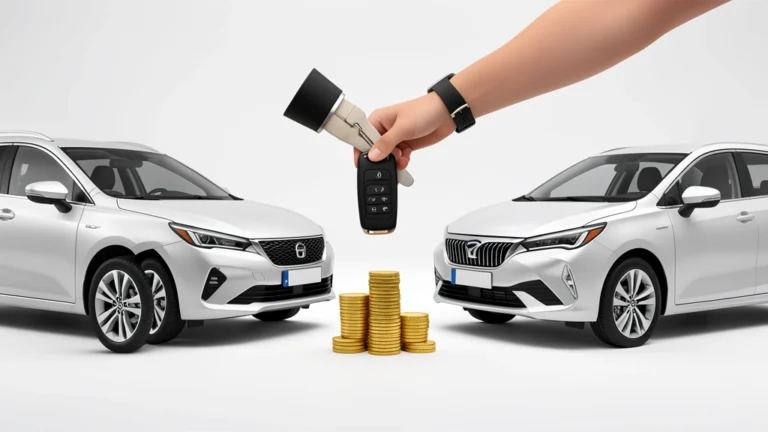
A trade-in affects your car loan by lowering the amount you have to finance. The dealer applies your trade-in value as a credit toward the new car, much like a down payment, so your loan balance and monthly payment come down. The catch is any money you still owe on the old car. When the car is worth more than you owe, that positive equity shrinks your new loan. When you owe more than it is worth, that negative equity often gets rolled into the new loan and makes it bigger.
- A trade-in acts like a down payment: its value is credited toward the new car and lowers the amount you finance.
- If your old car is paid off, the full trade-in value reduces your new loan balance and monthly payment.
- Positive equity is the credit left over after the trade-in value pays off what you still owe on the old loan.
- Negative equity means you owe more than the car is worth, and it can be rolled into the new loan, raising your balance and payment.
- Rolling negative equity forward means paying interest on a car you no longer drive.
How Does a Trade-In Affect Your Car Loan?
When you trade in a car, the dealer assigns it a trade-in value and applies that amount toward the purchase of your next vehicle. If the old car is fully paid off, the whole trade-in value works like a down payment. It comes straight off the price the lender has to finance, which lowers both your loan balance and the monthly payment that flows from it.
The picture changes the moment you still owe money on the old car. Before the trade-in value can help you, it first has to clear the remaining balance on your current loan, known as your payoff amount. Only the part of the trade-in value that is left after that payoff becomes a credit toward the new car. What happens next depends entirely on whether that leftover is a positive number or a negative one. You can see the effect on any purchase by running the numbers through the auto loan car payment calculator with and without a trade-in credit.
So the short answer is that a trade-in usually reduces your car loan, but not always. It reduces the loan when your car is worth more than you owe, and it can quietly increase the loan when you owe more than the car is worth.
Positive vs Negative Equity: The One Thing That Changes Everything
Equity is simply the gap between what your car is worth as a trade-in and what you still owe on it. That single gap decides whether a trade-in helps or hurts your next loan, so it is worth getting clear before you ever walk into a dealership.
Positive equity means the trade-in value is higher than your payoff amount. Say the dealer values your car at 12,000 dollars and you owe 8,000 dollars. The first 8,000 clears your old loan, and the remaining 4,000 becomes a credit toward the new car. That 4,000 is real money working in your favor, exactly like a cash down payment.
Negative equity, sometimes called being upside down or underwater, means you owe more than the car is worth. If that same car is valued at 12,000 dollars but you owe 15,000 dollars, the trade-in cannot cover the loan. You are 3,000 dollars short, and that shortfall does not disappear. The Consumer Financial Protection Bureau notes that dealers will often offer to roll the amount you still owe into your new loan, which increases how much you borrow. The chart below shows how the same trade-in value produces a credit in one case and a shortfall in the other.
This is why two people trading in the identical car can walk away with very different loans. The trade-in value is only half of the story. What you still owe is the other half, and together they decide whether your next loan starts smaller or larger.
Worked Example: The Same Trade-In, Two Different Loans
Numbers make the difference concrete. The table below buys the same 30,000 dollar car and trades in the same vehicle valued at 12,000 dollars. The only thing that changes is the payoff on the old loan, and that alone moves the amount financed and the monthly payment. The payments assume a 60 month term at 7 percent APR and are rounded so the arithmetic is easy to follow.
| Item | Positive Equity Scenario | Negative Equity Scenario |
|---|---|---|
| New car price | 30,000 | 30,000 |
| Trade-in value | 12,000 | 12,000 |
| Loan payoff on old car | 8,000 | 15,000 |
| Equity in the trade (value minus payoff) | plus 4,000 (down payment) | minus 3,000 (rolled in) |
| Amount financed | 26,000 | 33,000 |
| Monthly payment | about 515 | about 653 |
The positive equity buyer finances 26,000 dollars because the leftover 4,000 dollar credit came off the price. The negative equity buyer finances 33,000 dollars because the 3,000 dollar shortfall got added on top of the car price. That is a 7,000 dollar swing in the amount borrowed on the very same car, and it lands on every monthly payment. The chart below compares the two.
What Happens When You Roll Negative Equity Forward
Rolling over a car loan sounds harmless because the dealer folds the shortfall into one tidy monthly payment. The cost is easy to miss. You are now borrowing money to pay off a car you no longer own, and you pay interest on that old balance for the full length of the new loan. In the example above, the extra 3,000 dollars adds roughly 138 dollars to every payment and more than 1,000 dollars in interest over five years.
There is a second risk. Starting a loan already underwater means the balance can stay higher than the car is worth for years, because new cars lose value quickly in the early months. If the car is totaled or stolen during that window, your insurance payout may not cover the loan, leaving you to pay the difference out of pocket. This is the exact gap that optional guaranteed asset protection, or GAP coverage, is designed to fill.
None of this means a trade-in with negative equity is always the wrong move. Sometimes you genuinely need a different vehicle. It does mean you should see the rolled-in amount as new debt rather than a rounding detail, and treat it the way you would any balance you are trying to clear. The same discipline that helps you knock out a card balance with the credit card payoff date calculator applies here: the faster you retire borrowed money, the less it costs you.
How to Get the Most From Your Trade-In
Whether your equity is positive or negative, a few steps put you in a stronger position before you sign anything.
Know Your Payoff Amount and Trade-In Value
Call your lender for the exact payoff figure, which can differ slightly from your last statement, and check independent pricing guides for a realistic trade-in value. The CFPB recommends comparing the two numbers yourself so you know whether you are bringing equity to the deal or a shortfall. Walking in with both figures removes the biggest source of dealership surprises.
Negotiate the Car Price Before the Trade
According to the Federal Trade Commission, you should settle the price of the new car before you bring up your trade-in, because blending the two makes it hard to tell whether either number is fair. Keep the purchase, the trade, and any financing as three separate conversations.
Consider Paying Down or Paying Off First
If you are close to even, paying the old loan down before you trade can flip a small shortfall into positive equity, or at least shrink the amount you roll forward. And if the goal is a smaller bill rather than a new car, our guide on how to lower your car payment covers options that do not involve a trade at all. Before you commit to any new loan, it also helps to confirm the payment fits your budget by checking how much car you can afford.
FAQs About Car Trade-Ins
Does a Trade-In Lower My Car Loan?
Usually, yes. The trade-in value is credited toward the new car like a down payment, which lowers the amount you finance and your monthly payment. It only fails to lower the loan when you owe more on the old car than it is worth.
What Is Negative Equity on a Trade-In?
Negative equity means you owe more on your current auto loan than the car is worth as a trade-in. For example, owing 15,000 dollars on a car valued at 12,000 dollars leaves 3,000 dollars of negative equity that the trade-in cannot cover.
Can I Trade In a Car I Still Owe Money On?
Yes. The dealer uses your trade-in value to pay off the remaining loan balance, called the payoff amount. Any value above the payoff becomes a credit toward the new car, and any shortfall below it has to be covered somehow.
What Happens to Negative Equity When I Trade In?
Dealers often roll the shortfall into your new loan, so you borrow the car price plus the old balance. This raises the amount financed and the monthly payment, and you pay interest on the old car for the life of the new loan.
Is It Better to Pay Off My Car Before Trading It In?
If you have negative equity, paying the loan down first shrinks or removes the shortfall you would otherwise roll forward. If you already have positive equity, you can trade in without paying it off and use the leftover value as a down payment.
How Do I Find My Car’s Trade-In Value and Payoff Amount?
Get the payoff amount directly from your lender, since it can differ from your statement balance. Estimate the trade-in value with independent pricing guides, then compare the two numbers to see whether you have positive or negative equity.
Does a Trade-In Count as a Down Payment?
Positive equity in a trade-in works just like a cash down payment, reducing the amount you finance. Negative equity does the opposite, adding to the amount financed, so a trade-in only counts as a down payment when the car is worth more than you owe.
Sources
Authoritative Sources Used in This Article
- Consumer Financial Protection Bureau, Should I trade in my car if it is not paid off (negative equity): consumerfinance.gov
- Consumer Financial Protection Bureau, What is a loan-to-value ratio in an auto loan: consumerfinance.gov
- Federal Trade Commission, Financing or Leasing a Car: consumer.ftc.gov
Educational note: This article is general information, not financial, tax, or legal advice. Trade-in values, payoff amounts, loan terms, and dealer practices vary by lender and by your situation. Confirm every figure on your written loan and purchase documents and speak with a licensed professional before you trade in a car or sign new financing. Reviewed for accuracy by Prof. Dr. Khalil Mudassar, PhD, as part of our editorial review process. Content last reviewed September 9, 2026.
Author

Shakeel Muzaffar is the Founder and Editor-in-Chief of MultiCalculators.com, bringing over 15 years of experience in digital publishing, product strategy, and online tool development. He leads the platform's editorial vision, ensuring every calculator meets strict standards for accuracy, usability, and real-world value. Shakeel personally oversees content quality, formula verification workflows, and the platform's commitment to publishing tools that are genuinely useful for students, professionals, and everyday users worldwide.