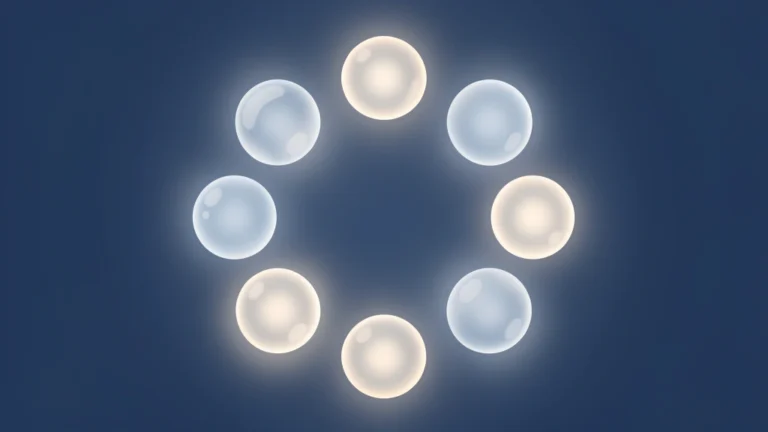
Your menstrual cycle is more than just the days you bleed. It is a monthly pattern made up of four distinct phases, each shaped by shifting hormones. Understanding those phases can help you make sense of energy dips, mood shifts, and other patterns you may notice through the month. This guide walks through each phase in general terms, using typical ranges rather than one-size-fits-all rules, since every body and every cycle is a little different.
A typical menstrual cycle has four phases: menstrual, follicular, ovulation, and luteal. The menstrual phase is when bleeding happens, usually in the first several days of the cycle. The follicular phase overlaps with it and continues until ovulation, when an egg is released around the middle of a typical cycle. The luteal phase then follows until the next period begins. Cycle length and phase timing vary a lot between people, and even from cycle to cycle for the same person, so these are general patterns, not fixed rules. This article is educational only and is not a diagnostic tool.
What the Menstrual Cycle Actually Is
The menstrual cycle is the monthly series of changes your body goes through to prepare for a possible pregnancy. It is counted from the first day of one period to the day before the next period starts.
A typical cycle runs somewhere between about 21 and 35 days. Doctors often use 28 days as a simple average example, not as a universal target every person should match.
Four phases make up this cycle: menstrual, follicular, ovulation, and luteal. Two of them actually overlap, since the menstrual phase happens during the early part of the follicular phase.
Each phase is shaped by rising and falling levels of a few key hormones. The main ones are estrogen, progesterone, follicle-stimulating hormone (FSH), and luteinizing hormone (LH). Together, they signal the ovaries and the uterus to change as the month goes on.
The Four Phases at a Glance
The table below lines up the four phases using a typical, average-length cycle as an illustrative example. Real timing shifts from person to person and cycle to cycle, so treat these as general reference points.
| Phase | Typical Timing (Varies) | General Hormone Pattern |
|---|---|---|
| Menstrual | Around day 1 to day 5 | Estrogen and progesterone are at their lowest point |
| Follicular | Day 1 through about day 13 | FSH rises, and estrogen builds as follicles develop |
| Ovulation | Around day 14 in a typical cycle | A surge in LH triggers the release of an egg |
| Luteal | About day 15 through day 28 | Progesterone rises, then both hormones drop if pregnancy does not occur |
Notice that the follicular phase actually starts on day one, the same day the period begins. The two phases overlap rather than following one another in a strict line.
Phase 1: The Menstrual Phase
The menstrual phase is when bleeding happens. It marks day one of the cycle and is usually the easiest phase to notice.
During this phase, the uterus sheds the lining it built up the cycle before. This happens because pregnancy did not occur, so estrogen and progesterone drop to their lowest levels.
Bleeding commonly lasts somewhere between about three and seven days, though this varies by person. Flow, length, and comfort during this phase can all look different from one person to the next, and from one cycle to the next for the same person.
Some people notice cramping, fatigue, or lower back discomfort during this phase. These are commonly reported experiences, not something every person will feel, and not a diagnosis on their own.
Phase 2: The Follicular Phase
The follicular phase begins on the same day as the period and continues until ovulation. It is named for the follicles, small structures in the ovaries that each contain an immature egg.
As this phase progresses, the pituitary gland releases more FSH. This hormone signals a group of follicles to start developing, and typically one becomes the lead follicle that will release an egg.
As the follicles grow, they produce more estrogen. Rising estrogen also signals the uterine lining to start rebuilding, preparing a cushion in case a pregnancy happens later in the cycle.
Many people report feeling more energetic as this phase goes on, though this is a commonly noticed pattern rather than something guaranteed for everyone.
Phase 3: Ovulation
Ovulation is the shortest phase, and it is really more of a single event than a stretch of days. It typically happens around the middle of a cycle, often close to day fourteen in an average-length cycle.
Ovulation is triggered by a sharp rise in LH, sometimes called the LH surge. This surge causes the lead follicle to release its mature egg from the ovary.
Once released, the egg travels into the fallopian tube, where it can be fertilized for a short window of time. Estrogen typically peaks just before ovulation, then drops briefly right around it.
Some people notice signs around ovulation, such as a change in cervical mucus or a mild, one-sided twinge of pelvic discomfort. These are commonly reported patterns, not a reliable way to confirm ovulation on their own. Our companion guide on ovulation signs and how to track them covers this in more detail.
Phase 4: The Luteal Phase
The luteal phase starts right after ovulation and lasts until the next period begins. It is generally the most consistent phase in length, often lasting somewhere around 12 to 14 days.
After the egg is released, the empty follicle transforms into a temporary structure called the corpus luteum. This structure produces progesterone, which rises through most of this phase.
Progesterone helps maintain the uterine lining in case a fertilized egg implants. If pregnancy does not occur, the corpus luteum breaks down, and both progesterone and estrogen fall sharply near the end of the phase.
That hormone drop is what triggers the next period, starting the cycle over again. Some people commonly report mood changes, bloating, or breast tenderness in the days before a period, sometimes called premenstrual symptoms, though experiences vary widely from person to person.
Why Cycle Length and Phase Timing Vary So Much
No two people share the exact same cycle, and even one person’s cycle can shift from month to month. This is normal, not a sign that something is automatically wrong.
The follicular phase is usually the most variable part of the cycle. It can run short or long depending on how quickly a lead follicle matures that particular month.
The luteal phase tends to stay more consistent for a given person, often varying by only a day or two. That is one reason some tracking methods focus on counting backward from a period rather than forward from one.
Many everyday factors can influence timing, including stress, sleep, travel, illness, significant weight changes, and certain medications. Age also plays a role, since cycles often look different in the years just after a first period and again in the years leading up to menopause.
Because so many factors are involved, occasional variation is common and expected. A pattern of very irregular or absent cycles over time is worth discussing with a doctor, rather than something to interpret on your own.
Common Signs People Notice, Phase by Phase
Many people notice general patterns in energy, mood, or physical comfort that loosely track with the four phases. These are commonly reported patterns, not universal rules, and they are not a way to diagnose anything.
During the menstrual phase, some people report lower energy, cramping, or a desire to rest more than usual. During the follicular phase, many people report gradually rising energy and mood as estrogen builds.
Around ovulation, some people notice a short burst of energy or subtle physical signs like changes in cervical mucus. During the luteal phase, especially the final days, some people report bloating, breast tenderness, or mood changes.
These patterns differ a lot between people, and many people notice no clear pattern at all. If any symptom feels severe or disrupts daily life, that is a reason to talk with a healthcare provider rather than wait it out.
Putting Cycle Knowledge Into Practice
Knowing the four phases is a helpful starting point, but applying that knowledge to your own dates is a separate step. Many people use their last period date as the anchor for estimating where they are in a cycle.
That same last-period date is also the core input behind due date estimates. Our Pregnancy Calculator uses it to estimate a due date and general timeline, which makes it a natural next step once you understand how cycle phases and timing work.
It is not a diagnostic tool and does not replace tracking done with a doctor or a dedicated method. It simply turns cycle-phase knowledge into a concrete, practical estimate based on the dates you enter.
Want to turn your own cycle dates into a useful estimate? Try our Pregnancy Calculator, which uses your last period date, the same anchor point behind everything in this guide, to estimate a general timeline.
Frequently Asked Questions About the Menstrual Cycle Phases
What Are the Four Phases of the Menstrual Cycle?
The four phases are menstrual, follicular, ovulation, and luteal. The menstrual phase is when bleeding happens, the follicular phase overlaps with it and builds toward ovulation, ovulation is when an egg is released, and the luteal phase follows until the next period begins.
How Long Does a Menstrual Cycle Typically Last?
A typical cycle runs somewhere between about 21 and 35 days, with 28 days often used as a simple average example. Cycle length varies widely between people and can even shift from month to month for the same person, so there is no single correct number.
What Hormones Drive Each Phase of the Cycle?
Estrogen, progesterone, follicle-stimulating hormone (FSH), and luteinizing hormone (LH) are the main hormones involved. FSH and rising estrogen drive the follicular phase, an LH surge triggers ovulation, and progesterone rises during the luteal phase before both hormones fall if pregnancy does not occur.
Why Does My Cycle Length Change From Month to Month?
The follicular phase is usually the most variable part of the cycle, since a lead follicle can mature faster or slower depending on the month. Everyday factors like stress, sleep, illness, travel, and weight changes can also shift timing. This kind of variation is common and generally expected.
What Are Common Signs of Ovulation?
Some people commonly notice changes in cervical mucus, a small rise in basal body temperature after ovulation, or a mild, one-sided pelvic twinge. These signs are commonly reported patterns, not guaranteed or diagnostic, and not everyone notices clear signs at all.
Can Stress or Lifestyle Affect My Cycle?
Yes, in general terms. Stress, sleep changes, travel, illness, significant weight changes, and certain medications can all influence cycle length and timing for many people. Occasional shifts are common, though a doctor can help if changes feel persistent or concerning.
When Should I Talk to a Doctor About My Cycle?
Consider talking with a healthcare provider if your cycles are consistently very irregular, absent, extremely painful, or unusually heavy, or if patterns change suddenly and stay changed. A doctor can look at your full picture rather than a general guide like this one.
Sources
Authoritative Sources Used in This Article
This article is for general education only, not medical advice. Every body is different, so always talk with your doctor or a qualified healthcare provider about your specific situation. Reviewed for accuracy by Dr. Abdullah Khalil, MBBS. Last updated September 15, 2026.
Author

Shakeel Muzaffar is the Founder and Editor-in-Chief of MultiCalculators.com, bringing over 15 years of experience in digital publishing, product strategy, and online tool development. He leads the platform's editorial vision, ensuring every calculator meets strict standards for accuracy, usability, and real-world value. Shakeel personally oversees content quality, formula verification workflows, and the platform's commitment to publishing tools that are genuinely useful for students, professionals, and everyday users worldwide.



2 thoughts on “The Four Phases of the Menstrual Cycle”