Did you know one cup holds exactly 48 teaspoons? That single fact unlocks the whole American measuring system. Teaspoons, tablespoons, fluid ounces, and cups all fit together in clean steps. Once you see the ladder, you can halve a recipe, fill a missing measure, or read a foreign cookbook with confidence.
- 3 teaspoons make 1 tablespoon, and 16 tablespoons make 1 cup.
- 1 cup equals 48 teaspoons, 8 fluid ounces, or about 236.6 mL.
- 1/3 cup is 5 tablespoons plus 1 teaspoon, and 1/8 cup is 2 tablespoons.
- US nutrition labels use a 240 mL cup, while Australia and Canada use a 250 mL metric cup.
- An Australian tablespoon holds 20 mL, about 4 US teaspoons instead of 3.
How Many Teaspoons and Tablespoons Are in a Cup?
One US cup holds 16 tablespoons or 48 teaspoons. Every step on the ladder is a whole number. Three teaspoons make a tablespoon, two tablespoons make a fluid ounce, and eight fluid ounces make a cup.
NIST lists the exact metric sizes behind these units. A teaspoon is 4.93 mL, a tablespoon is 14.79 mL, and a fluid ounce is 29.57 mL. A full cup comes to 236.59 mL.
Keep one thing straight. A fluid ounce measures space, not weight. The ounce on a kitchen scale is a different unit. Our guide on converting ounces to grams for cooking and shipping covers that weight side.
Recipes also shorten these names. A lowercase tsp means teaspoon, while tbsp or a capital T means tablespoon. Misreading one for the other makes an amount three times too big or too small.
| Unit | Teaspoons | Tablespoons | Milliliters |
|---|---|---|---|
| 1 teaspoon | 1 | 1/3 | 4.93 |
| 1 tablespoon | 3 | 1 | 14.79 |
| 1 fluid ounce | 6 | 2 | 29.57 |
| 1/4 cup | 12 | 4 | 59.15 |
| 1 cup | 48 | 16 | 236.59 |
How Do You Measure Odd Fractions Like 1/3 Cup?
Convert the fraction to teaspoons, then regroup into tablespoons. One third of 48 teaspoons is 16 teaspoons. That equals 5 tablespoons plus 1 teaspoon, which is exactly 1/3 cup.
The same trick handles every awkward amount. Two thirds of a cup is 32 teaspoons, or 10 tablespoons plus 2 teaspoons. An eighth of a cup is 6 teaspoons, which is simply 2 tablespoons.
| Cup fraction | Teaspoons | Spoon version |
|---|---|---|
| 1/8 cup | 6 | 2 tbsp |
| 1/6 cup | 8 | 2 tbsp + 2 tsp |
| 1/4 cup | 12 | 4 tbsp |
| 1/3 cup | 16 | 5 tbsp + 1 tsp |
| 3/8 cup | 18 | 6 tbsp |
| 1/2 cup | 24 | 8 tbsp |
| 2/3 cup | 32 | 10 tbsp + 2 tsp |
| 3/4 cup | 36 | 12 tbsp |
This table saves the day when a cup measure goes missing. Your spoon set alone can build any common fraction without guessing. Eighths of a cup always land on whole tablespoons, since each eighth is 2 tablespoons.
Watch for one common slip. Some cooks measure 1/3 cup as 5 tablespoons and stop there. Skipping the extra teaspoon leaves the amount about 6 percent short.
Is a Cup the Same Size Everywhere?
No. Three different cups show up in modern recipes and labels. The US customary cup holds 236.6 mL, the US nutrition label cup holds 240 mL, and the metric cup holds 250 mL.
Federal rule 21 CFR 101.9 sets the label sizes. For nutrition labeling, a teaspoon means 5 mL, a tablespoon 15 mL, and a cup 240 mL. The label cup is 1.44 percent larger than a kitchen cup. The label spoons are larger by the same 1.44 percent.
Australia, Canada, and New Zealand use a 250 mL metric cup. That cup is about 5.7 percent larger than a US customary cup. It holds about 16.9 US tablespoons instead of 16.
For a single cup of milk, these gaps barely matter. For four cups of flour in a bread recipe, the metric cup adds about 54 mL in total.
Why Is an Australian Tablespoon Bigger?
Australia defines its tablespoon as 20 mL, which equals four metric teaspoons. The US tablespoon holds 14.79 mL and equals three teaspoons. So an Australian tablespoon is about 35 percent larger.
In US terms, one Australian tablespoon equals 4.06 US teaspoons. Three Australian tablespoons hold 60 mL, which is about 4 US tablespoons. That gap matters for strong ingredients like salt, baking soda, and chili flakes.
Modern UK recipes use a 15 mL tablespoon, which is almost identical to the US size. The difference is only 1.44 percent, too small to notice in a spoon. Australian recipes are the ones to watch.
Check where a recipe comes from before you measure. A cookbook printed in Australia uses the 20 mL spoon and the 250 mL cup together. Swap in 1 US tablespoon plus 1 US teaspoon for each Australian tablespoon, and you land within 1.4 percent.
How Do You Scale a Recipe With Spoons and Cups?
Convert each amount to teaspoons, multiply by your scale factor, then regroup into cups and spoons. Teaspoons are the common unit, so every step stays a whole number.
Here is a halving example. A recipe calls for 2/3 cup of oil, and you want half a batch. That is 32 teaspoons, and half is 16 teaspoons, or 5 tablespoons plus 1 teaspoon.
Scaling up works the same way. Triple 1/3 cup and you get 48 teaspoons, which is exactly 1 cup. Scale 1/4 cup by 1.5 and you get 18 teaspoons, or 6 tablespoons.
Cutting a recipe to one third works too. Half a cup is 24 teaspoons, so one third of it is 8 teaspoons. That regroups into 2 tablespoons plus 2 teaspoons.
For quick spoon swaps, try the tablespoons to teaspoons converter. It multiplies by 3 instantly and shows a chart from 1/4 tablespoon up to 1 cup.
How Should You Measure Liquids and Dry Ingredients?
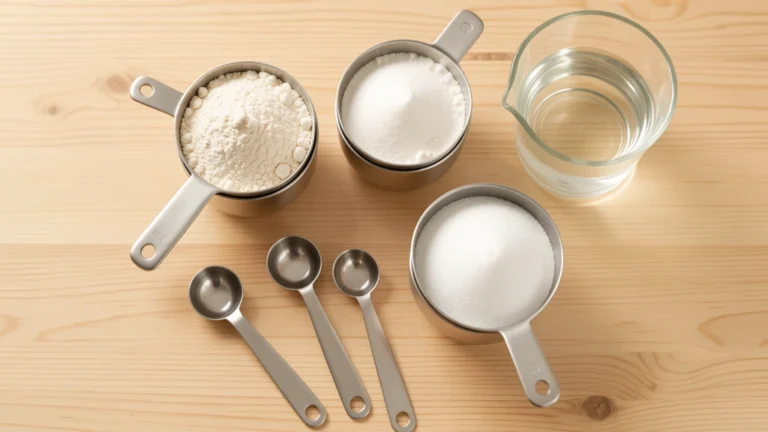
Use a clear liquid cup for liquids and a nesting dry cup for dry goods. NIST notes that swapping one for the other is a common source of kitchen measuring errors.
Liquids
Set the liquid cup on a flat counter before you pour. Bend down and read the curved surface of the liquid at eye level.
Dry Ingredients
Fill the dry cup or spoon until it mounds over the top. Then sweep a straight edge across the rim to level it off. Recipes expect a level measure unless they say heaping or rounded.
Packing changes how much flour or sugar fits in a cup. Our guide to baking measurement conversions from cups to grams covers when weighing beats scooping.
Pinch and Dash
Terms like pinch and dash have no official size in the NIST or FDA tables cited here. Treat them as a small amount, then adjust to taste.
The Tablespoons to Teaspoons Converter turns any tablespoon amount into teaspoons in real time, with a quick chart for common recipe fractions.
FAQs About Tablespoons, Teaspoons, and Cups
How Many Tablespoons Are in a Cup?
There are 16 tablespoons in one US cup. That also equals 48 teaspoons or 8 fluid ounces. Half a cup is 8 tablespoons, and a quarter cup is 4 tablespoons.
How Do I Measure 1/3 Cup Without a 1/3 Cup Measure?
Use 5 tablespoons plus 1 teaspoon. One third of a cup is 16 teaspoons, and 5 tablespoons supply 15 of them. Add 1 more teaspoon to finish the amount.
Is a Tablespoon the Same as a Fluid Ounce?
No. A tablespoon is half a fluid ounce, so 2 tablespoons make 1 fluid ounce. In metric terms, a US tablespoon is 14.79 mL and a fluid ounce is 29.57 mL.
Why Does a Nutrition Label Say 1 Cup Is 240 mL?
Federal labeling rules round the cup to 240 mL, the tablespoon to 15 mL, and the teaspoon to 5 mL. A kitchen cup is 236.6 mL, so the label cup is 1.44 percent larger.
Can I Use US Cups for an Australian Recipe?
Yes, for most dishes, but adjust the spoons. The 250 mL metric cup is only about 5.7 percent larger than a US cup. An Australian tablespoon holds 20 mL, or about 4 US teaspoons.
How Many Teaspoons Are in Half a Tablespoon?
Half a tablespoon equals 1 1/2 teaspoons. Most spoon sets have no half tablespoon, so combine the 1 teaspoon and the 1/2 teaspoon measures.
Should I Level Off Measuring Spoons for Baking?
Yes. Recipes expect a level spoon or cup unless they say heaping or rounded. Overfill the measure, then sweep a straight edge across the top to remove the extra.
Sources
References Used in This Article
- NIST SP 811, Appendix B.9: Conversion Factors for Volume (cup, tablespoon, teaspoon, fluid ounce)
- eCFR, 21 CFR 101.9 Nutrition Labeling of Food (240 mL cup, 15 mL tablespoon, 5 mL teaspoon)
- NIST Metric Kitchen, Culinary Measurement Tips
- Tablespoon: US, UK, and Australian definitions
- Cup (unit): customary, legal, and metric cups
This article explains US customary kitchen volume units and common national variations for everyday cooking. Reviewed for accuracy by Prof. Dr. Khalil Mudassar, PhD. Last updated September 27, 2026.
Author

Shakeel Muzaffar is the Founder and Editor-in-Chief of MultiCalculators.com, bringing over 15 years of experience in digital publishing, product strategy, and online tool development. He leads the platform's editorial vision, ensuring every calculator meets strict standards for accuracy, usability, and real-world value. Shakeel personally oversees content quality, formula verification workflows, and the platform's commitment to publishing tools that are genuinely useful for students, professionals, and everyday users worldwide.