A cup of flour weighs about 120 grams. A cup of sugar weighs 198. A cup of honey tips the scale at 340. They are all one cup, yet none of them weigh the same. Once you see why, you understand why serious bakers reach for a scale, and why the recipe that worked last time can flop the next. Here is what a cup really measures, and when grams do a better job.
- A cup measures volume, not weight, so each ingredient fills it differently.
- Dense ingredients like sugar and honey weigh far more per cup than fluffy flour.
- Weighing in grams removes the guesswork that packing and scooping introduce.
- A US cup is 237 ml, but a metric cup is 250 ml, so they are not interchangeable.
- Flour is the ingredient where a cup goes most wrong, off by up to 30 percent.
Why One Cup Is Never One Weight
A measuring cup marks a fixed space, about 237 milliliters in the United States. Weight is a different question entirely. It asks how much matter fills that space. Light, airy ingredients hold less matter in the same cup than heavy, compact ones, so their weights diverge sharply.
Flour is full of air and settles unevenly, so a cup holds roughly 120 grams. Granulated sugar packs into tight crystals, giving about 198 grams. Honey is nearly solid matter with almost no air, so a cup weighs around 340 grams, nearly three times the flour. The cup never changed. The density did.
Each ingredient has its own gram weight per cup. To convert any specific ingredient without memorizing them, the Baking Conversion Calculator holds the weight for each one and switches between cups and grams instantly.
Why Weighing Beats Measuring
The problem with cups is not the cup. It is how we fill it. Scoop flour straight from the bag and you compress it, packing in extra. Spoon it in gently and it stays loose. Those two cups of the same flour can differ by 30 grams or more, enough to turn a tender cake dense.
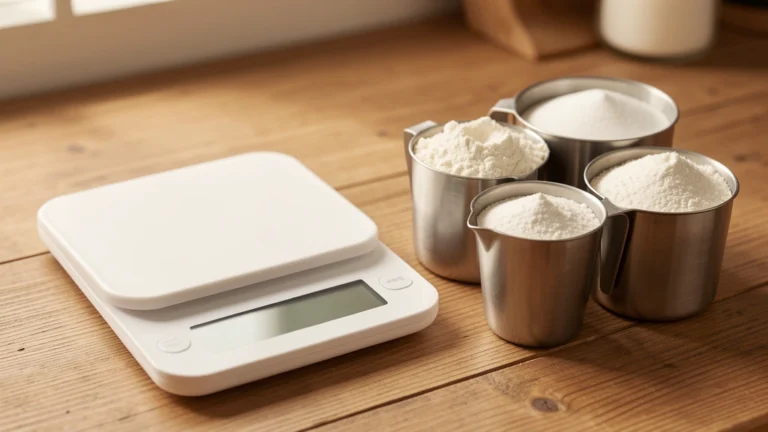
A scale sidesteps all of it. Two hundred grams of flour is 200 grams whether you scoop, spoon, or pour. There is no packing error, no leveling judgment, and no pile of dirty cups. This is why professional and published recipes increasingly list grams first, and why the results come out the same every time.
The US Cup and Metric Cup Trap
Here is a catch that surprises even confident bakers. A cup is not one size worldwide. The US customary cup is about 237 milliliters. The metric cup used in Australia and much of Europe is 250 milliliters. That is a five percent gap hiding inside the same word.
For a splash of milk it hardly matters. Across a full recipe of several cups, that five percent compounds, and a batter can come out noticeably wetter or drier than intended. If a recipe comes from overseas, check which cup it means, or better yet, work from the gram weights and skip the ambiguity.
When a Cup Is Fine, and When It Is Not
Cups are not the enemy. For forgiving jobs, they work well. Measuring water, tossing a salad, or scooping oats for breakfast needs no scale, because small errors change nothing you will notice.
Precision baking is where cups fall down. Bread, laminated pastry, and delicate cakes depend on exact ratios of flour to liquid to fat. There, a stray 30 grams of flour matters. The rule of thumb is simple: the more the recipe depends on structure and rise, the more a scale earns its place on the counter.
The Baking Conversion Calculator turns cups into grams for flour, sugar, butter, honey, and more, using the correct weight for each one.
FAQs About Cups to Grams in Baking
Why Do a Cup of Flour and a Cup of Sugar Weigh Different Amounts?
Because a cup measures volume, not weight. Sugar is denser than flour, so more matter fits in the same space. A cup of flour is about 120 grams, while a cup of sugar is about 198 grams.
Is It Better to Weigh or Measure Baking Ingredients?
Weighing is more accurate, especially for flour. Scooping packs flour and adds extra, while a scale gives the same amount every time. For precise baking like bread and cake, weighing gives more reliable results.
How Many Grams Is One Cup of Flour?
About 120 grams for all-purpose flour, spooned and leveled. If you scoop straight from the bag, you can pack in 150 grams or more, which is why weighing is more dependable.
Is a US Cup the Same as a Metric Cup?
No. A US cup is about 237 milliliters, and a metric cup is 250 milliliters. That is roughly a five percent difference, which can add up across a full recipe.
Do I Need a Scale to Bake Well?
Not for everything, but it helps a lot for precise recipes. Cups are fine for forgiving jobs like oatmeal or water. For bread and delicate cakes, a scale removes the packing and leveling errors that cups introduce.
Why Does the Same Recipe Turn Out Differently Each Time?
Often it is how you fill the cup. Packing flour tightly one day and loosely the next changes the amount by a lot. Weighing the flour keeps it consistent and removes that variation.
Sources
References Used in This Article
This article is general cooking and baking education. Reviewed for accuracy by Prof. Dr. Khalil Mudassar, PhD. Last updated September 26, 2026.
Author

Shakeel Muzaffar is the Founder and Editor-in-Chief of MultiCalculators.com, bringing over 15 years of experience in digital publishing, product strategy, and online tool development. He leads the platform's editorial vision, ensuring every calculator meets strict standards for accuracy, usability, and real-world value. Shakeel personally oversees content quality, formula verification workflows, and the platform's commitment to publishing tools that are genuinely useful for students, professionals, and everyday users worldwide.