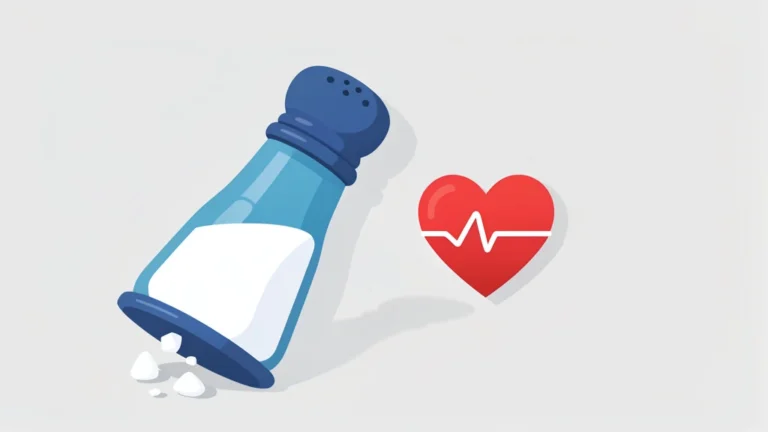
Ever wonder why a salty meal can leave you feeling puffy the next morning? That puffiness is a small, visible sign of a much bigger story about sodium and blood pressure. This guide explains the general mechanism in plain language, the commonly cited daily sodium limit, and simple steps that may help you eat less of it.
Sodium can cause your body to hold onto extra fluid, and more fluid in your blood vessels can raise blood pressure over time. Health groups commonly cite a general limit of under 2,300 mg of sodium a day for most adults, which is about one teaspoon of table salt. Many people eat more than that, mostly from processed and restaurant food rather than the salt shaker. This is general education, not personal medical advice, since sensitivity to sodium varies from person to person.
How Sodium and Blood Pressure Are Connected
Sodium is a mineral your body needs in small amounts. It helps nerves send signals and helps muscles, including your heart, work properly.
The general pattern that health experts commonly describe works like this: eating a lot of sodium can make your body hold onto more water. That extra fluid adds to the total volume of blood moving through your blood vessels. More blood volume can put more pressure on artery walls, which shows up as a higher blood pressure reading over time.
This is a general mechanism, not a fixed rule for every person. Some people are more sensitive to sodium than others, and genetics, kidney function, and overall diet all play a role.
How Much Sodium Is Considered Too Much
Health guidelines need one clear number to work with, even though needs vary by person. The Dietary Guidelines for Americans commonly cite a general limit of under 2,300 mg of sodium a day for most adults.
That number is easier to picture than it sounds. About 2,300 mg of sodium is roughly the amount in one teaspoon of table salt, including salt already mixed into food.
- 2,300 mg a day is the commonly cited general upper limit for most healthy adults.
- Some people, based on personal health history, are told a lower target by their doctor.
- The limit covers all sodium eaten in a day, not just salt added at the table.
These figures are general reference points from public health sources, not a personal prescription. A doctor or registered dietitian can set a target that fits your own health picture.
Why Average Intake Runs Higher Than the Guideline
Many people eat more sodium than the commonly cited general limit. The CDC has reported that average adult sodium intake in the United States often runs closer to about 3,400 mg a day.
That gap surprises people who rarely use the salt shaker. Most sodium in a typical diet comes from processed, packaged, and restaurant food, not from salt added at home.
Bread, soups, sauces, and deli meats can each add a little sodium, and those small amounts add up fast across a full day of eating.
Common High-Sodium Foods to Watch For
Sodium often hides in foods that do not taste especially salty. Knowing the usual sources makes it much easier to cut back without guessing.
- Processed and packaged snacks, like chips, crackers, and frozen meals.
- Canned soups and canned vegetables, unless labeled low sodium.
- Restaurant and fast food, including items that taste mild or sweet.
- Deli meats, cured meats, and many cheeses.
- Sauces, condiments, and salad dressings used in small amounts often.
- Bread and other baked goods, since sodium is used in the recipe itself.
How to Read Sodium on a Nutrition Facts Label
The Nutrition Facts label lists sodium in milligrams per serving, with a percent Daily Value right next to it. The percent Daily Value shows how much of a full day’s general limit that one serving provides.
- 5% Daily Value or less per serving is generally considered low in sodium.
- 20% Daily Value or more per serving is generally considered high in sodium.
- Always check the serving size first, since it may be smaller than what you actually eat.
If a package holds two servings and you eat the whole thing, you take in double the listed sodium and double the percent Daily Value. Watching that serving-size multiplier helps you avoid underestimating your total sodium for the day.
Simple Ways to Cut Back on Sodium
You do not need a strict diet to eat less sodium. Small, steady habits usually make the biggest difference over time.
- Read the nutrition label and compare sodium per serving across similar products.
- Cook more meals at home, where you control how much salt goes in.
- Rinse canned beans and vegetables under water to wash away added sodium.
- Choose fresh or frozen plain vegetables over canned or pre-seasoned versions.
- Season food with herbs, spices, or citrus instead of extra salt.
Building a full meal plan around your goals is easier when you can see protein, carbs, fat, and sodium together. Our Macronutrient Calculator can help you plan balanced meals while you work on cutting back sodium.
Potassium-Rich Foods as a Complementary Habit
Along with cutting back on sodium, general dietary guidance often mentions potassium-rich foods as a helpful complementary habit. Bananas, oranges, spinach, and potatoes are common potassium sources.
This is a general dietary pattern idea, not a treatment for high blood pressure. Ask your doctor before changing your potassium intake, especially if you take certain medications or have kidney disease.
Sodium Is Not the Only Nutrient to Watch
Blood pressure and overall health depend on more than one nutrient. Sodium is just one piece of a bigger nutrition picture.
Fiber, sugar, and carbs each play their own role in daily health, and each deserves its own focused look. Our Daily Fiber Intake Guide covers fiber targets in detail, and How Much Sugar Per Day Is Too Much? walks through general sugar limits.
This article stays focused on sodium so you get a clear, complete answer without repeating what those guides already explain well.
Sodium Sensitivity and Who Should Watch It Closely
Not everyone’s blood pressure reacts to sodium the same way. This difference is often called sodium sensitivity, and it depends on genetics, age, kidney function, and existing health conditions.
Some people can eat more sodium with little change in their blood pressure. Others see a noticeable rise from the same amount, even when they eat similar meals.
People who already have high blood pressure or a related heart or kidney condition often benefit from watching sodium more closely. Sodium sensitivity also tends to be more common in older adults, based on general population research.
Sodium sensitivity is not something you can diagnose on your own. If you have a diagnosed health condition, ask your doctor or a registered dietitian for a personal sodium target that fits your situation.
Ready to build meals that fit your goals? Use our Macronutrient Calculator to balance protein, carbs, and fat while you keep an eye on sodium.
Frequently Asked Questions About Sodium and Blood Pressure
How Does Sodium Raise Blood Pressure?
Eating a lot of sodium can cause your body to hold onto extra fluid. That extra fluid adds to your blood volume, and more blood volume can put more pressure on your artery walls. This is a general pattern, and how much it affects any one person can vary.
How Much Sodium Is Recommended per Day?
The Dietary Guidelines for Americans commonly cite a general limit of under 2,300 mg of sodium a day for most adults. That is roughly the amount in one teaspoon of table salt. Some people are given a lower personal target by their doctor.
What Foods Are Highest in Sodium?
Processed snacks, canned soups, restaurant food, deli meats, sauces, and bread are common high-sodium sources. Most sodium in a typical diet comes from these packaged and prepared foods. The salt shaker usually adds a much smaller share.
Does Everyone React to Sodium the Same Way?
No. Sodium sensitivity varies by person and depends on genetics, kidney function, age, and overall health. Some people see a bigger blood pressure change from sodium than others do. A doctor can help you understand your own sensitivity.
Can Cutting Back on Sodium Lower Blood Pressure?
For many people, eating less sodium is linked to lower blood pressure over time, according to general health guidance. Results vary from person to person and often work best alongside other healthy habits. Talk with a doctor about changes that fit your health needs.
Is Sea Salt or Pink Salt Lower in Sodium?
Sea salt and pink salt contain sodium in amounts very close to regular table salt by weight. The difference in trace minerals is small and does not meaningfully change sodium content. Any salt still counts toward your daily sodium total.
How Do I Check Sodium on a Food Label?
Look at the nutrition label for “Sodium” listed in milligrams per serving. Check the serving size too, since eating more than one serving adds up the sodium fast. Comparing labels across similar products helps you pick the lower sodium option.
Sources
Authoritative Sources Used in This Article
This article is for general education only, not medical advice. Nutrition needs vary by person, so talk with a doctor or a registered dietitian before making changes to your diet or health routine. Reviewed for accuracy by Dr. Abdullah Khalil, MBBS. Last updated September 12, 2026.
Author

Shakeel Muzaffar is the Founder and Editor-in-Chief of MultiCalculators.com, bringing over 15 years of experience in digital publishing, product strategy, and online tool development. He leads the platform's editorial vision, ensuring every calculator meets strict standards for accuracy, usability, and real-world value. Shakeel personally oversees content quality, formula verification workflows, and the platform's commitment to publishing tools that are genuinely useful for students, professionals, and everyday users worldwide.