Could one round of drinks really cost you as many calories as a meal? It can, because alcohol is not a free pass just because it is not a carb, a protein, or a fat. It still carries real energy, about 7 calories per gram, and those calories add up fast once you count a full drink. Once you see the math, it is easy to spot which drinks run light and which run heavy.
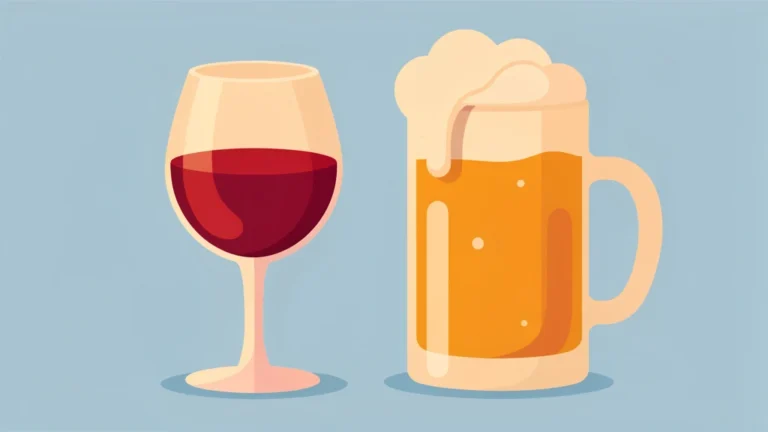
Alcohol has about 7 calories per gram, more than carbs or protein at 4 calories per gram and less than fat at 9 calories per gram. A standard 12 oz beer has about 150 calories, a 5 oz glass of wine about 120 to 125, and a 1.5 oz shot of spirits about 97. Sugary mixers can push a cocktail well past 200 calories. These are common approximate figures that vary by brand and recipe.
How Many Calories Are in Alcohol, Gram for Gram?
Pure alcohol, also called ethanol, supplies about 7 calories for every gram you drink. That single number is the base fact behind every calorie count in this article.
It helps to see where that number sits next to the three main energy sources in food. Carbohydrates and protein each supply about 4 calories per gram. Fat supplies about 9 calories per gram, the highest of the group.
- Carbohydrates: about 4 calories per gram
- Protein: about 4 calories per gram
- Alcohol: about 7 calories per gram
- Fat: about 9 calories per gram
Alcohol lands almost in the middle, but closer to fat than to carbs or protein. Some nutrition writers even call it a fourth energy source for this reason. It is still not an essential nutrient, so your body does not need it the way it needs carbs, protein, and fat.
How to Calculate Calories From Alcohol Yourself
You do not need a lab to estimate alcohol calories. A simple formula gets you close using a drink’s size and its alcohol by volume, or ABV.
Multiply the drink’s ounces by its ABV written as a decimal, then multiply that by 23.4. That gives you roughly the grams of alcohol in the drink. Multiply the grams by 7 to get the calories from alcohol.
- Beer: 12 oz x 0.05 ABV x 23.4 = about 14 grams of alcohol. 14 x 7 = about 98 calories from alcohol alone.
- Wine: 5 oz x 0.12 ABV x 23.4 = about 14 grams of alcohol. 14 x 7 = about 98 calories from alcohol alone.
- Spirits: 1.5 oz x 0.40 ABV x 23.4 = about 14 grams of alcohol. 14 x 7 = about 98 calories from alcohol alone.
Notice all three land near 98 calories from alcohol. That is why each is called a standard drink, roughly 14 grams of pure alcohol. The total calorie count differs once you add in carbs from the beer, wine, or any mixer.
Calories in a Standard Beer, Wine, and Spirits
A standard drink always has about 14 grams of alcohol, but the total calories differ because some drinks carry extra carbs on top of the alcohol.
A regular 12 oz beer at about 5% ABV has roughly 150 calories total. About 98 of those come from alcohol, and the rest come from carbs left over from the grain used to brew it. Light beer trims those carbs, often landing near 100 to 110 calories.
A 5 oz glass of wine at about 12% ABV has about the same 14 grams of alcohol, but fewer leftover carbs than beer. That puts most wine around 120 to 125 calories total. Sweet or dessert wine runs higher.
Straight spirits like vodka, gin, rum, tequila, and whiskey have almost no carbs on their own. A 1.5 oz shot of 80 proof spirits stays close to its alcohol-only number, about 97 calories, as long as nothing else is added.
| Drink | Typical Serving | Alcohol Calories | Approx Total Calories |
|---|---|---|---|
| Regular beer (~5% ABV) | 12 oz | ~98 | ~150 |
| Wine (~12% ABV) | 5 oz | ~98 | ~120 to 125 |
| Spirits (80 proof) | 1.5 oz | ~98 | ~97 |
| Cocktail with sugary mixer | Varies | ~98+ | ~200 to 300+ |
Why Mixers and Cocktails Add Extra Calories
A cocktail rarely stops at just alcohol. Soda, juice, syrup, and cream all pile their own calories on top of the alcohol itself.
A rum and cola can reach 150 to 200 calories once you count the sugar in the soda. A margarita or a pina colada often passes 300 calories because of syrup, juice, or cream, and large or blended versions can go even higher.
- Soda and fruit juice add sugar calories
- Simple syrup and sweet liqueurs add concentrated sugar
- Cream or coconut milk add fat calories
- Soda water or a splash of citrus add almost none
The mixer, not the alcohol, is often the biggest calorie swing between two drinks. Swapping a sugary mixer for soda water can cut a lot of calories without changing how much alcohol you drink. If you want to dig deeper into sugar itself, see our guide on How Much Sugar Per Day Is Too Much?
Why Alcohol Calories Are Called “Empty Calories”
Nutrition experts often call alcohol calories empty calories. The energy is real, but the drink brings almost no vitamins, minerals, protein, or fiber along with it.
Compare that to a piece of fruit or a serving of chicken. Those foods deliver calories along with nutrients your body actually uses. Alcohol mostly just delivers the calories on their own.
This is one reason alcohol calories can sneak up on you. You can drink several hundred calories in an evening and still feel hungry for dinner, since alcohol does not fill you up the way food does.
Do General Moderate Drinking Guidelines Exist?
Yes, general guidelines for moderate drinking exist, and they focus mainly on health risk, not just calorie counts. These guidelines describe broad patterns, not a personal limit set for every reader.
Body size, health conditions, medications, and personal history all shape how alcohol and its calories affect any one person. A doctor or a registered dietitian is the right source for guidance that fits your own situation.
If you want to think through how a drinking pattern might relate to health and recovery over time, our Alcohol Impact on Recovery Calculator offers a general, educational starting point for that conversation.
Curious how your drinking pattern might connect to your health and recovery over time? Try our Alcohol Impact on Recovery Calculator for a general, educational look at the bigger picture.
Frequently Asked Questions About Calories in Alcohol
How Many Calories Are in a Gram of Alcohol?
Pure alcohol has about 7 calories per gram. That is more than carbohydrates or protein, which each have about 4 calories per gram, but less than fat, which has about 9 calories per gram. Multiplying the grams of alcohol in a drink by 7 gives you the calories from alcohol alone.
Is Alcohol a Carb, a Protein, or a Fat?
Alcohol is none of the three. It is sometimes called a fourth energy source because it supplies calories, about 7 per gram, even though it is not an essential nutrient like carbs, protein, or fat. Your body does not need alcohol to function normally.
How Many Calories Are in a Beer?
A standard 12 oz regular beer at about 5% ABV has roughly 150 calories. About 98 of those come from its 14 grams of alcohol, and the rest come from carbs in the grain. Light beer usually runs lower, often around 100 to 110 calories.
How Many Calories Are in a Glass of Wine?
A standard 5 oz glass of wine at about 12% ABV usually has about 120 to 125 calories. It carries about the same 14 grams of alcohol as a beer or shot, but fewer leftover carbs than most beer. Sweet or dessert wine tends to run higher.
How Many Calories Are in a Shot of Liquor?
A 1.5 oz shot of 80 proof spirits, like vodka, gin, rum, or whiskey, has about 97 calories. Straight spirits have almost no carbs, so nearly all of those calories come from the alcohol itself. Adding any mixer changes the total.
Why Do Cocktails Have So Many Calories?
Cocktails often mix alcohol with soda, juice, syrup, or cream, and each of those adds its own calories on top. A rum and cola can reach close to 200 calories, while a creamy or syrupy cocktail can pass 300. The mixer is often a bigger factor than the alcohol itself.
Are Alcohol Calories “Empty Calories”?
Yes, alcohol calories are usually called empty calories because they carry very little nutrition. A drink can add real calories to your day without bringing along vitamins, minerals, protein, or fiber. That is worth remembering when you plan meals around a night of drinking.
Sources
Authoritative Sources Used in This Article
This article is for general education only, not medical advice. Nutrition needs vary by person, so talk with a doctor or a registered dietitian before making changes to your diet or health routine. Reviewed for accuracy by Dr. Abdullah Khalil, MBBS. Last updated September 12, 2026.
Author

Shakeel Muzaffar is the Founder and Editor-in-Chief of MultiCalculators.com, bringing over 15 years of experience in digital publishing, product strategy, and online tool development. He leads the platform's editorial vision, ensuring every calculator meets strict standards for accuracy, usability, and real-world value. Shakeel personally oversees content quality, formula verification workflows, and the platform's commitment to publishing tools that are genuinely useful for students, professionals, and everyday users worldwide.