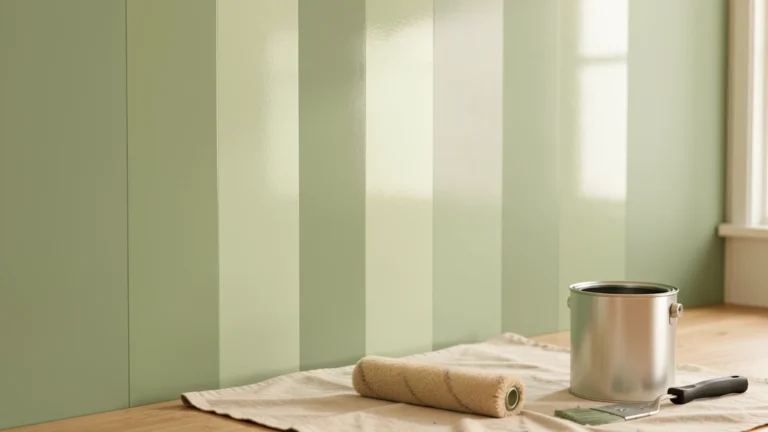
Why does the same paint color look soft on one wall and shiny on the next? The answer is sheen, the amount of light a dried finish reflects. Most paint lines come in five or six sheens, from flat to high gloss. Pick the right one and your walls hide flaws, clean easily, and look finished for years.
- Flat and matte hide flaws best but scrub poorly, so use them on ceilings and quiet rooms.
- Eggshell and satin balance a soft look with easy wiping for most living spaces.
- Semi-gloss suits trim, doors, kitchens, and bathrooms that face moisture and hands.
- Gloss and high gloss give the toughest, shiniest surface but show every dent and brush mark.
- The glossier the sheen, the smoother your prep must be before the first coat.
What Is Paint Sheen and How Is It Measured?
Paint sheen is how much light a dry paint film reflects back toward your eye. Labs measure it with a gloss meter that shines light at a fixed angle and reads the reflection in gloss units.
The common test method is ASTM D523, which uses three meter angles: 20, 60, and 85 degrees. The 60 degree angle covers most paints. The 20 degree angle separates very glossy finishes, and the 85 degree angle reads low-sheen flat paints.
Here is the catch for shoppers. Sheen names such as eggshell and satin are not standardized. One brand’s satin can look close to another brand’s eggshell, and gloss-unit ranges differ from line to line.
So treat the names as a rough ladder, not an exact spec. Before you commit to a whole room, paint a sample board and view it in daylight and lamplight.
How Do the Five Main Sheens Compare?
Each step up the sheen ladder adds shine and washability but hides fewer flaws. Flat sits at the soft, forgiving end, and high gloss sits at the tough, revealing end.
- Flat or matte: almost no shine. It hides patches and dents well, but scrubbing tends to leave shiny marks.
- Eggshell: a low, soft glow. It wipes clean better than flat and still hides most wall texture.
- Satin: a smooth, velvet shine. It handles regular wiping and suits busier rooms.
- Semi-gloss: a clear shine. It resists moisture and scrubbing, so it fits trim and wet rooms.
- Gloss and high gloss: a mirror-like finish. It is the hardest wearing but shows every sanding mark.
The reason is simple physics. A rough, flat film scatters light in many directions, so small bumps blend in. A smooth, glossy film bounces light straight back, so each ridge casts a visible highlight.
Which Sheen Works Best in Each Room?
Match the sheen to how hard the room works. Low sheens suit quiet, dry rooms, while higher sheens suit rooms with steam, grease, and frequent hand contact.
| Room | Best pick | Why |
|---|---|---|
| Ceilings | Flat | Hides roller marks and seams under overhead light |
| Living room, bedroom | Flat, matte, or eggshell | Soft look, little scrubbing needed |
| Hallway, kids room | Eggshell or satin | Survives fingerprints and wiping |
| Kitchen | Satin or semi-gloss | Wipes off grease and splatter |
| Bathroom | Satin or semi-gloss | Sheds steam and resists moisture |
Ceilings deserve flat paint almost every time. Light from lamps and windows skims across a ceiling at a low angle, which exaggerates every roller lap. A flat film scatters that light and keeps the surface calm.
For a bathroom without an exhaust fan, lean toward semi-gloss. Its tighter film sheds condensation faster than eggshell and wipes clean after steamy showers.
What Sheen Should You Use on Trim, Doors, Cabinets, and Exteriors?
Use semi-gloss on most trim and doors, semi-gloss or gloss on cabinets, and flat or satin on exterior siding. These surfaces take the most knocks, so durability usually wins over flaw hiding.
Trim, Doors, and Cabinets
Baseboards collect scuffs from shoes and vacuums, and doors collect handprints near the knob. Semi-gloss wipes clean in seconds and outlines molding with a crisp edge. Cabinets get daily grease and fingers, so semi-gloss or gloss gives the hardest face.
Exterior Siding and Trim
On siding, flat or satin hides the uneven texture of old boards and stucco. Exterior trim, shutters, and front doors look sharp in semi-gloss or gloss, and they shed rain and dirt well.
Mixing Sheens in One Room
A classic pattern uses three sheens in one room: flat ceiling, eggshell walls, and semi-gloss trim. The contrast makes trim read as a frame around the walls. Keep one sheen per plane, though, since two sheens on one wall look like a mistake.
How Does Sheen Change Prep, Coats, and Touch-Ups?
Sheen does not change the square feet a gallon covers on its own, but glossier sheens demand more careful prep. Every patch, dent, and sanding scratch shows through a shiny film.
For flat walls, a quick patch and light sanding usually pass. For semi-gloss or gloss, sand patches smooth, wipe off the dust, and spot-prime them. Unprimed patches absorb paint differently and can show as dull spots called flashing.
Painting over an old glossy surface needs one extra step. Scuff-sand or use a deglosser so the new coat grips instead of peeling. A strong color change also tends to need a primer coat plus two finish coats.
To plan gallons for each sheen, measure each surface group separately. Enter the wall area in the paint coverage calculator for gallons and coats, then run the trim and ceiling as their own lines. Our guide on how much paint you need for a room walks through the measuring.
Touch-ups behave differently too. Flat paint blends almost invisibly, while a glossy touch-up often shows as a patch. Keep a labeled can of each sheen for future repairs.
What Safety Steps Matter Before You Paint?
Ventilate while you paint, and test for lead before you sand old paint in a home built before 1978. These two steps protect your lungs and your family.
The EPA notes that paints contain organic solvents that release volatile organic compounds, or VOCs, into indoor air. Open windows, run a fan that blows outward, and pick a low-VOC product when one fits the job. The EPA also advises buying only the paint you will use soon.
Lead is the bigger risk in older homes. The EPA estimates that about three-quarters of U.S. homes built before 1978 still contain some lead-based paint. Sanding it for a smooth glossy finish creates dangerous lead dust.
Test old trim and doors with an EPA-recognized kit or a certified inspector first. Paid contractors working on pre-1978 homes must hold EPA lead-safe certification. Add testing and safety gear to your plan with our guide on how to estimate a renovation budget.
The Paint Coverage Calculator turns your wall, ceiling, and trim areas into gallons and coats, so each finish gets its own shopping line.
FAQs About Paint Sheen
What Is the Best All-Purpose Sheen for Walls?
Eggshell is the safest all-purpose wall sheen. It keeps a soft look, hides most texture, and wipes clean better than flat. Step up to satin for busy family rooms and hallways.
Is Eggshell or Satin Better for a Kitchen?
Satin is usually better for kitchen walls. Its tighter film wipes off grease and splatter without leaving shiny spots. Use semi-gloss behind the stove and sink, where splashes hit hardest.
What Sheen Should I Use in a Bathroom Without a Fan?
Choose semi-gloss for a bathroom without an exhaust fan. It sheds condensation faster than lower sheens and handles regular wiping. Open a window during and after showers to help it dry.
Can I Use Flat Paint on Trim?
You can, but it wears poorly. Trim takes scuffs from shoes, vacuums, and hands, and flat paint marks when scrubbed. Semi-gloss is the standard trim choice because it cleans easily.
Why Does My Touch-Up Paint Look Shiny or Patchy?
Touch-ups on satin and glossier finishes often reflect light differently from the older paint around them. Spot-prime bare patches, feather the edges, or repaint the full wall from corner to corner.
Does a Glossier Sheen Need More Paint?
Not by coverage rate alone, so check the spread rate on the label. Glossier sheens do need smoother prep, and patching or spot-priming adds work and sometimes an extra primer coat.
Can I Paint Flat Paint Over Semi-Gloss?
Yes, with the right prep. Clean the old semi-gloss, then scuff-sand it or use a deglosser so the new coat grips. A bonding primer helps on very slick surfaces.
Sources
References Used in This Article
- ASTM D523, Standard Test Method for Specular Gloss (20, 60, and 85 degree geometries)
- Gloss (optics): measurement angles for high, medium, and low gloss
- Paint sheen: common finish names and how gloss affects surface prep
- EPA, Volatile Organic Compounds’ Impact on Indoor Air Quality
- EPA, Lead Renovation, Repair and Painting Program
This article is general home-improvement education, not a product endorsement. Sheen names and gloss ranges vary by brand, so check each product label. Reviewed for accuracy by Prof. Dr. Khalil Mudassar, PhD. Last updated September 27, 2026.
Author

Shakeel Muzaffar is the Founder and Editor-in-Chief of MultiCalculators.com, bringing over 15 years of experience in digital publishing, product strategy, and online tool development. He leads the platform's editorial vision, ensuring every calculator meets strict standards for accuracy, usability, and real-world value. Shakeel personally oversees content quality, formula verification workflows, and the platform's commitment to publishing tools that are genuinely useful for students, professionals, and everyday users worldwide.