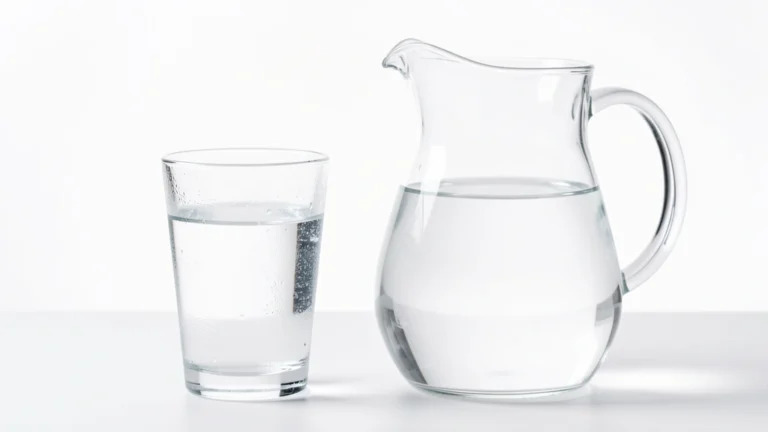
A common everyday guideline is about 8 cups, or roughly 2 liters, of water a day, but your real need varies with body size, activity, heat, and diet. National health institutes suggest roughly 2.7 liters of total water a day for women and 3.7 liters for men, counting all drinks and the water in food combined. For most healthy people, thirst and pale-yellow urine are practical daily guides.
- The popular target is about 8 cups, close to 2 liters, of plain water a day, and it is a starting point rather than a strict rule.
- Total water figures from national institutes run near 2.7 liters a day for women and 3.7 liters for men, from all drinks and food combined.
- Food supplies a meaningful share of your water, so total intake is higher than what you drink alone.
- Heat, exercise, larger body size, pregnancy, and breastfeeding raise your needs above the average.
- Thirst and pale-yellow urine are simple everyday signals, and some medical conditions require fluid limits set by a clinician.
How Much Water Should You Drink a Day?
The short answer most people have heard is about 8 cups, which is close to 2 liters, of water a day. That guideline is easy to remember and works as a reasonable default for many healthy adults. It is a rounded, everyday rule rather than a precise medical prescription, and no single number fits everyone.
Health institutes often describe a broader figure called total water. This counts every source combined: plain water, other drinks such as milk and tea, and the water naturally present in food. On that fuller basis, common estimates land near 2.7 liters of total water a day for women and about 3.7 liters for men. Because food and other beverages contribute a good portion of that, the amount you need to drink on purpose is smaller than the total.
Your body loses water all day through breathing, sweat, and urine, and the goal is simply to replace what you lose. If you are curious about how hydration fits into overall daily nutrition and energy needs, the Calorie Calculator can help you frame the bigger picture of what your body uses each day.
Total Water vs Water You Drink
One reason the numbers seem to conflict is that they measure different things. The 8-cup idea usually refers to plain water you drink. The larger 2.7 and 3.7 liter figures refer to total water from all sources. Understanding the gap keeps you from over-counting or under-counting.
According to MedlinePlus from the National Institutes of Health, the water in food and in other beverages counts toward your daily fluid. Many fruits and vegetables are mostly water, and soups, milk, and similar drinks add more. So a person who eats plenty of produce may reach a healthy total while drinking somewhat less plain water than the total figure suggests.
This is also why chasing an exact glass count is less useful than watching how you feel and look. For most healthy people, thirst is a dependable prompt to drink, and the color of your urine offers a quick check: pale yellow generally suggests you are well hydrated, while darker urine can be a sign to drink more.
What Changes How Much Water You Need
The average is only a midpoint. Several everyday factors push your needs above or below it, sometimes by a large margin. The table below lists the most common ones and the direction each tends to move your water needs.
| Factor | Direction of Change | Why It Happens |
|---|---|---|
| Physical activity | Increases needs | Sweat during exercise raises water loss, so more fluid is needed to replace it. |
| Hot or humid weather | Increases needs | Heat drives more sweating, and dry air can speed up fluid loss. |
| Larger body size | Increases needs | A bigger body generally holds and turns over more water each day. |
| Pregnancy | Increases needs | Supporting a growing baby raises the body’s overall fluid demand. |
| Breastfeeding | Increases needs | Producing milk uses extra water, so intake usually needs to rise. |
| Fever, vomiting, or diarrhea | Increases needs | Illness can cause rapid fluid loss that has to be replaced. |
| A water-rich diet | Lowers water you must drink | Fruits, vegetables, and soups supply water, so less plain water is needed. |
| Clinician-set fluid limits | May lower needs | Some heart or kidney conditions call for a restricted intake set by a provider. |
Notice that most everyday factors push in the same direction: they raise how much you need. Activity and heat are the two that change fastest from one day to the next, which is why a hot afternoon or a long workout can leave you thirstier than usual. The chart below shows how a typical day splits between the water you drink and the water your food provides.
Simple Everyday Signs You Are Drinking Enough
You do not need to track every glass to stay hydrated. For most healthy people, the body gives clear signals. Two of the easiest to read are thirst and the color of your urine.
Thirst
Thirst is your body’s built-in reminder to drink. Responding to it through the day is usually enough for healthy adults with no special medical needs. Some people, including older adults, may feel thirst less reliably, so keeping water within easy reach can help.
Urine Color
A quick glance can tell you a lot. Pale yellow urine generally points to good hydration, while consistently dark urine can be a sign to drink more. It is a rough guide rather than a lab test, but it is easy to use any day.
Energy and Focus
Mild dehydration can leave some people feeling tired or less focused. If you notice a dip in the afternoon, a glass of water is a low-cost first step before reaching for anything else. Hydration supports the everyday nutrition habits described in our guide on how to read a nutrition label, where fluids and food work together.
Practical Ways to Reach Your Water Goal
If you want to drink more without overthinking it, a few small habits do most of the work. None of these require exact measuring, and you can mix and match whatever fits your day.
- Drink with meals: pairing a glass of water with each meal builds a steady rhythm without any counting.
- Keep water visible: a bottle on your desk or counter is a gentle nudge to sip through the day.
- Eat water-rich foods: fruits and vegetables add fluid and count toward your total water.
- Drink more when active or hot: add extra water around exercise and on warm days to match higher losses.
- Let thirst lead: for most healthy people, responding to thirst is a reliable everyday guide.
Hydration is one piece of a balanced routine. The World Health Organization frames healthy eating around plenty of fruits and vegetables, and those same foods quietly add to your daily water. If you are also watching energy balance, our overview of how many calories to lose weight pairs naturally with steady hydration, since water has no calories and can help meals feel more satisfying.
FAQs About Daily Water Intake
How Much Water Should I Drink a Day?
A common everyday guide is about 8 cups, close to 2 liters, of water. Total water from all drinks and food runs near 2.7 liters for women and 3.7 liters for men, and needs vary by person.
Is 8 Glasses of Water a Day a Strict Rule?
No. The 8-cup idea is an easy-to-remember starting point, not a precise medical requirement. Your real need depends on body size, activity, heat, and diet, so more or less can be perfectly normal.
Does Food Count Toward My Water Intake?
Yes. The water in fruits, vegetables, soups, and other foods counts toward your total water. That is why total intake is higher than the plain water you drink on purpose each day.
Do Coffee and Tea Count as Hydration?
Beverages such as tea and coffee do add fluid toward your daily total. Water and other unsweetened drinks are good everyday choices, and any drink you enjoy contributes to your overall intake.
How Can I Tell If I Am Drinking Enough?
For most healthy people, thirst and urine color are simple guides. Pale-yellow urine usually suggests good hydration, while darker urine can be a sign to drink more water during the day.
Do I Need More Water When It Is Hot or I Exercise?
Yes. Heat and physical activity raise how much you sweat, so you lose more water and should drink more to replace it. Keep water handy around workouts and on warm days.
Can You Drink Too Much Water?
It is uncommon in healthy people, but drinking far beyond your needs can be harmful. Some heart and kidney conditions require fluid limits set by a clinician, so follow any plan your provider gives you.
Sources
Authoritative Sources Used in This Article
- MedlinePlus, National Institutes of Health, Water in Diet: medlineplus.gov
- MedlinePlus, National Institutes of Health, Nutrition: medlineplus.gov
- World Health Organization, Healthy Diet: who.int
Educational note: This article is general health information, not medical advice, and it is not a substitute for care from a qualified professional. It is meant to inform, not to judge anyone’s habits. Everyday water needs vary with body size, activity, climate, and diet, and some conditions, including certain heart and kidney problems, require fluid limits set by a clinician. If you have questions about how much water is right for you, or any symptoms that concern you, talk to a healthcare provider. Reviewed for general accuracy by Dr. Abdullah Khalil, MBBS, as part of our editorial review process. Content last reviewed September 10, 2026.
Author

Shakeel Muzaffar is the Founder and Editor-in-Chief of MultiCalculators.com, bringing over 15 years of experience in digital publishing, product strategy, and online tool development. He leads the platform's editorial vision, ensuring every calculator meets strict standards for accuracy, usability, and real-world value. Shakeel personally oversees content quality, formula verification workflows, and the platform's commitment to publishing tools that are genuinely useful for students, professionals, and everyday users worldwide.


1 thought on “How Much Water Should You Drink a Day?”