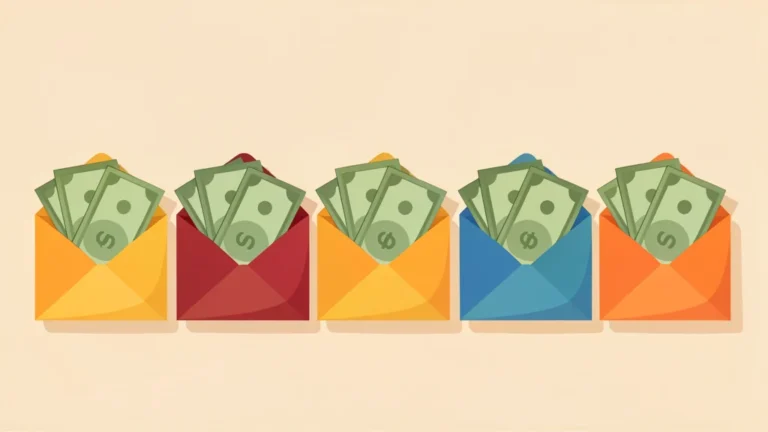
Ever reach the end of the month and wonder where your spending money went? The envelope budgeting method stops that guesswork by giving every dollar a job before you spend it. You split your spending money into labeled envelopes, one for each category like groceries, gas, and dining out. When an envelope is empty, you stop spending in that category until the next month. It is simple, visual, and very hard to ignore.
The envelope budgeting method divides your spending money into category envelopes, each holding a set amount. You spend from an envelope only until it runs out, then you stop in that category. It works with real cash or with digital envelopes in a budgeting app. Use it to control flexible spending like food, gas, fun, and personal care.
What Is the Envelope Budgeting Method?
The envelope method is a hands-on way to control spending by category. You decide how much to spend in each area, then physically separate that money into envelopes.
Each envelope is one category, such as groceries or gas. You place the month’s planned amount inside and spend only from that envelope. When the cash is gone, you are done spending there until next month.
This approach is sometimes called the cash envelope system or cash stuffing. The core idea stays the same whether you use paper or an app. The hard limit in each envelope is what makes the method work. It turns a vague plan into a clear rule you can see and feel.
The method works because a fixed amount is concrete, not abstract. A shrinking envelope is easy to notice, so you slow down before you run out. That simple feedback is why many people stick with it.
How the Envelope Method Works in Three Steps
The system has a simple rhythm you repeat every month. Follow these three steps in order.
- Set your categories. List the flexible areas where your money actually goes.
- Fund each envelope. Put a fixed amount in each one at the start of the month.
- Spend to zero. Pay only from the matching envelope, and stop when it is empty.
That last rule is the heart of the method. An empty envelope is a clear signal to pause, not to borrow from another envelope. This builds a natural limit into daily spending without constant math.
How to Pick Your Categories and Amounts
Envelopes work best for flexible, everyday spending that is easy to overdo. Fixed bills like rent and loan payments usually stay on autopay, not in envelopes.
Start with four to eight categories so the system stays simple. Common envelope categories include:
- Groceries and household food
- Gas, transit, or other transport
- Dining out and takeout
- Entertainment and hobbies
- Personal care and haircuts
- Household supplies and small goods
To set amounts, look at what you really spent over the past two or three months. Use those averages as a starting point, then trim areas you want to cut. The free Household Expenses Calculator can help you total your monthly costs by category before you fund each envelope.
A Worked Example With Six Envelopes
Say you set aside $1,000 each month for flexible spending, separate from rent and bills. You split that $1,000 across six envelopes like this.
| Envelope | Amount |
|---|---|
| Groceries | $450 |
| Gas | $150 |
| Dining Out | $120 |
| Entertainment | $80 |
| Personal Care | $60 |
| Household Supplies | $140 |
| Total | $1,000 |
The six amounts add up exactly: $450 + $150 + $120 + $80 + $60 + $140 = $1,000. If dining out empties by the 20th, you cook at home until the next month. The limit does the work for you.
Your own split will look different, and that is fine. Shift dollars toward the categories you use most, and keep the total equal to the spending money you set aside. The point is that every dollar has a home before the month starts.
Cash Envelopes vs Digital Envelopes
You can run the envelope method two ways. Classic cash envelopes use real bills in paper sleeves. Digital envelopes use virtual categories inside a budgeting app.
Cash gives you strong, physical feedback, since you watch the money leave your hand. Digital envelopes work with cards and online bills, and they track spending for you. Many people blend both, using cash for food and fun while keeping the rest digital.
| Feature | Cash Envelopes | Digital Envelopes |
|---|---|---|
| What holds the money | Real cash in paper envelopes | Virtual categories in an app |
| Works with cards | No, cash only | Yes, cards and online bills |
| Feedback | Strong, you feel money leave | Softer, shown as numbers |
| Tracking | Manual, you count it | Automatic, with alerts |
| Main risk | Can be lost or stolen | Easy to tap past the limit |
What to Do With Leftover Envelope Cash
Some months you will not empty every envelope. That leftover cash is a win, and you have a few good options.
- Roll it over. Leave the extra in the same envelope to build a small buffer for that category.
- Move it to savings. Sweep leftovers into an emergency fund or a savings goal.
- Pay down debt. Send the extra toward a credit card or loan balance.
Pick one habit and keep it consistent. The key is to decide in advance, so leftover money gets a purpose instead of drifting back into random spending.
Pros and Cons of the Envelope Method
The envelope method is powerful, but it is not perfect for everyone. Weigh both sides before you commit.
Main benefits:
- Spending limits are clear and visual.
- It is hard to overspend when the cash is gone.
- Beginners can start with no special tools.
Common drawbacks:
- Carrying cash can feel risky or inconvenient.
- Online and card-only bills do not fit cash envelopes.
- It takes effort to refill and manage each month.
Who the Envelope Method Suits Best
This method shines for people who tend to overspend in flexible categories like food and fun. The physical limit gives fast, clear feedback that many budgeting apps cannot match.
It also helps anyone new to budgeting who wants a simple, low-tech start. If you prefer cards and automation, a digital version fits better.
Want a different structure? For giving every dollar a job on paper, see Zero-Based Budgeting Explained. To sort your categories first, read Needs vs Wants: How to Categorize Spending. To build the whole plan step by step, try How to Build a Monthly Budget From Scratch.
Ready to size your envelopes? Add up your real monthly costs by category first with our Household Expenses Calculator. It gives you the numbers you need to fund each envelope with confidence.
Frequently Asked Questions About the Envelope Budgeting Method
What Is the Envelope Budgeting Method?
It is a system that splits your spending money into category envelopes, each holding a set amount. You spend only from the matching envelope, such as groceries or gas. When that envelope is empty, you stop spending in that category until the next month. The built-in limit keeps spending under control.
How Do I Start the Envelope System?
Start by listing four to eight flexible categories where your money goes. Set an amount for each based on your recent spending, then fund the envelopes at the start of the month. Spend only from the matching envelope. When it is empty, pause that category until next month.
What Categories Should Get an Envelope?
Use envelopes for flexible, everyday spending that is easy to overdo. Good examples include groceries, gas, dining out, entertainment, personal care, and household supplies. Fixed bills like rent and loan payments usually stay on autopay instead. Keeping the list short, around four to eight envelopes, makes the system easier to manage.
Can I Use Envelope Budgeting Without Cash?
Yes. Digital envelopes use virtual categories inside a budgeting app instead of paper and bills. They work with cards and online payments, and they track spending for you. The core rule stays the same: once a category hits its limit, you stop spending there until the next month.
What Happens When an Envelope Is Empty?
An empty envelope is your signal to stop spending in that category until next month. Avoid borrowing from another envelope, because that breaks the limit that makes the method work. If an envelope empties too early each month, its amount may be too low. Adjust it when you refund next month.
What Should I Do With Leftover Cash?
Leftover cash means you spent less than planned, which is a win. You can roll it over to build a buffer in that envelope, move it to savings, or put it toward debt. Pick one habit and stay consistent. The goal is to give leftover money a clear purpose.
Who Is the Envelope Method Best For?
It suits people who overspend in flexible areas like food, dining out, and entertainment. The hard limit gives fast, visual feedback that is easy to follow. It also helps beginners who want a simple, low-tech start. People who prefer cards and automation may like a digital version better.
Sources
Authoritative Sources Used in This Article
This article is for general education only, not financial advice. Budgeting methods and living costs vary by household and change over time, so review your own income and expenses and adjust as needed. Reviewed for accuracy by Prof. Dr. Khalil Mudassar, PhD. Last updated September 12, 2026.
Author

Shakeel Muzaffar is the Founder and Editor-in-Chief of MultiCalculators.com, bringing over 15 years of experience in digital publishing, product strategy, and online tool development. He leads the platform's editorial vision, ensuring every calculator meets strict standards for accuracy, usability, and real-world value. Shakeel personally oversees content quality, formula verification workflows, and the platform's commitment to publishing tools that are genuinely useful for students, professionals, and everyday users worldwide.