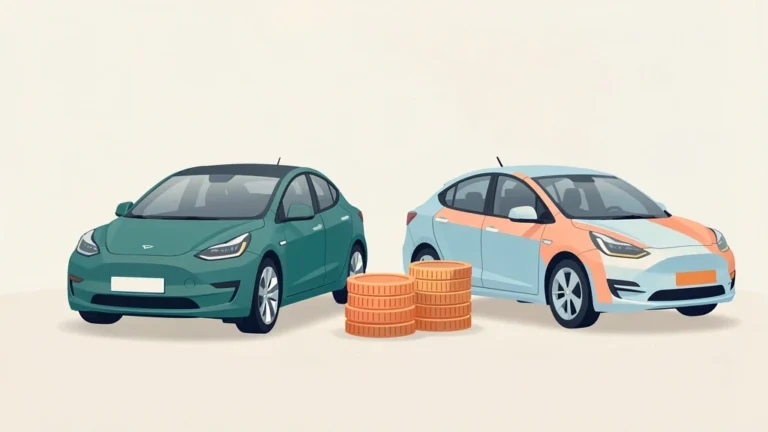
An electric car usually costs more to buy, so does it actually save money once you drive it? For day-to-day energy cost, the answer is often yes. At typical rates, a gas car runs near $0.117 per mile, while an EV runs close to $0.043 per mile. That gap adds up fast over a year. But the full picture includes maintenance and upfront price too, and your local gas and electricity rates can swing the result.
An EV is usually cheaper to run per mile. At $3.50 per gallon and 30 MPG, gas costs about $0.117 per mile. At $0.15 per kWh and 3.5 miles per kWh, an EV costs about $0.043 per mile. Over 12,000 miles that is roughly $1,400 for gas versus $516 for the EV. EVs cost more upfront but usually need less maintenance. Your own savings depend on local gas and electricity prices.
Gas Cost Per Mile
Running cost for a gas car starts with two numbers: the price per gallon and your miles per gallon (MPG). Divide the price by the MPG to get the cost of driving one mile.
The formula is simple:
Gas cost per mile = price per gallon / MPG
Say gas is $3.50 per gallon and your car gets 30 MPG. The math is 3.50 / 30 = $0.117 per mile. So every mile you drive burns about 12 cents of fuel.
Higher gas prices or lower MPG push that number up. A thirsty truck at 18 MPG and $4.00 gas costs 4.00 / 18 = $0.222 per mile, nearly double. A fuel-sipping hybrid at 45 MPG and the same $3.50 gas costs 3.50 / 45 = $0.078 per mile, which closes much of the gap with an EV.
Your real-world MPG also drifts with how and where you drive. City stop-and-go, cold weather, and a heavy load all lower it. If you want to measure your own MPG the right way, see our sibling guide on MPG explained.
Electric Cost Per Mile
An EV uses the same idea, but with electricity instead of gasoline. You need the price per kilowatt-hour (kWh) and how many miles the car travels per kWh.
The formula mirrors the gas one:
EV cost per mile = price per kWh / miles per kWh
Say home electricity is $0.15 per kWh and the EV gets 3.5 miles per kWh. The math is 0.15 / 3.5 = $0.043 per mile. That is about 4 cents a mile, roughly a third of the gas cost in our example.
Most EV efficiency is rated in a slightly different unit, but miles per kWh keeps the math easy to compare. Charging at home on an off-peak rate is usually the cheapest option. Fast charging on the road often costs more per kWh, which narrows the gap.
EV efficiency also shifts with conditions. Cold weather, high speeds, and heavy use of heat or air conditioning all lower miles per kWh. A car rated near 3.5 miles per kWh in mild weather may dip lower on a freezing highway, which raises its cost per mile for that trip.
Side-by-Side Comparison
Energy cost is only one piece. The table below lines up the running cost with maintenance and upfront price, using typical figures. Your real numbers will vary by vehicle and local prices.
| Cost Factor | Gas Car | Electric Car |
|---|---|---|
| Energy cost per mile | About $0.117 (at $3.50 per gallon, 30 MPG) | About $0.043 (at $0.15 per kWh, 3.5 miles per kWh) |
| Energy cost per 12,000 miles | About $1,400 | About $516 |
| Routine maintenance | Higher: oil changes, filters, more moving parts | Lower: no oil changes, fewer moving parts |
| Upfront price | Usually lower to buy | Usually higher to buy |
In this example, the EV saves about $884 a year in energy alone (1,400 – 516). That helps offset its higher sticker price over time, though how fast depends on how much you drive and what you pay for fuel and power.
Notice the running-cost row is where the biggest day-to-day difference shows up. Maintenance and upfront price shift the total, but energy is the cost you feel every week. That is why a small change in gas or electricity prices can matter so much over a year.
Beyond Fuel: Maintenance and Upfront Cost
Energy is the biggest day-to-day difference, but it is not the whole story. Two other costs matter a lot when you compare the total.
- Maintenance: EVs have fewer moving parts and no oil, spark plugs, or exhaust system. That usually means lower routine upkeep. Brakes can last longer too, since regenerative braking does some of the work.
- Upfront price: EVs often cost more to buy than a similar gas model. Tax credits or rebates, where available, can shrink that gap.
- Battery and tires: EV batteries are built to last many years, but replacement is costly if needed long term. Heavier EVs can wear tires a bit faster.
- Resale and insurance: Both vary by model and region, so check real quotes for the cars you are weighing.
Put simply, an EV tends to trade a higher purchase price for lower running and maintenance costs. Whether that pays off depends on how long you keep the car and how many miles you drive.
When Each One Wins
Neither choice wins for everyone. The cheapest option depends on your rates, your driving, and any incentives you qualify for.
An EV usually wins when you can charge at home on low-cost electricity and you drive a lot of miles. More miles means more fuel savings to offset the higher purchase price. Local rebates and cheap overnight power tip the scale further toward electric.
A gas car can win when electricity is expensive, you rely on pricey fast charging, or you drive very few miles. With low mileage, the fuel savings may never catch up to the higher upfront cost. A cheap used gas car can also beat a new EV on total cost.
The key lever is your local price of gas and electricity. Plug your own rates and mileage into the math before deciding, because the result can flip when prices change.
To run the numbers for a specific trip or a full year, use our Fuel Cost Calculator. For the complete trip-fuel formula, see the sibling guide on fuel cost for a road trip.
Want to compare your own car’s running cost in seconds? Enter your price, mileage, and efficiency in our Fuel Cost Calculator and see the cost per mile and per year for gas or electric at a glance.
Frequently Asked Questions About Electric vs Gas Running Cost
Is an Electric Car Really Cheaper to Run Than Gas?
In most cases, yes, at least for energy. At $3.50 per gallon and 30 MPG, gas costs about $0.117 per mile. A typical EV at $0.15 per kWh and 3.5 miles per kWh costs about $0.043 per mile. The EV is roughly a third of the gas cost here. Your result depends on local gas and electricity prices.
How Do I Calculate Cost Per Mile for Each One?
For gas, divide the price per gallon by your MPG. At $3.50 and 30 MPG, that is 3.50 / 30 = $0.117 per mile. For an EV, divide the price per kWh by miles per kWh. At $0.15 and 3.5 miles per kWh, that is 0.15 / 3.5 = $0.043 per mile. Same formula shape, different energy source.
How Much Can I Save Per Year With an EV?
In our example, over 12,000 miles gas costs about $1,400 and the EV about $516. That is roughly $884 saved in energy alone. More miles or higher gas prices increase the savings. Pricey fast charging or cheap gas reduces them. Use your own rates and mileage to get a realistic figure.
Does Fast Charging Change the Math?
Yes. Home charging on a low off-peak rate is usually the cheapest way to power an EV. Public fast charging often costs more per kWh, sometimes much more. If you rely heavily on fast charging, your EV cost per mile rises and the gap with gas narrows. Home charging keeps the savings largest.
Do EVs Cost Less to Maintain?
Usually, yes. EVs have no oil changes, spark plugs, or exhaust system, and fewer moving parts overall. Regenerative braking can also extend brake life. That tends to lower routine maintenance. Big-ticket items like battery replacement are rare but costly, so factor them into long-term ownership.
Does an EV’s Higher Purchase Price Cancel the Savings?
It can, depending on how long you keep the car and how much you drive. EVs usually cost more upfront but less to run and maintain. High annual mileage and low electricity rates help the savings catch up faster. Low mileage or a cheap used gas car can favor gasoline on total cost.
What Matters Most When Comparing Running Costs?
Your local price of gas and electricity matters most, followed by the car’s efficiency and how many miles you drive. A small change in gas price or kWh rate can flip the result. Run your own numbers before deciding, and compare the full picture of energy, maintenance, and upfront cost.
Sources
Authoritative Sources Used in This Article
This article is for general education only, not professional automotive advice. Fuel use, costs, and specs vary by vehicle, driving style, and local prices, so check your owner’s manual and current prices. Reviewed for accuracy by Prof. Dr. Khalil Mudassar, PhD. Last updated September 12, 2026.
Author

Shakeel Muzaffar is the Founder and Editor-in-Chief of MultiCalculators.com, bringing over 15 years of experience in digital publishing, product strategy, and online tool development. He leads the platform's editorial vision, ensuring every calculator meets strict standards for accuracy, usability, and real-world value. Shakeel personally oversees content quality, formula verification workflows, and the platform's commitment to publishing tools that are genuinely useful for students, professionals, and everyday users worldwide.