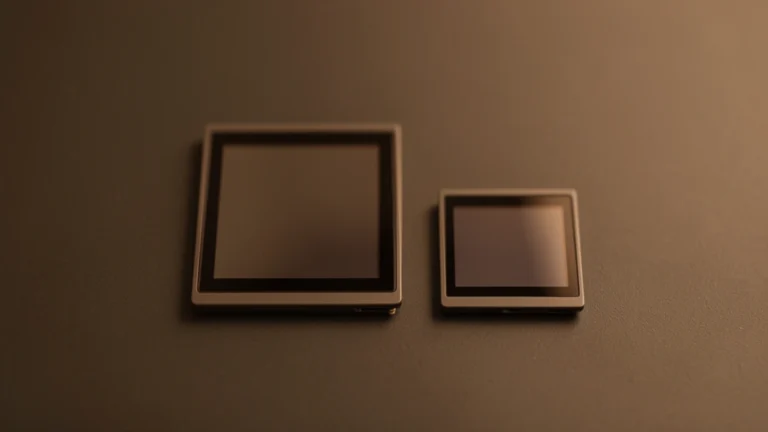
Why does a 50 mm lens look like a 75 mm lens on one camera but not on another? The lens is the same, but the sensor behind it is smaller. A typical APS-C sensor covers only about 43 percent of the area of a full frame sensor. That smaller window crops the picture, and the crop factor tells you by how much.
Crop factor is the full frame sensor diagonal, 43.3 mm, divided by your sensor’s diagonal. Multiply a focal length by it to find the full frame lens with the same view, so 50 mm on a 1.5x body frames like 75 mm. Multiply the f-number by it to compare depth of field and total light, but keep the real f-number for exposure.
What Is Crop Factor?
Crop factor is a number that compares your camera’s sensor to a full frame sensor. It equals the full frame diagonal divided by your sensor’s diagonal. A bigger number means a smaller sensor and a tighter view from any lens.
Full frame is the reference because it matches the classic 35 mm film frame of 36 by 24 mm. Its diagonal is 43.3 mm, so full frame has a crop factor of exactly 1. Every other format is measured against it.
Think of the lens as a projector that throws a round image onto the back of the camera. A full frame sensor catches a large rectangle of that image. A smaller sensor catches only the middle part, just like cropping a print with scissors.
The Crop Factor Formula
The core formula is short: crop factor equals 43.3 mm divided by the sensor diagonal. You find the diagonal with the Pythagorean theorem, using the sensor’s width and height. For an APS-C sensor of 23.6 by 15.6 mm, the diagonal is 28.3 mm.
Divide 43.3 by 28.3 and you get 1.53, which everyone rounds to 1.5. Two more formulas follow from that one number:
- Equivalent focal length = real focal length x crop factor.
- Equivalent aperture = real f-number x crop factor (for depth of field and total light only).
| Format | Size (mm) | Diagonal | Crop factor | 50 mm frames like |
|---|---|---|---|---|
| Full frame | 36 x 24 | 43.3 mm | 1.0 | 50 mm |
| APS-C | 23.6 x 15.6 | 28.3 mm | 1.5 | 75 mm |
| APS-C (smaller type) | 22.3 x 14.9 | 26.8 mm | 1.6 | 80 mm |
| Micro Four Thirds | 17.3 x 13 | 21.6 mm | 2.0 | 100 mm |
| 1 inch | 13.2 x 8.8 | 15.9 mm | 2.7 | 135 mm |
| 1/2.3 inch | 6.17 x 4.55 | 7.7 mm | 5.6 | 282 mm |
Notice that the table uses the diagonal, not the width. Sensors with different shapes, such as the squarer 4:3 Four Thirds format, still compare fairly this way.
A Worked Example on an APS-C Body
Say you mount a 50 mm f/1.8 lens on a 1.5x APS-C camera for a portrait. Check framing, background blur, and exposure.
Framing
Multiply 50 by 1.5 to get 75 mm. The shot frames like a 75 mm lens on full frame, a classic short portrait length. The horizontal angle of view shrinks from 39.6 degrees to 26.6 degrees.
Picture a wall 5 m away. Full frame with this lens covers a strip 3.6 m wide. The APS-C sensor covers only 2.36 m of that same wall. For angle math on any lens, the field of view calculator gives exact degrees.
Background Blur and Exposure
Multiply f/1.8 by 1.5 to get about f/2.7. At 2 m, this setup keeps about 11 cm in focus, the same as a 75 mm f/2.7 lens on full frame. Exposure does not change, so you still meter and shoot at f/1.8.
The Crop Factor Calculator gives the equivalent focal length, equivalent aperture, and sensor diagonal. It covers six sensor sizes, from full frame down to phone sensors.
Does a Smaller Sensor Change Aperture and Depth of Field?
The f-number stays the same for exposure. For the same framing, though, a smaller sensor gives more depth of field and less total light. The equivalent aperture captures both effects.
Exposure Stays the Same
An f-number describes light per unit of sensor area. So f/2.8 at 1/125 s and ISO 100 gives the same brightness on every sensor size. Your meter and shutter speeds work exactly as before.
Depth of Field Grows
Compare two cameras framing the same subject at 3 m, both at f/2.8. A 50 mm lens on APS-C keeps about 39 cm sharp. A 75 mm lens on full frame keeps only about 25 cm sharp.
Stop the full frame lens down to f/4.2, which is 2.8 times 1.5. Its zone grows to about 38 cm, a near match. Our guide to how depth of field works covers the near and far limits behind these numbers.
Total Light Drops
An APS-C sensor has about 43 percent of the area of full frame, so it collects about 1.2 stops less total light. Micro Four Thirds collects about 2 stops less. That is why small sensors show more noise at the same ISO setting.
Where Crop Factor Math Goes Wrong
Most errors come from applying the crop factor to the wrong thing. These five show up again and again in forums and camera reviews.
- Believing the lens changes. A 50 mm lens is 50 mm on every body. Its focal length comes from its glass, not the sensor, so only the framing changes.
- Changing the exposure setting. Do not set f/2.7 because the math says so. Keep f/1.8 for exposure and use f/2.7 only to compare blur.
- Mixing up 1.5 and 1.6. A 200 mm lens frames like 300 mm at 1.5x but 320 mm at 1.6x. Check your camera’s exact sensor size.
- Treating reach as free detail. A crop sensor does not magnify anything. Cropping a 24 MP full frame image to the APS-C area leaves about 10.2 MP. Read about what image resolution really measures to see why pixel count matters here.
- Applying it twice. Phone specs often list focal lengths as full frame equivalents already. Multiplying those again gives nonsense numbers.
A good habit is to write both numbers down: the real value for settings, and the equivalent value for comparing systems.
Which Sensor Size Fits the Way You Shoot?
Choose a larger sensor for low light and shallow focus, and a smaller one for reach and compact size. No format wins at everything, so match it to the subjects you shoot most.
Wildlife and sports shooters often like crop sensors. A 300 mm lens on Micro Four Thirds frames like 600 mm, in a far smaller and lighter package. Landscape shooters enjoy the extra depth of field that small sensors give at wide apertures.
Portrait and night shooters lean toward full frame. It gives thinner focus and about 1.2 stops more total light than APS-C. Wide-angle fans also benefit, since an 18 mm lens on APS-C frames only like 27 mm.
To convert any lens and f-number in seconds, run it through our crop factor and equivalent focal length tool before you buy.
Common Questions About Crop Factor
What Is the Crop Factor of APS-C?
Most APS-C sensors have a crop factor of 1.5, and some slightly smaller APS-C sensors use 1.6. A 50 mm lens frames like 75 mm at 1.5x and like 80 mm at 1.6x.
Does Crop Factor Affect Exposure?
No. An f-number measures light per unit of sensor area, so f/2.8 exposes the same on every sensor size. Use the real f-number for your settings and the equivalent f-number only to compare depth of field and total light.
Is a 50 mm Lens on APS-C the Same as a 75 mm Lens on Full Frame?
It matches the framing and the angle of view from the same spot. At the same f-number, though, the APS-C shot has more depth of field. It matches a 75 mm lens at about 1.5 times the f-number.
Does a Crop Sensor Give You More Zoom?
It gives a tighter view, not true magnification. The sensor records the center of the lens image, much like cropping a full frame photo. The gain comes from packing all your pixels into that smaller area.
Can You Use Full Frame Lenses on a Crop Sensor Camera?
Yes, when the lens mount matches. A full frame lens covers the smaller sensor with room to spare, and you get the cropped view. Lenses made for small sensors often darken the corners on full frame bodies.
What Is the Crop Factor of a Phone Camera?
A small 1/2.3 inch sensor has a crop factor of about 5.6, and phone sensors vary. That is why phone specs list equivalent focal lengths. A real 4.6 mm lens on that sensor frames like about 26 mm.
References
References Used in This Article
This article is general photography education. Depth of field figures use a 0.029 mm circle of confusion for full frame, scaled by the crop factor for smaller sensors. Reviewed for accuracy by Prof. Dr. Khalil Mudassar, PhD. Last updated September 27, 2026.
Author

Shakeel Muzaffar is the Founder and Editor-in-Chief of MultiCalculators.com, bringing over 15 years of experience in digital publishing, product strategy, and online tool development. He leads the platform's editorial vision, ensuring every calculator meets strict standards for accuracy, usability, and real-world value. Shakeel personally oversees content quality, formula verification workflows, and the platform's commitment to publishing tools that are genuinely useful for students, professionals, and everyday users worldwide.