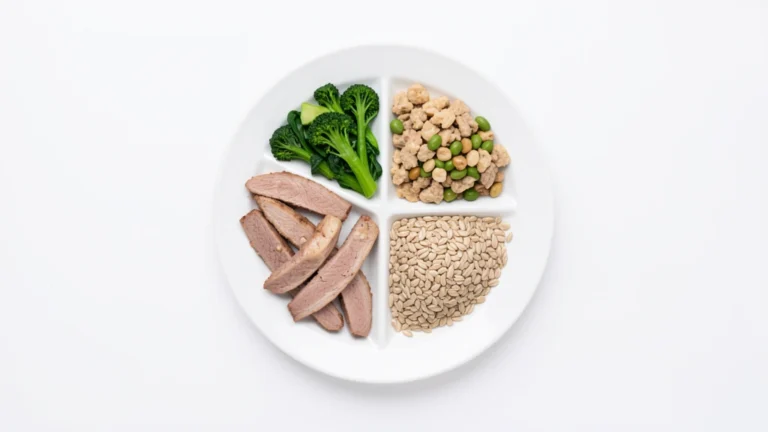
For weight loss, the total calorie deficit matters most, but a higher-protein split helps preserve muscle and control hunger. A common starting point is roughly 30 to 40 percent protein, 30 to 40 percent carbs, and 20 to 30 percent fat, adjusted to your preference. There is no single best ratio. Pick one you can stick to inside your calorie target.
- Losing weight comes down to an overall calorie deficit; the macro split shapes how that deficit feels and what you keep.
- A practical starting split is about 30 to 40 percent protein, 30 to 40 percent carbs, and 20 to 30 percent fat.
- More protein helps you hold on to muscle and stay fuller, which makes a deficit easier to maintain.
- Protein and carbs supply 4 calories per gram; fat supplies 9, so a small change in fat grams moves calories a lot.
- The best split is the one you can follow consistently, so adjust the ratio to your food preferences and routine.
Best Macros for Weight Loss
The short answer is that no macronutrient ratio melts fat on its own. Weight loss happens when you take in fewer calories than you burn over time, and any split can create that gap. What the split changes is how comfortable the deficit is to live with and how much of the weight you lose is fat rather than muscle. That is why a higher-protein pattern is usually the sensible default.
A reasonable starting point for many people is roughly 30 to 40 percent of calories from protein, 30 to 40 percent from carbohydrates, and 20 to 30 percent from fat. These are wide bands on purpose. Someone who loves bread and fruit can sit near the top of the carb range, while someone who prefers richer meals can lean toward more fat. Both can lose weight if the calorie total is the same. To find that total first, the Calorie Calculator estimates the daily calories you need before you split them into macros.
Think of it in two steps. Step one is the calorie ceiling, which decides whether you lose weight at all. Step two is the macro split, which decides how the deficit feels and how well you protect muscle along the way. Getting step one right is non-negotiable; step two is where personal preference has room to move.
What Macronutrients Actually Are
Macronutrients, or macros, are the three nutrients your body needs in large amounts and that carry calories: protein, carbohydrate, and fat. Every food is some combination of the three. Understanding what each one does makes it easier to see why the split matters less than the total but still helps.
Protein
Protein supplies 4 calories per gram and is the raw material your body uses to build and repair tissue, including muscle. MedlinePlus notes that proteins are part of every cell in the body and help build and repair it. During a calorie deficit, adequate protein is what helps signal your body to keep muscle while it draws on fat for energy, and it tends to be the most filling of the three macros.
Carbohydrates
Carbohydrates also supply 4 calories per gram and are the body’s main everyday fuel source. MedlinePlus describes carbohydrates as one of the main types of nutrients and the most important source of energy for the body. Cutting carbs is not required for weight loss, but because carb-rich foods are common and easy to overeat, many people find that moderating them helps them stay inside their calorie target.
Fat
Fat is the most calorie-dense macro at 9 calories per gram, more than twice protein or carbohydrate. MedlinePlus explains that some dietary fat is needed to give the body energy and support cell function, while the type of fat matters for heart health. Because fat is so dense, small changes in fat grams move your calorie total quickly, which is worth keeping in mind when you set your split.
Why the Calorie Deficit Comes First
It is tempting to obsess over percentages, but the arithmetic is clear: if you eat more calories than you burn, no macro ratio will produce fat loss, and if you eat fewer, most reasonable ratios will. This is why the deficit leads and the split follows. A modest, steady deficit is generally easier to sustain than an aggressive one, and it gives protein a better chance to protect your muscle.
Once you know your calorie target, the split simply divides that number into grams. Because protein and carbs are 4 calories per gram and fat is 9, you can translate any percentage into grams with basic multiplication and division. If you would rather not do the math by hand, the Macronutrient Calculator turns a calorie target and a chosen ratio into gram goals for each macro. For a deeper look at how the deficit itself works, our sibling guide explains what a calorie deficit is and how to size one sensibly.
A Sample Macro Split at 1,800 Calories
To make the split concrete, here is one example built around a sample target of 1,800 calories per day. This is an illustration, not a recommendation for any specific person, since the right calorie level depends on your body, activity, and goals. The example uses a 35 percent protein, 35 percent carbohydrate, and 30 percent fat split, which sits comfortably inside the ranges above.
| Macro | Percent of Calories | Calories | Grams per Day |
|---|---|---|---|
| Protein | 35 percent | 630 | 158 |
| Carbohydrate | 35 percent | 630 | 158 |
| Fat | 30 percent | 540 | 60 |
| Total | 100 percent | 1,800 | – |
To get the grams, take each macro’s calories and divide by its calories per gram. Protein is 630 divided by 4, which rounds to 158 grams. Carbohydrate is the same, 630 divided by 4, or 158 grams. Fat is 540 divided by 9, which is 60 grams. Notice how fat lands at far fewer grams than the other two for a similar share of calories, purely because it is more than twice as dense. The pie below shows how this sample split divides the day’s calories.
How to Adjust the Split to Fit You
The sample above is a starting point, not a target you must copy. The best split for you is the one you can repeat day after day without feeling deprived. Some people do well with more carbs to fuel training and busy days; others feel steadier with more fat and fewer carbs. Both can work as long as the calorie total holds and protein stays high enough to protect muscle.
A useful habit is to set protein first, then divide the remaining calories between carbs and fat according to what you enjoy. Protein is the macro most worth defending during a deficit, so many people anchor it and let the other two flex. The chart below shows the gram totals from the 1,800 calorie example, which highlights how few grams of fat it takes to reach 30 percent of calories.
Why a Higher-Protein Split Helps
If the calorie total decides whether you lose weight, protein has a strong influence on the quality of that loss. When you are in a deficit, your body can draw on both fat and muscle for energy. Eating enough protein, along with some resistance activity, tilts that balance toward keeping muscle, which matters for strength, day-to-day function, and how you look at the end of a diet.
Protein also tends to be the most satisfying macro per calorie. A meal built around a protein source often keeps hunger down longer than one that is mostly carbs or fat, which makes sticking to your calorie target easier. That is the practical reason higher-protein splits are so popular for weight loss: they help with the two hardest parts, holding on to muscle and managing appetite. The same logic applies when the goal is gaining rather than losing, which our companion article on the best macros for building muscle covers in detail.
Putting It Together
To set your own macros, work in order. Estimate your daily calories and choose a modest deficit. Pick a protein share toward the higher end of the range so you protect muscle and stay full. Then divide the rest between carbs and fat in whatever mix you find easiest to keep up. Track loosely for a couple of weeks, watch how your energy and hunger respond, and adjust the carb and fat balance while keeping protein and the calorie total steady.
The point is not to find a magic ratio. It is to build a plan you can actually follow, because consistency over weeks is what produces results, not perfection at any single meal.
FAQs About Weight-Loss Macros
What Are the Best Macros for Weight Loss?
There is no single best ratio. A practical starting split is roughly 30 to 40 percent protein, 30 to 40 percent carbs, and 20 to 30 percent fat, all inside a calorie deficit. The best split is one you can follow consistently.
Do Macros Matter More Than Calories for Losing Weight?
No. The total calorie deficit is what drives weight loss. Macros shape how the deficit feels and how much muscle you keep, but they do not override the calorie total.
How Much Protein Should I Eat to Lose Weight?
Many people aim toward the higher end of the range because protein helps preserve muscle and control hunger during a deficit. Your ideal amount depends on your body and activity, so a healthcare provider or dietitian can help you set it.
Do I Need to Cut Carbs to Lose Weight?
No. Carbs are not required to be low for weight loss. Some people find moderating carbs helps them stay within their calorie target, but you can lose weight with higher-carb or lower-carb splits if calories are controlled.
How Do I Calculate Macros From My Calorie Target?
Multiply your calorie target by each macro percentage, then divide by its calories per gram: 4 for protein, 4 for carbs, and 9 for fat. A macronutrient calculator can do this for you automatically.
Why Is Fat So Few Grams in a Split?
Fat has 9 calories per gram, more than twice protein or carbs at 4 each. So the same share of calories from fat works out to far fewer grams, which is why small fat changes move your calorie total quickly.
Is There One Perfect Macro Ratio for Everyone?
No. Food preferences, routine, and how your body responds all differ, so the ideal split varies from person to person. Pick a ratio you can maintain, and adjust it over time based on your results and how you feel.
Sources
Authoritative Sources Used in This Article
- MedlinePlus (NIH), Carbohydrates: medlineplus.gov
- MedlinePlus (NIH), Dietary Fats: medlineplus.gov
- MedlinePlus (NIH), Protein in Diet: medlineplus.gov
Educational note: This article is general information for education only and is not medical, nutritional, or health advice. It is not a substitute for professional care, and it is not intended to diagnose, treat, or guide any individual diet plan. Nutrition needs vary widely from person to person, and calorie and macro targets should account for your health, medications, and goals. Before starting a weight-loss plan or changing how you eat, talk to a healthcare provider or a registered dietitian, especially if you have a medical condition or a history of disordered eating. Reviewed for general accuracy by Dr. Abdullah Khalil, MBBS, as part of our editorial review process. Content last reviewed September 10, 2026.
Author

Shakeel Muzaffar is the Founder and Editor-in-Chief of MultiCalculators.com, bringing over 15 years of experience in digital publishing, product strategy, and online tool development. He leads the platform's editorial vision, ensuring every calculator meets strict standards for accuracy, usability, and real-world value. Shakeel personally oversees content quality, formula verification workflows, and the platform's commitment to publishing tools that are genuinely useful for students, professionals, and everyday users worldwide.