Dough hydration is the weight of water divided by the weight of flour, as a baker percentage. With 500 g flour and 350 g water that is 70 percent. This calculator also folds your starter into the totals, so you see the true hydration of the whole dough, plus the salt percentage.
Calculations run in your browser. Inputs are not sent to our servers; anything you Save stays in this browser only.
Saved results (0)
How to Use the Sourdough Hydration Calculator
- Enter the flour you add to the dough, not counting the starter.
- Enter the water you add to the dough, again not counting the starter.
- Add your starter weight and its hydration; a 1:1 starter is 100 percent.
- Add salt if you want the salt percentage, then read your true dough hydration.
| Result | What it means |
|---|---|
| Dough hydration | Total water divided by total flour, as a baker percentage. |
| Total flour | Flour in the dough plus the flour hidden in your starter. |
| Total water | Water in the dough plus the water in your starter. |
| Total dough weight | The combined weight of flour, water, starter and salt. |
What Is Dough Hydration?
Dough hydration is the amount of water in a dough compared with the amount of flour, written as a percentage. It uses baker percentages, where flour is always 100 percent and every other ingredient is measured against it. A dough at 70 percent hydration has 70 grams of water for every 100 grams of flour.
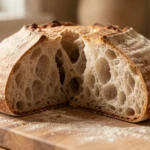
Hydration is the single biggest lever on how a sourdough behaves and bakes. It shapes how sticky the dough feels, how open the crumb becomes, and how crisp the crust turns out, which is why bakers track it so closely.
How Does the Hydration Calculation Work?
hydration % = total water / total flour x 100- Split your starter into its flour and water using its hydration.
- Add that flour and water to the flour and water in the dough for the totals.
- Divide total water by total flour and multiply by 100.
- For salt percentage, divide salt by total flour and multiply by 100.
Counting the starter matters: a 100 gram starter at 100 percent hydration hides 50 grams of flour and 50 grams of water, which shifts your real hydration noticeably.
Sourdough Hydration Example
You mix 500 grams of flour with 350 grams of water, then add 100 grams of a 100 percent starter. The starter brings 50 grams of flour and 50 grams of water, so total flour is 550 grams and total water is 400 grams. Hydration is 400 divided by 550, which is about 73 percent, a touch higher than the 70 percent you might assume from the dough water alone.
What Affects Your Hydration
Flour Type
Wholemeal and rye soak up far more water than white bread flour, so the same hydration feels drier with wholegrains and wetter with refined flour.
Your Starter
A wetter or larger starter adds more water to the total, nudging your real hydration up even if the dough water stays the same.
Ambient Conditions
Humidity and flour freshness change how much water the dough seems to want on any given day.
Handling Skill
Higher hydration gives a more open crumb but is stickier to shape, so bakers raise it gradually as their technique improves.
Hydration Levels Compared
Different breads sit at different hydration ranges.
| Hydration | Style | Feel |
|---|---|---|
| 60 to 65% | Stiff doughs, bagels, sandwich loaves | Firm, easy to shape |
| 65 to 75% | Everyday sourdough boules and batards | Supple, forgiving |
| 75 to 85% | Open-crumb artisan loaves | Slack and sticky |
| 85% and above | Ciabatta and focaccia | Very wet, poured not shaped |
Beginners are usually happiest around 65 to 70 percent, where the dough holds its shape while still baking into a light loaf.
When to Use a Hydration Calculator
Scaling a Recipe
Keep the same hydration when you change batch size, so the loaf behaves the way you expect.
Adjusting a Formula
Dial hydration up or down deliberately to chase a more open or a tighter crumb.
Troubleshooting a Bake
If a dough was too slack or too dry, check its real hydration, starter included, to see what to change next time.
Common Sourdough Mistakes
1. Ignoring the Starter
Leaving the starter out of the totals understates your true hydration, often by several percent.
2. Measuring by Volume
Cups are unreliable for flour; weigh everything in grams for hydration to mean anything.
3. Chasing High Hydration Too Soon
Very wet doughs need practice; jumping to 85 percent before you can handle 70 leads to flat, spread-out loaves.
4. Forgetting Flour Absorbs Differently
Switching to wholemeal without adding water leaves the dough drier than the number suggests.
Accuracy and Limitations
The calculator applies baker percentages exactly, so the hydration and totals are precise for the weights you enter. It describes the recipe, not how the dough will feel on the day.
What it calculates accurately
- True hydration including the starter
- Total flour and water weights
- Salt as a percentage of flour
What it does not do
- Account for how much water your flour absorbs
- Adjust for humidity or temperature
- Predict rise, timing or oven spring
How We Calculate the Result
Frequently Asked Questions
How do you calculate sourdough hydration?
Divide the total water by the total flour and multiply by 100. Include the flour and water inside your starter, not just the water you add to the dough.
What is a good hydration for beginners?
Around 65 to 70 percent. The dough holds its shape and is easy to handle while still baking into a light, open loaf.
Does the starter count toward hydration?
Yes. A 100 gram starter at 100 percent hydration adds 50 grams of flour and 50 grams of water, which changes your true hydration.
What is baker percentage?
A way of writing a recipe where flour is 100 percent and every other ingredient is measured against the flour weight, making recipes easy to scale.
Why is my dough so sticky?
High hydration, above about 75 percent, makes dough slack and sticky. Lower the water or build your handling technique with stretch and folds.
How much salt should sourdough have?
Most recipes use about 2 percent salt as a share of the total flour, which is 10 grams for every 500 grams of flour.
Does flour type change hydration?
Yes. Wholemeal and rye absorb more water than white flour, so the same hydration percentage feels drier with wholegrain flours.
How do I keep hydration when scaling up?
Multiply every ingredient by the same factor. Baker percentages stay constant, so the hydration and feel of the dough do not change.
Is my data saved?
No. The calculator runs entirely in your browser and nothing you enter is stored or sent anywhere.
Sources
- Sourdough bread (Wikipedia).
- Baker percentage explained (Wikipedia).
- Bread and dough basics (Wikipedia).
Related Calculators
Baking a loaf?
Explore all hobby calculatorsFor home baking and educational use. Real dough behaviour depends on flour, temperature and humidity; use the hydration figure as a guide and adjust to feel. Spotted an error? Let us know.
Author

Shakeel Muzaffar is the Founder and Editor-in-Chief of MultiCalculators.com, bringing over 15 years of experience in digital publishing, product strategy, and online tool development. He leads the platform's editorial vision, ensuring every calculator meets strict standards for accuracy, usability, and real-world value. Shakeel personally oversees content quality, formula verification workflows, and the platform's commitment to publishing tools that are genuinely useful for students, professionals, and everyday users worldwide.