Guessing how much fluid to drink during a long run or a hot practice leaves too much to chance. A personal sweat-rate test replaces that guess with a real number built from your own body and your own workout. The whole test takes one training session, a scale, and a bit of simple arithmetic, and it turns fuzzy hydration advice into a figure you can actually plan around.
Calculate sweat rate by weighing yourself right before exercise, tracking exactly how much fluid you drink during the session, weighing yourself again right after (toweling off first), then applying this formula: sweat rate per hour equals (pre-exercise weight minus post-exercise weight, converted to fluid ounces or liters) plus fluid consumed during exercise, divided by exercise duration in hours. A 150.0 lb athlete who finishes at 148.5 lb after drinking 12 fl oz during a 1-hour session lost 24 fl oz of body weight (1.5 lb x 16 fl oz/lb) plus the 12 fl oz consumed, for a sweat rate of 36 fl oz per hour. No dedicated sweat-rate calculator exists on this site yet, so the Water Intake Calculator gives a solid daily baseline fluid estimate that you can then adjust upward once you know your own sweat rate.
What Is Sweat Rate and Why Does It Matter?
Sweat rate is the volume of fluid your body loses through sweat during a set period of exercise, usually expressed in fluid ounces or liters per hour. It combines two things: the water your body sheds through your skin, and how quickly that loss adds up once you factor in intensity, heat, and how hard your body works to cool itself.
Sweat rate matters because it turns hydration from a guess into a plan. Generic advice like “drink plenty of water” ignores the fact that two athletes doing the identical workout can lose wildly different amounts of fluid. One runner might lose 16 fl oz an hour while a training partner running beside them loses 40 fl oz in the same hour, purely from differences in body size, fitness, heat acclimation, and genetics.
Knowing your own number lets you build a fluid-replacement plan tailored to your body instead of copying a number pulled from a magazine article about a different athlete entirely. Coaches, athletic trainers, and sports dietitians commonly use this exact weigh-in method with athletes preparing for long training blocks or hot-weather competition.
What Do You Need Before You Start the Test?
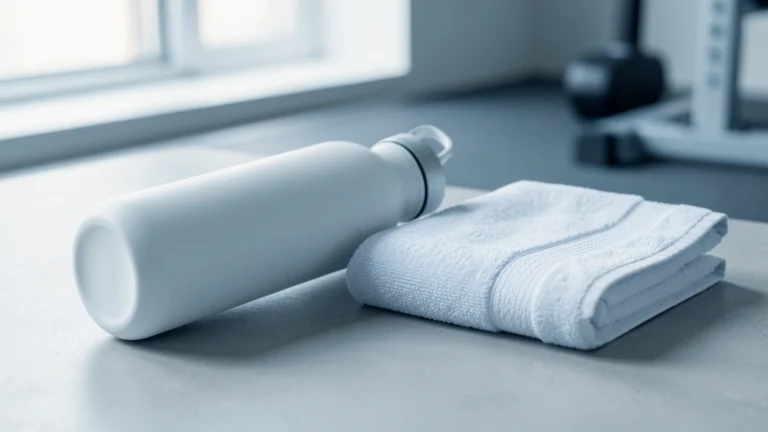
You need four things: a reliable scale, a way to track exercise time precisely, a measured fluid source, and a towel. A digital bathroom scale accurate to a tenth of a pound or a tenth of a kilogram works well for this purpose, since small errors in body weight translate directly into errors in your final sweat-rate number.
Pick a workout that represents your normal training conditions rather than an unusually easy or unusually brutal session. A moderate-to-hard effort lasting 45 to 90 minutes in weather similar to what you actually train in gives a more useful number than a short, easy jog on a mild day.
Measure your fluid source ahead of time. A water bottle with printed volume markings, or a bottle you have pre-measured yourself with a measuring cup, removes guesswork from the “fluid consumed” part of the formula. Estimating how much you drank after the fact introduces error that compounds through the whole calculation.
What Are the Five Steps to Calculate Your Sweat Rate?
The five steps are: weigh in dry, exercise for a tracked duration, drink a measured amount of fluid, weigh out after toweling off, then run the numbers through the formula. Each step feeds directly into the next, so skipping or rushing any one of them throws off the final result.
Step 1: Weigh Yourself Before Exercise
Strip down to minimal, dry clothing or go nude and step on the scale immediately before your workout starts. Empty your bladder first, since urine weight has nothing to do with sweat loss and only adds noise to the measurement. Record this number precisely, down to the nearest tenth of a pound or tenth of a kilogram.
Step 2: Exercise for a Known, Tracked Duration
Start a stopwatch or use a running watch the moment you begin exercising, and stop it the moment you finish. Precision matters more than most athletes expect, because a 58-minute session mistaken for a full 60 minutes shifts your final per-hour number noticeably once you divide by time.
Step 3: Track Exactly How Much Fluid You Drink
Sip only from your pre-measured bottle during the session and note the total volume consumed by the time you finish. This number gets added back into the formula, since fluid you drank replaced some of the sweat you lost and would otherwise make your sweat loss look smaller than it really is.
Step 4: Weigh Yourself Again Immediately After
Towel off sweat thoroughly before stepping back on the scale, and remove any wet clothing first. Wet clothes and lingering sweat on your skin both add phantom weight that has nothing to do with actual fluid loss from your body, so drying off matters as much as the pre-exercise weigh-in did.
Step 5: Apply the Sweat Rate Formula
Plug your three numbers into this formula: sweat rate per hour equals pre-exercise weight minus post-exercise weight (converted to fluid volume), plus fluid consumed during exercise, all divided by exercise duration in hours. Keep your units consistent throughout: 1 lb of body weight lost equals about 16 fl oz of fluid, and 1 kg of body weight lost equals about 1 liter of fluid, since a liter of sweat weighs close to a kilogram.
What Does a Full Worked Example Look Like?
A complete numeric example shows exactly how the arithmetic works from start to finish. These figures are illustrative, since real sweat rates vary widely between individuals, heat conditions, and exercise intensity, but the method applies the same way to any athlete’s real numbers.
An athlete steps on the scale before a workout and weighs 150.0 lb, wearing only dry shorts and a light shirt. They run for exactly 60 minutes at a steady pace on a warm afternoon, drinking 12 fl oz of water from a pre-measured bottle during the run. Toweling off sweat and removing the damp shirt, they step back on the scale immediately after finishing and weigh 148.5 lb.
Body weight lost during the run equals 150.0 lb minus 148.5 lb, which is 1.5 lb. Converting that to fluid volume: 1.5 lb x 16 fl oz per lb equals 24 fl oz. Adding back the 12 fl oz consumed during the run gives a total fluid loss of 24 fl oz plus 12 fl oz, which equals 36 fl oz. Dividing by the 1-hour duration produces a final sweat rate of 36 fl oz per hour.
That 36 fl oz per hour figure represents roughly 1.06 liters per hour, useful for athletes who prefer metric units or train with a metric water bottle. The same math works entirely in metric from the start: a 68.0 kg athlete who finishes at 67.3 kg after drinking 350 mL lost 0.7 kg (about 0.7 L) plus 0.35 L consumed, for a sweat rate of 1.05 L per hour over a 1-hour session.
| Measurement | Value | Running total |
|---|---|---|
| Pre-exercise weight | 150.0 lb | — |
| Post-exercise weight (dry) | 148.5 lb | Weight lost: 1.5 lb |
| Weight lost converted to fluid | 1.5 lb x 16 fl oz/lb | 24 fl oz |
| Fluid consumed during exercise | 12 fl oz | 24 + 12 = 36 fl oz |
| Exercise duration | 1.0 hour | 36 fl oz / 1.0 hr |
| Sweat rate | 36 fl oz per hour (about 1.06 L/hr) | |
Run the same formula after a 90-minute session and the math shifts only in the final division step. Losing 2.2 lb and drinking 20 fl oz over 90 minutes gives (2.2 x 16) + 20 = 35.2 + 20 = 55.2 fl oz, divided by 1.5 hours, for a sweat rate of 36.8 fl oz per hour, close to the 1-hour result because the underlying sweat rate stayed fairly steady across the longer session.
How Do You Use Your Sweat Rate to Guide Fluid Intake?
Use your sweat rate as a target for how much fluid to drink per hour during similar future workouts, adjusted for comfort and gut tolerance. A 36 fl oz per hour sweat rate does not mean forcing down 36 fl oz every single hour, since most athletes cannot fully replace fluid losses during exercise without stomach discomfort, and replacing 60 to 80 percent of losses during the session itself, with the rest made up afterward, works well for most people.
No dedicated sweat-rate calculator exists on this site, and this how-to guide plus the formula above serves that role directly. The Water Intake Calculator still earns a place in your routine, since it provides a baseline daily fluid estimate built from body weight and activity level. Run your own sweat-rate test, then adjust that daily baseline upward on training days using the extra fluid your specific workout demands.
Heat, humidity, altitude, and exercise intensity all push sweat rate higher than a baseline estimate alone would suggest, which is exactly why the personal test matters more for serious training blocks than a generic daily number. Athletes preparing for a hot-weather race or a heavy summer training camp benefit the most from running this test under conditions that match race day or peak training days.
Want a starting point for daily fluid needs before you run your own sweat-rate test? Check the Water Intake Calculator for a baseline estimate, then use the formula above to adjust it for your training days.
Why Does Sweat Rate Vary So Much Between Athletes?
Sweat rate varies because body size, fitness level, heat acclimation, genetics, and exercise intensity all influence how much fluid a person’s body sheds to stay cool. A larger athlete generally produces more total sweat than a smaller athlete doing the identical workout, simply because a bigger body generates more heat that needs shedding.
Fitness level plays a real role too. Well-trained, heat-acclimated athletes often develop a more efficient cooling system and can sweat earlier and more heavily at a given effort level than an untrained person, a trait that actually improves cooling efficiency rather than signaling a problem.
Two athletes running the exact same pace on the exact same course can post sweat rates that differ by a factor of two or more. That range is precisely why a personal test beats a generic number pulled from an average, and why retesting periodically as fitness and conditions change keeps your fluid plan accurate. For guidance on replacing electrolytes lost through sweat, see Electrolytes and Hydration for Athletes.
What Mistakes Most Often Skew a Sweat Rate Measurement?
The most common mistake is weighing in with wet clothing or lingering sweat still on the skin, which adds phantom weight that makes sweat loss look smaller than it actually was. Toweling off thoroughly and removing damp clothing before the second weigh-in fixes this error directly.
Skipping a bathroom trip before the pre-exercise weigh-in ranks as another frequent problem. A full bladder adds weight that has nothing to do with sweat, and that extra weight disappears by the end of the session regardless of how much fluid was actually lost through skin.
Rounding exercise duration loosely, forgetting to measure fluid intake precisely, and testing under conditions far from your normal training environment all introduce smaller errors that add up. Testing on an unusually cool, low-intensity day and then applying that sweat rate to a hot race produces a fluid plan that falls well short of actual needs.
Athletes managing any medical condition that affects fluid balance, kidney function, or electrolyte regulation should consult a healthcare provider or sports medicine professional before using a personal sweat-rate target to guide fluid intake during exercise. For broader warning signs to watch for during exercise, see Signs of Dehydration and How to Prevent It.
FAQs About Calculating Sweat Rate for Athletes
Is Sweat Rate the Same for Everyone Doing the Same Workout?
No. Sweat rate varies a great deal from person to person, even during the identical workout. Body size, fitness level, heat acclimation, and genetics all change how much fluid an individual loses, so two athletes on the same run can post very different numbers.
How Do I Convert Between Pounds, Kilograms, Ounces, and Liters?
Use these two conversions: 1 lb of body weight lost equals about 16 fl oz of fluid, and 1 kg of body weight lost equals about 1 liter of fluid. Pick one unit system, either lb and fl oz or kg and liters, and stick with it through the entire calculation to avoid mixing errors.
Does Hot or Humid Weather Change My Sweat Rate?
Yes, significantly. Heat and humidity both push sweat rate higher, since the body works harder to cool itself in those conditions. Testing your sweat rate on a day and in a setting similar to your hardest training or competition conditions gives the most useful number for planning fluid intake.
How Often Should I Recheck My Sweat Rate?
Recheck your sweat rate every few months, and again whenever fitness level, training intensity, or typical weather conditions change noticeably. A sweat rate measured during mild spring training may run well below the number you would post once summer heat arrives.
Does Wearing Heavy or Wet Clothing Throw Off the Measurement?
Yes. Weighing in with wet clothing, a soaked shirt, or heavy gear still on adds weight that has nothing to do with actual sweat loss and skews the result. Weigh in nude or in minimal dry clothing before exercise, and towel off completely before the post-exercise weigh-in.
How Much Should I Actually Drink During Exercise Based on My Sweat Rate?
Aim to replace roughly 60 to 80 percent of your measured sweat rate during exercise itself, adjusted for personal gut tolerance. A 36 fl oz per hour sweat rate translates to a practical target of about 22 to 29 fl oz per hour during the session, with the rest replaced afterward.
Can You Walk Through a Realistic Sweat Rate Calculation?
An athlete weighing 150.0 lb before a 1-hour run finishes at 148.5 lb after drinking 12 fl oz. Weight lost is 1.5 lb, equal to 24 fl oz. Adding the 12 fl oz consumed gives 36 fl oz total, divided by 1 hour, for a sweat rate of 36 fl oz per hour.
Sources
Reference Sources Used in This Article
This article is for general fitness education only, not personal medical advice. Sweat rates vary widely by individual, heat, and intensity, so treat any figure here as illustrative. Athletes with a medical condition affecting fluid balance should consult a healthcare provider or sports medicine professional before adjusting fluid intake. Reviewed for accuracy by Dr. Abdullah Khalil, MBBS. Last updated September 18, 2026.
Author

Shakeel Muzaffar is the Founder and Editor-in-Chief of MultiCalculators.com, bringing over 15 years of experience in digital publishing, product strategy, and online tool development. He leads the platform's editorial vision, ensuring every calculator meets strict standards for accuracy, usability, and real-world value. Shakeel personally oversees content quality, formula verification workflows, and the platform's commitment to publishing tools that are genuinely useful for students, professionals, and everyday users worldwide.