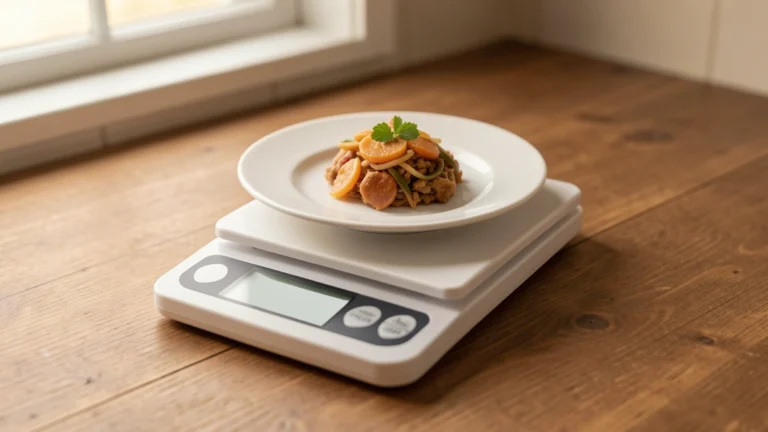
Most people know their rough daily protein goal, but splitting it across meals feels confusing. The good news is the math is simple once you have your daily number. You take your daily protein target, then divide it across the meals you actually eat, adjusting a little for your schedule and workouts.
Start with your total daily protein target, since that is the number everything else is built from. A widely cited general approach is spreading protein fairly evenly across three to five meals a day, though this is one reasonable pattern among several, not a single fixed rule. Factors like workout timing and your daily schedule can shift how you split it. A simple example: a 140 gram daily target split across four meals lands near 35 grams per meal. Use a kitchen scale and a short list of protein-dense staple foods to hit your numbers consistently. This is general education, not personalized medical or nutrition advice.
Start With Your Daily Protein Target
Before you can split protein across meals, you need a starting number for the whole day. Trying to plan individual meals without a daily target is like packing for a trip without knowing how many days you will be gone.
Your daily protein target depends on your body weight, activity level, and general goals, such as building muscle, staying active, or simply eating a balanced diet. These factors vary a lot from person to person, so a single number rarely fits everyone. That is why estimating your own figure first makes the rest of this process far easier.
The Protein Intake Calculator is built for exactly this step. It takes your basic details and gives you an estimated daily protein target in grams, which becomes the number you divide across your meals. Think of it as the foundation the rest of your day is built on top of.
Once you have that daily figure in hand, the rest of this guide walks through general, widely cited ways to break it into workable meal-sized portions.
A General Approach to Spacing Protein Across Meals
A commonly cited general approach is spreading your daily protein fairly evenly across three to five meals. This is one reasonable pattern among several that people use, not a single correct rule everyone must follow.
The idea behind spacing protein out is fairly intuitive. Your body can only make use of so much protein at any one sitting for tasks like muscle repair, so eating it all in one giant meal is generally considered less useful than spreading it through the day. Smaller, steadier amounts across multiple meals is a pattern many nutrition-minded people find easier to sustain.
In practice, this often means aiming for a broadly similar amount of protein at breakfast, lunch, dinner, and any snacks, rather than loading almost all of it into dinner. It does not need to be perfectly even down to the gram. Being roughly close across your meals each day is generally considered good enough for most people’s general goals.
Some people prefer three larger meals with no snacks, while others prefer four or five smaller meals spread through the day. Both patterns can work for spacing out protein, as long as the total for the day lands near your target. The right number of meals is mostly about what fits your schedule, appetite, and lifestyle.
Factors That Might Change How You Split It
Even numbers is just a starting framework, and a few general factors commonly cause people to shift protein toward certain meals. None of these are strict rules, just widely cited patterns worth knowing.
Workout timing is one factor people often consider. Some people like having a meal with a solid protein portion in the hours around a training session, whether before or after. This is a general preference many active people follow, not a requirement for everyone.
Your daily schedule is another factor. If breakfast is always rushed, it may naturally carry less protein than a relaxed dinner where you have more time to cook. That is a normal, practical reason to shift portions around, not a mistake.
Appetite patterns matter too. Some people feel hungrier earlier in the day and prefer a bigger protein portion at breakfast, while others barely eat until midday. Building your split around how you actually feel tends to be more sustainable than forcing an artificial pattern that fights your natural hunger.
Finally, how many meals you eat in total changes the math. Someone eating three meals a day will naturally have larger per-meal amounts than someone spreading the same daily total across five smaller meals and snacks.
A Simple Example With Made-Up Numbers
Here is one illustrative example using made-up numbers, just to show how the math works. This is not a personal recommendation, only an example of the process.
Imagine someone has a daily protein target of 140 grams, an estimate they got from a calculator like the one linked above. They plan to eat four meals a day: breakfast, lunch, dinner, and one snack.
Dividing 140 grams evenly across four meals works out to 35 grams per meal. That is the simplest possible split, and it gives a clear per-meal target to aim for.
In practice, this person might round slightly and aim for something like 30 grams at breakfast, 35 grams at lunch, 40 grams at dinner, and 35 grams for the snack, since dinner is when they have the most time to cook. The daily total still lands close to 140 grams, even though the meals are not perfectly identical.
The table below shows this same example laid out meal by meal, so you can see how an even split compares with a slightly adjusted one.
| Meal | Even Split | Adjusted Example |
|---|---|---|
| Breakfast | 35 g | 30 g |
| Lunch | 35 g | 35 g |
| Dinner | 35 g | 40 g |
| Snack | 35 g | 35 g |
| Daily total | 140 g | 140 g |
Notice both columns add up to the same daily total. The even split is easier to remember, while the adjusted example fits a real schedule a little more naturally. Either approach is a reasonable way to work toward the same daily number.
Practical Tips for Hitting Your Per-Meal Target
Turning a per-meal number into a real habit is easier with a few practical tools. None of these require special equipment or a complicated system.
A kitchen scale is one of the simplest upgrades. Weighing a portion of chicken, fish, tofu, or yogurt takes a few seconds and removes the guesswork of eyeballing amounts. Over time, you learn what your usual portions look like without needing the scale every single time.
Keeping a short list of protein-dense staple foods also helps a lot. Having five or six go-to options, like eggs, chicken breast, Greek yogurt, cottage cheese, tofu, or a protein powder, makes it much easier to hit a per-meal number without overthinking every meal from scratch.
Reading nutrition labels or using a simple food-tracking app for a week or two can help you learn roughly how much protein is in your usual meals. Once you know that, you often do not need to track every day going forward.
If your meals fall short some days, a protein-rich snack can help close the gap. Options like a yogurt cup, a handful of edamame, or a small portion of cottage cheese are easy ways to add protein without a full extra meal.
Finally, remember that hitting your daily total matters more than nailing each individual meal exactly. If one meal runs a bit low, a later meal or snack can usually make up the difference.
Not sure where to start? Get your personalized daily protein estimate first with our Protein Intake Calculator, then use the general approach above to divide that number across your meals.
Putting It All Together
Calculating your protein per meal really comes down to two steps. First, estimate your daily protein target using your body weight, activity level, and general goals. Second, divide that number across the meals you actually eat, adjusting slightly for your schedule and preferences.
There is no single perfect formula for how to split it, and that is fine. A roughly even split across three to five meals is a sensible general starting point that fits most schedules. From there, small adjustments around workouts, appetite, and daily routine can make the plan easier to stick with long term.
If you are also planning full meals around broader macro targets, not just protein, our guide on how to meal prep for your macros walks through a general weekly approach. And if your daily calorie or protein needs are shifting because you are focused on cutting or bulking, our explainer on cutting vs bulking covers how those phases generally affect your targets.
As always, this article offers general education, not a personalized nutrition plan. Individual protein needs vary by health status, activity level, and other personal factors, so it is worth checking your approach with a doctor or registered dietitian, especially if you have a medical condition or specific performance goals.
FAQs About Calculating Protein Per Meal
How Do I Calculate How Much Protein I Need Per Meal?
Start with your total daily protein target, then divide it across the meals you eat each day. A common general approach is spreading it fairly evenly across three to five meals. You can adjust slightly based on your schedule, appetite, and workout timing.
Do I Need to Eat the Exact Same Amount of Protein at Every Meal?
No. An even split is a simple starting point, but meals do not need to be identical. Many people naturally eat a bit less at a rushed breakfast and more at a relaxed dinner. What matters most is that your daily total lands near your overall target.
How Many Meals Should I Split My Protein Across?
There is no single correct number. Three to five meals is a commonly cited general range that works for most schedules. Choose a number of meals that fits your lifestyle and appetite, then divide your daily protein target across however many meals you settle on.
Should I Eat More Protein Around My Workouts?
Some people prefer having a solid protein portion in the hours around a workout, whether before or after training. This is a general preference many active people follow, not a strict requirement. Your total daily protein intake generally matters more than the exact timing of any single meal.
What Foods Make It Easier to Hit a Per-Meal Protein Target?
Protein-dense staples like eggs, chicken breast, fish, Greek yogurt, cottage cheese, tofu, and protein powder are common general choices. Keeping a short list of five or six go-to foods makes it easier to plan meals without recalculating from scratch every time.
How Do I Find My Total Daily Protein Target Before Splitting It?
A daily protein target is generally estimated from your body weight, activity level, and general goals. The Protein Intake Calculator on this site can give you an estimated daily number, which then becomes the figure you divide across your meals using the approach in this guide.
What If I Fall Short of My Protein Target at One Meal?
That is common and generally not a big concern. A later meal or a protein-rich snack, such as yogurt or cottage cheese, can usually help make up the difference. Your total for the full day matters more than being exact at any single meal.
Sources
Authoritative Sources Used in This Article
This article is for general education only, not medical advice. Individual needs vary, so talk with your doctor or a registered dietitian before starting any new supplement or changing your diet. Reviewed for accuracy by Dr. Abdullah Khalil, MBBS. Last updated September 17, 2026.
Author

Shakeel Muzaffar is the Founder and Editor-in-Chief of MultiCalculators.com, bringing over 15 years of experience in digital publishing, product strategy, and online tool development. He leads the platform's editorial vision, ensuring every calculator meets strict standards for accuracy, usability, and real-world value. Shakeel personally oversees content quality, formula verification workflows, and the platform's commitment to publishing tools that are genuinely useful for students, professionals, and everyday users worldwide.