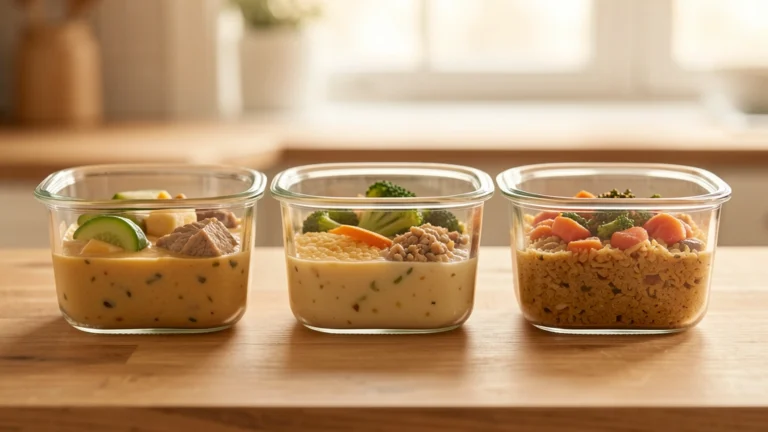
Meal prepping for your macros means cooking food ahead of time so your protein, carbs, and fat land close to a target you already know. Instead of guessing at dinner, you portion out meals in advance based on numbers you set earlier in the week. This turns a vague goal like “eat healthier” into a simple, repeatable routine you can actually stick with, even on busy days.
Start by getting your daily macro targets from a tool like the Macronutrient Calculator, then plan a week of meals around a small set of protein, carb, and fat sources. Batch-cook those staples once or twice a week, portion them by weight or measured servings, and store them safely in the fridge or freezer. Rotate sauces and seasonings so the same base ingredients do not feel repetitive. Keep a rough plan for eating out or travel days so one meal away from home does not undo your targets. This is general, educational guidance, not a personalized meal plan or medical advice.
Why Setting Macro Targets First Makes Meal Prep Easier
Meal prep without a target is just batch cooking. It might save time, but it will not reliably move you toward a fat loss, maintenance, or muscle building goal.
Knowing your daily protein, carbohydrate, and fat targets first gives your prep a purpose. You know roughly how much chicken, rice, or olive oil to portion before you even turn on the stove, instead of estimating after the fact.
A Macronutrient Calculator can estimate a general daily target split across protein, carbs, and fat based on your details and goal. Treat that output as a helpful starting reference point, not a fixed number carved in stone. From there, meal prep becomes a matter of building meals that land near those numbers most days, not chasing a perfect total every single time.
Think of your macro target as a map, and meal prep as the vehicle that gets you there. Without the map, you could still cook in advance, but you would have no way to judge whether your meals actually support your goal. With the map in hand, every batch of chicken or rice you cook has a clear job to do, which makes planning portions feel far less like guesswork.
A Step-by-Step Approach to Planning a Week of Meals
Once you have a rough target in mind, planning a week of macro-friendly meals follows a fairly simple, repeatable pattern. None of these steps require special equipment beyond a stove, a fridge, and some containers.
- Pick two or three protein sources. Chicken breast, lean ground turkey, tofu, or fish are common choices because they are easy to portion and reheat well.
- Pick two or three carbohydrate sources. Rice, potatoes, oats, and beans all hold up well in the fridge for several days without much texture loss.
- Pick one or two fat sources. Olive oil, avocado, nuts, or seeds are easy to add in small measured amounts at serving time.
- Batch-cook everything at once. Many people set aside one or two hours on a weekend to cook all their proteins and carbs together, which cuts down on daily cooking time.
- Portion by weight or measured servings. A simple kitchen scale makes it far easier to hit a target consistently than eyeballing portions by sight alone.
- Assemble and store in containers. Divide the cooked food into individual meal containers so grabbing a meal later takes seconds, not minutes.
This approach front-loads the effort. You do the planning and cooking once, then spend the rest of the week simply reheating and eating, which removes a lot of the daily decision-making that tends to derail consistent eating habits.
Keeping Your Meals From Getting Repetitive
The biggest complaint about meal prep is boredom. Eating the same chicken and rice five days in a row can wear anyone down, even if the macros are on point.
The fix is usually not more ingredients, just more variety in how you season them. A small rotation of sauces and spice blends can make the same base proteins and carbs taste like different meals entirely.
- Keep three or four sauces on hand, such as a spicy option, a tangy option, and a savory option, and rotate them across the week.
- Change the cooking method occasionally, like roasting vegetables one week and stir-frying them the next.
- Swap in a new vegetable or herb each week to keep meals visually and texturally different.
- Prep a base of protein and carbs, but build two or three different meal combinations from that same base across the week.
Small changes like these keep macro-friendly eating feeling sustainable, which matters more for long-term results than any single day being perfect.
Food Safety Basics for Prepped Meals
Meal prep only helps if the food stays safe to eat. A few general food-safety habits are commonly cited for anyone cooking meals in advance.
- Cool cooked food before sealing it in containers, so it does not sit warm for long stretches.
- Refrigerate prepped meals promptly, and use most cooked leftovers within about three to four days as a commonly cited general window.
- Freeze portions you will not eat within a few days, and thaw them safely in the fridge rather than at room temperature.
- Reheat food fully and evenly until it is steaming hot throughout before eating it.
- Label containers with the date you cooked them so older meals get eaten first.
These are general practices, not a food-safety guarantee for every situation. If you ever notice an off smell, unusual texture, or visible spoilage, it is safest to discard that meal rather than risk it.
Staying on Track When Eating Out or Traveling
Not every meal will come out of a container you packed. Eating out, work trips, and social events are a normal part of life, and macro-friendly eating should be flexible enough to handle them.
A few general habits can help a restaurant meal or travel day fit closer to your usual targets without turning the whole day into a guessing game.
- Look at a menu ahead of time if possible, and favor a visible protein source with vegetables and a measured starch.
- Ask for sauces and dressings on the side, since they are easy to under- or overestimate.
- Treat one off-plan meal as a single data point, not a reason to abandon the rest of the week.
- On travel days, pack a few portable staples like fruit, nuts, or a protein source so you are not relying only on whatever is available.
The goal is consistency across the week, not perfection on any single day. A meal prep routine that bends a little for real life is far more sustainable than one that breaks the first time plans change.
Travel days are also a good time to lean on your prepped habits rather than abandon them entirely. Bringing a familiar snack or protein source along, even for a short trip, can keep you from arriving somewhere hungry and making a rushed food choice you would not normally pick. Small preparation like this bridges the gap between your usual routine and the unpredictability of being away from your own kitchen.
A Sample Day Mapped to Macro Targets
Here is a simple, illustrative example using made-up numbers. It is not a personalized recommendation, just a picture of how prepped meals can map to a daily target.
Imagine a daily target of about 150 grams of protein, 200 grams of carbohydrate, and 60 grams of fat. A prepped day built from batch-cooked staples might look like this.
| Meal | Example Foods | Rough Macro Contribution |
|---|---|---|
| Breakfast | Eggs and oats with berries | About 35g protein, 45g carbs, 15g fat |
| Lunch | Prepped chicken, rice, and mixed vegetables | About 40g protein, 55g carbs, 12g fat |
| Snack | Greek yogurt and a handful of nuts | About 20g protein, 15g carbs, 14g fat |
| Dinner | Prepped ground turkey, sweet potato, and salad with olive oil | About 45g protein, 60g carbs, 15g fat |
| Prepped total | Across all four meals | About 140g protein, 175g carbs, 56g fat |
Notice the total lands close to, but not exactly on, the target numbers. That is normal and expected with real food, since exact precision to the gram is rarely necessary or realistic. Batch-cooking the chicken, turkey, rice, and sweet potato ahead of time is what makes hitting a day like this manageable without extra daily cooking. If your own target differs, the Macronutrient Calculator can give you a starting split to build a similar sample day around, and our guide on how to calculate your protein per meal can help you divide your own protein target across meals like these.
Ready to plan your own week? Get your daily protein, carb, and fat targets first with our Macronutrient Calculator, then use this guide to build a batch-cooked meal prep routine around those numbers.
FAQs About Meal Prepping for Your Macros
Do I Need to Know My Macros Before I Start Meal Prepping?
It helps a lot. Knowing a rough daily protein, carb, and fat target gives your prep a clear purpose, so you portion food with a goal in mind instead of guessing. A Macronutrient Calculator can give you a general starting split to plan around.
How Many Meals Should I Prep at Once?
Many people prep three to five days of meals at a time, since food quality and variety tend to hold up better within that general window. You can always cook a smaller batch more often if that fits your schedule and kitchen space better.
What Are the Easiest Foods to Meal Prep for Macros?
Foods that reheat well and are easy to portion tend to work best. Common choices include chicken breast, ground turkey, tofu, rice, potatoes, oats, and beans, since they hold texture in the fridge and are simple to weigh out by the serving.
How Long Do Prepped Meals Stay Safe to Eat?
Most cooked leftovers are commonly cited as safe in the refrigerator for about three to four days when cooled and stored promptly. Freeze portions you will not eat within that window, and always reheat food fully and evenly before eating it.
How Do I Keep Macro-Friendly Meal Prep From Getting Boring?
Rotate a small set of sauces and spice blends across the same base proteins and carbs, and vary your cooking method or vegetables from week to week. These small changes can make repeated staple ingredients feel like different meals.
What If I Cannot Hit My Exact Macro Numbers Every Day?
That is normal and expected. Whole foods rarely land on an exact gram target, and small daily variation generally will not matter much. Focus on getting close most days rather than treating any single meal as a failure.
How Do I Handle Eating Out Without Ruining My Meal Prep Plan?
Treat a restaurant meal as one data point in a longer week, not a reason to abandon your routine. Favor a visible protein with vegetables and a measured starch when possible, and ask for sauces on the side to keep portions more predictable.
Sources
Authoritative Sources Used in This Article
This article is for general education only, not medical advice. Individual needs vary, so talk with your doctor or a registered dietitian before starting any new supplement or changing your diet. Reviewed for accuracy by Dr. Abdullah Khalil, MBBS. Last updated September 17, 2026.
Author

Shakeel Muzaffar is the Founder and Editor-in-Chief of MultiCalculators.com, bringing over 15 years of experience in digital publishing, product strategy, and online tool development. He leads the platform's editorial vision, ensuring every calculator meets strict standards for accuracy, usability, and real-world value. Shakeel personally oversees content quality, formula verification workflows, and the platform's commitment to publishing tools that are genuinely useful for students, professionals, and everyday users worldwide.




1 thought on “How to Meal Prep for Your Macros”