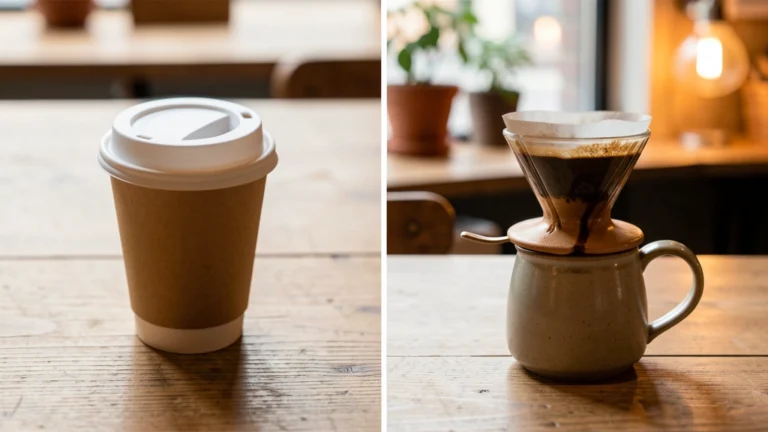
A daily coffee shop habit feels small, one cup, one swipe of a card. Add it up over a year and that small habit can cost more than a used car down payment. This guide breaks down what coffee shop coffee really costs against brewing at home, covers four home methods, and shows how fast the equipment pays for itself. By the end, you will have real numbers to compare, not just a general feeling that home brewing saves money.
A daily coffee shop drink often costs $3 to $6 per cup, while home brewing typically runs $0.25 to $0.75 per cup depending on the method. Over a year, that gap can add up to well over a thousand dollars for a one-cup-a-day habit. Home equipment, from a $25 pour-over kit to a $300 espresso machine, usually pays for itself in days to a couple of months. You do not have to quit coffee shops completely. A hybrid approach, brewing most days and treating yourself sometimes, captures most of the savings while keeping the parts of the habit you enjoy.
What a Coffee Shop Habit Really Costs
A basic drip coffee at a shop often runs about $3.00 a cup. A specialty drink like a latte or flavored espresso drink often lands closer to $5.50, and prices can run higher in large cities.
Buy one specialty drink every weekday and the weekly cost is about $27.50. Multiply that across a year and the total lands around $1,430, before tips, upsizes, or a weekend treat.
If that habit runs seven days a week instead of five, the yearly total climbs to roughly $2,000. None of this makes coffee shops a bad choice. It just helps to see the real number before comparing it to brewing at home.
The sticker price is rarely the whole story either. A tip of a dollar or two, an upsize to a larger cup, or an add-on like flavored syrup or an extra espresso shot can push the average order higher than the base menu price. A seasonal specialty drink or a pastry bought alongside your coffee adds even more. None of these extras are large on their own, but a habit built around daily extras compounds the same way the base drink price does.
The Real Cost Per Cup at Home
Home brewing costs less per cup, but the exact amount depends on the method you use. Ground coffee, filters, milk, and pods all factor into the math.
A basic drip machine using regular grounds often costs around $0.25 a cup. Pour-over brewing runs close behind, around $0.35 a cup, since it uses similar coffee and filters with no electricity.
A home espresso machine costs more per cup once you add milk and a specialty-style drink, often around $0.60. Coffee pods, like single-serve capsules, tend to be the priciest home option at roughly $0.75 a cup, since the convenience comes with a higher price per pod.
Bean or ground coffee quality can shift these numbers too. A budget grocery store bag lowers the cost per cup, while a premium small-batch roast raises it. Even at premium bean prices, home brewing almost always stays well below a coffee shop’s per-cup price, since you are not paying for labor, rent, or a seat to sit in.
| Method | Typical Cost Per Cup | Notes |
|---|---|---|
| Coffee Shop (basic drip) | $3.00 | Dine-in or to-go, no add-ons |
| Coffee Shop (latte or specialty) | $5.50 | Espresso drink with milk, common city price |
| Home: Drip Machine | $0.25 | Basic ground coffee, no milk added |
| Home: Pour-Over | $0.35 | Ground coffee, filter, manual brewing |
| Home: Espresso Machine | $0.60 | Includes milk for a latte-style drink |
| Home: Pods (Single-Serve) | $0.75 | Convenience capsules, priciest home option |
Equipment Cost and Payback Period
Home brewing needs some upfront gear, and that gear pays for itself faster than most people expect. The math is simple: divide the equipment cost by how much you save on each cup compared to a coffee shop drink.
A pour-over kit, often around $25, saves roughly $5.15 per cup against a $5.50 latte. That pays for itself in about five cups, or under a week for a daily drinker.
A basic drip machine, around $30, saves about $5.25 a cup, so it pays for itself in around six cups. A pod machine, often near $120, saves about $4.75 a cup and typically pays for itself in about three to four weeks.
A full espresso machine, often around $300, saves about $4.90 a cup against a latte. For a daily drinker, that is roughly two months before the machine has fully paid for itself, and every cup after that is savings.
Ongoing upkeep is small but worth planning for. Drip machines and pour-over kits need occasional filters and a descaling rinse. Espresso machines need regular cleaning and descaling to keep running well, and pod machines need replacement pods on a steady basis. Budgeting a few dollars a month for upkeep keeps the payback math realistic rather than optimistic.
A Month and a Year, Side by Side
Numbers feel more real over a full month or year than one cup at a time. The table below assumes one drink a day, every day, to keep the comparison simple.
These are illustrative figures, not a personal forecast. Your own habit, portion size, and local prices will shift the real numbers up or down. If you want your own numbers instead of a sample table, the Coffee Spending Calculator can total up your actual habit in a few clicks.
| Source | Per Month (30 cups) | Per Year (365 cups) |
|---|---|---|
| Coffee Shop Latte | $165.00 | $2,007.50 |
| Home Espresso Machine | $18.00 | $219.00 |
| Home Pods | $22.50 | $273.75 |
| Home Pour-Over | $10.50 | $127.75 |
| Estimated Yearly Savings (vs espresso machine) | About $1,788.50 | |
Quality and Convenience Tradeoffs
Savings are only part of the story. A coffee shop sells more than caffeine, it sells a made drink, a seat, and a few minutes away from your desk.
Skilled baristas, commercial machines, and fresh milk steaming can be hard to match at home right away. Learning pour-over or espresso takes some practice before the results feel as good as a shop drink.
Convenience matters too. A pod machine or a quick drip pot takes far less time and cleanup than a full espresso setup, even if the cost per cup is a bit higher.
None of this means home brewing cannot taste great. It means the first few weeks come with a learning curve, and it helps to expect that instead of giving up early.
Hidden Costs on Both Sides
Coffee shops carry a few extra costs beyond the drink itself. Parking, a tip left in the jar, or a quick stop that turns into a snack purchase can all add a few dollars to what looked like a single small expense.
Home brewing has its own small extras. Milk, cream, sugar, and flavored syrup all cost something, and a water filter pitcher or filtered tap line adds a modest ongoing cost if your tap water needs it. A reusable travel mug is a one-time cost that pays for itself quickly if you commute with coffee.
Neither side is free of small extras. The gap between coffee shop and home brewing stays large even after accounting for them, since the base price difference is so much bigger than any of these smaller add-ons.
Cutting Coffee Shop Spend Without Giving Up Good Coffee
You do not need an all-or-nothing choice between coffee shops and home brewing. A few simple habits capture most of the savings while keeping the parts of the routine you enjoy.
Loyalty programs at many coffee chains offer free drinks, birthday rewards, or discounts after a set number of purchases. If you already visit regularly, joining costs nothing and lowers your average price per cup.
Investing in slightly better home equipment or fresher, whole-bean coffee often closes much of the taste gap with a shop drink, for pennies more per cup. A good grinder can matter more than an expensive machine.
A hybrid approach works well for many people: brew at home most days, then treat a coffee shop visit as an occasional reward rather than a daily default. Even cutting from seven shop visits a week to two can save well over a thousand dollars a year.
Brewing a bigger batch at home in the morning and pouring it into a travel mug also removes the temptation of a mid-morning shop run. Buying whole beans in bulk, when you know you will use them within a few weeks, often lowers the per-cup price further than buying small bags one at a time.
Small, repeatable habits like these matter more than one big change. A hybrid routine that fits your schedule is easier to stick with than a strict rule to never buy coffee out again.
Curious what your own coffee habit costs, and how much brewing at home could save? Plug in your numbers with our Coffee Spending Calculator to see your real monthly and yearly totals side by side.
FAQs About Coffee Shop vs Home Brewing Savings
How Much Does the Average Coffee Shop Habit Cost Per Year?
A daily specialty drink around $5.50 on weekdays adds up to roughly $1,430 a year. Buy that same drink seven days a week and the total climbs to around $2,000. Actual totals vary with local prices, drink size, and how often you buy.
Is Home Brewing Really Cheaper Than Buying Coffee Out?
Yes, almost always. Home methods typically run $0.25 to $0.75 per cup, while coffee shop drinks often run $3.00 to $5.50 per cup. Even the priciest home option, pods, usually costs a small fraction of a shop-bought drink.
How Long Does It Take an Espresso Machine to Pay for Itself?
A roughly $300 home espresso machine often pays for itself in about two months for a daily one-cup-a-day drinker, compared to buying a $5.50 latte out. After that, every cup brewed at home is savings rather than break-even.
Which Home Brewing Method Saves the Most Money?
A basic drip machine or a pour-over kit usually saves the most per cup, often costing around $0.25 to $0.35 a cup. Both also have low upfront equipment costs, so they pay for themselves within about a week of daily use.
Do Coffee Shop Loyalty Programs Actually Save Money?
Yes, for regulars. Many chains offer free drinks or discounts after a set number of purchases, plus occasional bonus offers. If you already buy coffee shop drinks, joining a free loyalty program lowers your average price per cup at no extra cost.
Is Home Coffee as Good as Coffee Shop Coffee?
It can be, with some practice and decent equipment. Fresh whole beans, a good grinder, and correct water temperature close much of the gap. Skilled baristas and commercial machines still have an edge, but many home setups come close for far less money.
What Is a Hybrid Approach to Coffee Spending?
A hybrid approach means brewing at home most days and treating coffee shop visits as an occasional extra rather than a daily habit. Cutting shop visits from daily to once or twice a week can still save well over a thousand dollars a year.
Sources
Authoritative Sources Used in This Article
This article is for general education only, not financial advice. Prices, rates, and personal habits vary, so use these figures as a starting point and adjust them to your own situation. Reviewed for accuracy by Prof. Dr. Khalil Mudassar, PhD. Last updated September 14, 2026.
Author

Shakeel Muzaffar is the Founder and Editor-in-Chief of MultiCalculators.com, bringing over 15 years of experience in digital publishing, product strategy, and online tool development. He leads the platform's editorial vision, ensuring every calculator meets strict standards for accuracy, usability, and real-world value. Shakeel personally oversees content quality, formula verification workflows, and the platform's commitment to publishing tools that are genuinely useful for students, professionals, and everyday users worldwide.


1 thought on “Coffee Shop vs Home Brewing: The Savings”