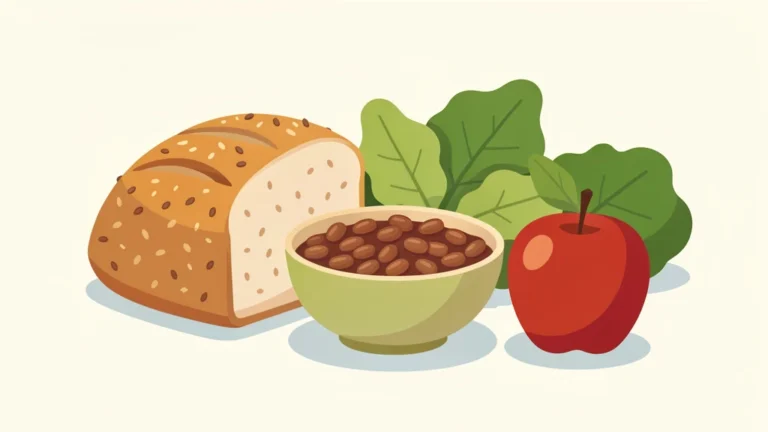
Most adults eat less than half the fiber their body could use in a day. Daily fiber intake shapes digestion, blood sugar, fullness after meals, and long-term heart health, yet it is easy to overlook next to protein and carbs. This guide explains what fiber does, the two types you need, general daily targets, and simple ways to eat more without stomach trouble.
Most adults benefit from a daily fiber intake near 25g for women and 38g for men, though this varies by age and calorie needs. You need both soluble fiber (oats, beans, fruit) and insoluble fiber (whole grains, vegetable skins). Add fiber slowly and drink more water to avoid bloating. Ask a doctor or dietitian for a target suited to you.
What Fiber Is and Why Your Body Needs It
Fiber is the part of plant foods your body cannot fully break down. It travels through your digestive system mostly intact, unlike sugar, starch, protein, or fat. Because your body cannot digest it for energy, fiber adds little in the way of extra calories.
That simple fact gives fiber several jobs. It adds bulk to stool and helps keep bowel movements regular. It also slows how fast food leaves your stomach, which can help you feel full longer after eating.
Fiber slows how quickly sugar enters your bloodstream, so blood sugar tends to rise more gently after a high-fiber meal. This steadier rise can also mean fewer sudden energy dips later on. Some fiber types also help lower LDL cholesterol, which supports long-term heart health.
- Supports regular digestion and bowel movements
- Helps you feel full after meals
- Softens blood sugar spikes after eating
- Can help lower LDL, the “bad” cholesterol
Soluble vs Insoluble Fiber: What Is the Difference
Fiber comes in two main types, and most whole plant foods contain a mix of both. Knowing the difference helps you understand why variety matters more than any single food.
Soluble fiber dissolves in water and forms a soft gel in your gut. That gel slows digestion, helps steady blood sugar, and can help lower cholesterol. It is also food for helpful gut bacteria. Oats, beans, lentils, apples, and citrus fruit are good sources.
Insoluble fiber does not dissolve in water. It adds bulk and helps food move through your gut at a steady pace, which supports regular bowel movements. Whole wheat, brown rice, nuts, and the skins of fruits and vegetables carry the most insoluble fiber.
How Much Fiber Do You Need Each Day
General guides commonly cite a daily fiber intake near 25g for adult women and 38g for adult men. These figures come from a rule of about 14g of fiber for every 1,000 calories eaten.
Because of that, your own target shifts with your age and how many calories you eat. Older adults who eat fewer calories are often given a slightly lower general number, while very active people who eat more may need more fiber.
Think of 25g and 38g as common reference points, not fixed rules for everyone. If you track your meals more closely, a Macronutrient Calculator can help you see fiber-rich carbohydrates alongside your protein and fat in one place.
Pregnant women and older adults often see slightly different general figures too, since calorie needs shift at different life stages. A doctor or registered dietitian can turn any of these general numbers into a target that fits your own health and diet.
Best Food Sources of Fiber
Whole plant foods are the best way to reach your daily fiber intake. Four food groups do most of the work, and each brings its own mix of soluble and insoluble fiber.
- Whole grains: oatmeal (about 4g per cooked cup), brown rice, whole wheat bread
- Legumes: lentils (about 8g per cooked half cup), black beans, chickpeas, split peas
- Fruits: a medium pear (about 5.5g), a medium apple with skin (about 4g), raspberries
- Vegetables: cooked broccoli (about 5g per cup), carrots, leafy greens
Eating fruit and vegetable skins, choosing whole grains over refined ones, and adding beans to soups or salads are easy ways to raise your count without much extra effort.
A Simple Example of a High-Fiber Day
Numbers are easier to picture with a real day. Start with a cup of oatmeal topped with raspberries for about 8g of fiber combined.
Add a lunch salad with a half cup of black beans for roughly 7.5g more, plus a side of carrots. By dinner, a cup of cooked broccoli with brown rice adds another 6g or so.
An apple as a snack contributes about 4g. Stacked together, this ordinary day lands close to 25g, right around the general daily fiber intake target for adult women, without any single meal feeling extreme.
Whole Foods, Supplements, and Reading Fiber Labels
Fiber supplements and fortified products can help close a gap, but whole foods are usually the better first choice. A cup of lentils or an apple brings fiber packaged together with vitamins, minerals, and antioxidants that a supplement capsule does not include. Save supplements for when whole-food sources fall short, and check with a doctor before taking one regularly.
Packaged foods list fiber on the Nutrition Facts label as total grams per serving, next to a percent Daily Value. That percent is based on a 25g daily reference amount, not your personal target. A food with 5g of fiber per serving shows close to 20% DV; foods at 20% DV or more count as a high-fiber choice, while 5% DV or less is considered low.
How to Increase Fiber Intake Without Discomfort
Adding a lot of fiber too fast can cause gas, bloating, or cramping. A slow, steady approach works better for most people.
These symptoms happen because gut bacteria ferment fiber as it moves through your colon, which produces gas along the way. This is a normal adjustment and usually eases within a couple of weeks. Raising your fiber intake gradually and drinking enough water gives your gut time to adapt comfortably.
- Add one high-fiber food every few days instead of overhauling every meal at once
- Drink more water as your fiber intake rises, since fiber needs fluid to move smoothly through your gut
- Swap white bread, white rice, and refined cereal for whole grain versions
- Add a half cup of beans or lentils to soups, salads, or rice dishes
- Keep the skin on apples, pears, and potatoes when you can
Give your body a few weeks to adjust after any increase. If discomfort continues, a registered dietitian can help you find a pace and mix of foods that works for your gut.
How Fiber Fits Into Your Bigger Nutrition Picture
Fiber is one part of the carbohydrates you eat, but it is not the whole picture. Total carbs, net carbs, and added sugar all matter too, and each has its own guidance.
If you want to see how fiber affects the carbs you count, our guide on how to calculate net carbs walks through that math step by step.
Added sugar is a separate concern from fiber, with its own daily limits. See how much sugar per day is too much for that guidance.
Together, fiber, net carbs, and added sugar give you a fuller view of the carbohydrates on your plate.
Want to see fiber-rich carbs next to your protein and fat targets? Try our Macronutrient Calculator to build a fuller picture of your daily plate.
FAQs About Daily Fiber Intake
What Is a Good Daily Fiber Intake?
Commonly cited general guides suggest about 25g a day for adult women and 38g a day for adult men. These numbers vary by age and how many calories you eat, so treat them as reference points rather than a fixed rule for everyone.
What Is the Difference Between Soluble and Insoluble Fiber?
Soluble fiber dissolves in water and forms a gel that slows digestion and can help blood sugar and cholesterol. Insoluble fiber does not dissolve; it adds bulk and helps food move through your gut. Most high-fiber foods contain some of both types.
What Foods Are Highest in Fiber?
Legumes like lentils and black beans, whole grains like oats and brown rice, and fruits and vegetables with their skins on are top sources. A half cup of cooked lentils has about 8g of fiber, more than most single foods.
Can Eating Too Much Fiber Cause Problems?
Yes, adding fiber too quickly can cause gas, bloating, or cramping, especially without enough water. Increasing your intake gradually over a few weeks and drinking more fluids usually prevents most discomfort.
Does Fiber Help With Blood Sugar Control?
Soluble fiber slows how fast sugar enters your bloodstream after a meal, which can soften blood sugar spikes. This is one reason high-fiber meals often feel more steady and filling than low-fiber ones.
Does Fiber Support Heart Health?
Soluble fiber can help lower LDL cholesterol, sometimes called “bad” cholesterol, when eaten regularly as part of an overall healthy diet. It works alongside other habits like activity and limiting saturated fat, not on its own.
How Fast Should I Increase My Fiber Intake?
Add fiber-rich foods gradually, such as one new source every few days, and pair the increase with more water. This gentle pace gives your digestive system time to adjust and lowers the chance of stomach discomfort.
Sources
Authoritative Sources Used in This Article
This article is for general education only, not medical advice. Nutrition needs vary by person, so talk with a doctor or a registered dietitian before making changes to your diet or health routine. Reviewed for accuracy by Dr. Abdullah Khalil, MBBS. Last updated September 12, 2026.
Author

Shakeel Muzaffar is the Founder and Editor-in-Chief of MultiCalculators.com, bringing over 15 years of experience in digital publishing, product strategy, and online tool development. He leads the platform's editorial vision, ensuring every calculator meets strict standards for accuracy, usability, and real-world value. Shakeel personally oversees content quality, formula verification workflows, and the platform's commitment to publishing tools that are genuinely useful for students, professionals, and everyday users worldwide.