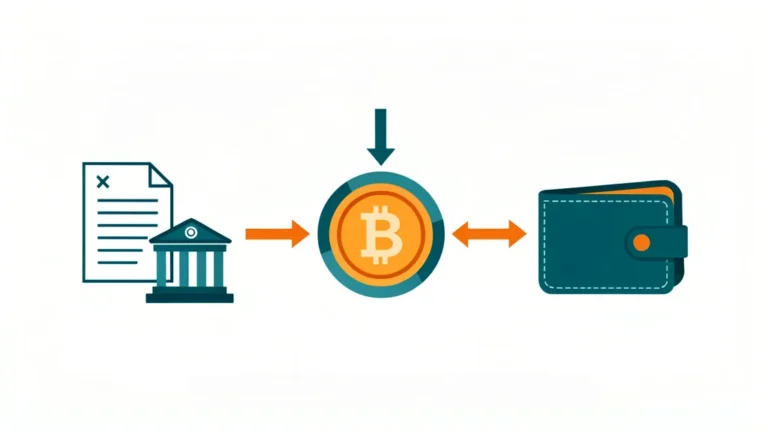
Did you swap one coin for another last year and assume no cash meant no tax? In the United States, that trade can still be a taxable event. These crypto tax basics explain why it happens. The US IRS treats cryptocurrency as property, not as money. So selling, trading, spending, or earning crypto can create a tax bill, while simply buying and holding usually does not. These rules are US focused, they change often, and they vary by country.
The US IRS treats crypto as property, not currency. Selling it for cash, trading one coin for another, or spending it can trigger capital gains tax. Earning crypto from staking, mining, airdrops, or interest counts as ordinary income when you receive it. Buying with cash and holding, or moving coins between your own wallets, is usually not taxable. You must track your cost basis and report. Rules change and vary by country, so confirm current IRS guidance.
Crypto Tax Basics: Why the IRS Treats Crypto as Property
The single idea that drives everything is this: the IRS treats crypto as property, not as currency. It has taken this position since its 2014 guidance on virtual currency.
Because crypto is property, the same general rules that apply to assets like stocks or a house apply to your coins. Each time you dispose of crypto, you may have a capital gain or a capital loss. That gain or loss is measured against your cost basis, which is usually what you paid.
So the core question is not “did I cash out to dollars?” It is “did I dispose of or earn crypto?” That shift in thinking explains the rest of these rules.
Taxable Crypto Events to Know
A taxable event is any action that can create a reportable gain, loss, or income. With crypto, several common actions count. Here are the main ones.
- Selling crypto for cash. You sell Bitcoin or another coin for US dollars.
- Trading one crypto for another. Swapping coins is a disposal, even though no cash changes hands.
- Spending crypto. Buying goods or services with crypto counts as disposing of it.
- Earning crypto. Rewards from staking, mining, airdrops, or interest are ordinary income at their fair market value when you receive them.
The trade-for-another surprise catches many people. Even a coin-to-coin swap can trigger a gain or loss, because you gave up property. The concept map below sorts the taxable side from the non-taxable side at a glance.
Non-Taxable Crypto Events
Not every move triggers tax. Some common actions usually create no taxable event at the time you do them.
- Buying crypto with cash and holding it. A purchase alone is not taxable. The clock just starts on your cost basis and holding period.
- Moving crypto between your own wallets. Sending coins from one wallet or account you control to another is not a disposal.
- Giving a gift within limits. Gifts up to the annual exclusion usually are not taxable to you, though larger gifts can involve separate gift tax rules.
The key word is “usually.” These actions do not erase future tax. When you later sell, trade, or spend those coins, the earlier cost basis still matters.
Short-Term vs Long-Term Capital Gains
When a sale, trade, or spend creates a gain, how long you held the crypto decides how it is taxed. This holding period splits gains into two types.
A short-term gain applies when you held the crypto for one year or less. It is taxed at your ordinary income tax rate. A long-term gain applies when you held it for more than one year. Long-term gains often use lower rates, commonly 0%, 15%, or 20% depending on your income. The exact rates and brackets change, so these are illustrative.
| Attribute | Short-Term | Long-Term |
|---|---|---|
| Holding period | One year or less | More than one year |
| Tax treatment | Ordinary income tax rates | Often lower capital gains rates |
| Example rates | Same as your wage bracket | Commonly 0%, 15%, or 20% |
A Worked Example of a Taxable Trade
Numbers make this clearer. The figures below are illustrative only, not real prices or advice.
Say you buy 1 ETH for $2,000. That $2,000 is your cost basis. A few months later, you trade that 1 ETH for another coin when ETH is worth $2,600.
No cash hit your bank, but you still disposed of property. Your gain is the value received minus your cost basis:
$2,600 – $2,000 = $600 capital gain.
Because you held the ETH for one year or less, this is a short-term gain, taxed at your ordinary income rate. If the coin had fallen to $1,600 instead, you would have a $400 capital loss, which can offset other gains. For the full profit and loss math, see our sibling guide on how to calculate crypto profit and loss.
Did You Sell, Trade, Spend, or Earn Crypto?
When you are unsure if an action is taxable, one quick question usually sorts it out. Follow the decision tree below.
Tracking Cost Basis and Reporting
Because crypto is property, you must keep records and report. The IRS also asks about digital assets right on Form 1040, so the question is hard to miss.
Your cost basis is usually what you paid for a coin, including fees. When you dispose of it, you compare the value received to that basis to find your gain or loss. Good records make this far easier.
Keep track of these details for every transaction:
- The date you acquired and the date you disposed of each coin.
- The amount of crypto and its value in US dollars at each time.
- Any fees, since they can adjust your basis or proceeds.
Capital gains and losses generally go on Form 8949 and Schedule D, while earned crypto is reported as income. Harvesting losses can help offset gains, and our Crypto Tax-Loss Harvesting Calculator can help you explore that idea. Rewards from staking are taxed as income when received; for how those rewards are produced, see how staking rewards are calculated.
These crypto tax rules are US focused, they change often, and they vary by country. Tax rates, forms, and limits can all shift from year to year. Always confirm the current IRS guidance and the rules in your own country before you file.
Want to see how selling losing positions could lower a gain? Model the numbers with our Crypto Tax-Loss Harvesting Calculator. It helps you estimate how harvesting losses might offset your crypto gains, using figures you enter.
Frequently Asked Questions About Crypto Tax Basics
Is Cryptocurrency Taxed in the US?
Yes. The US IRS treats crypto as property, so it can be taxed. Selling, trading, or spending crypto can create a capital gain or loss, and earning crypto is ordinary income. Simply buying and holding is usually not taxable. These rules change often, so confirm current IRS guidance before you file.
Do I Owe Tax If I Trade One Coin for Another?
Often yes. Trading one crypto for another is treated as disposing of property, even though no cash changes hands. You compare the value received to your cost basis to find a gain or loss. This surprises many people, so it helps to track each trade carefully. Confirm the current rules for your situation.
Is Buying Crypto and Holding It Taxable?
Usually not at the time you buy. A purchase alone does not create a taxable event. It just sets your cost basis and starts your holding period. Tax can apply later when you sell, trade, or spend those coins. Keep your purchase records so you can calculate any future gain or loss.
How Is Earned Crypto Taxed?
Crypto you earn from staking, mining, airdrops, or interest is generally ordinary income. You report its fair market value in US dollars at the time you receive it. That value can also become your cost basis for later. This is a basic overview only, so confirm the current IRS treatment for your case.
What Is the Difference Between Short-Term and Long-Term Gains?
It comes down to how long you held the crypto. If you held it for one year or less, a gain is short-term and taxed at ordinary income rates. If you held it more than one year, the gain is long-term and often taxed at a lower rate. Exact rates change over time.
What Records Do I Need for Crypto Taxes?
Keep the dates you acquired and disposed of each coin, the amounts, the US dollar value at each time, and any fees. These details let you calculate your cost basis and your gains or losses. Good records also make reporting on forms like Form 8949 and Schedule D far easier at tax time.
Do Crypto Tax Rules Change or Vary by Country?
Yes, a lot. This article describes US rules, which the IRS updates over time. Rates, forms, and reporting can all change from year to year. Other countries have their own, sometimes very different, rules. Always confirm the current IRS guidance and your own country’s rules, and consider talking with a tax professional.
Sources
Authoritative Sources Used in This Article
This article is for general education only, not financial or investment advice. Crypto is volatile and risky, and prices, fees, rewards, and tax rules change fast and vary by country, so do your own research and consult a professional. Reviewed for accuracy by Prof. Dr. Khalil Mudassar, PhD. Last updated September 12, 2026.
Author

Shakeel Muzaffar is the Founder and Editor-in-Chief of MultiCalculators.com, bringing over 15 years of experience in digital publishing, product strategy, and online tool development. He leads the platform's editorial vision, ensuring every calculator meets strict standards for accuracy, usability, and real-world value. Shakeel personally oversees content quality, formula verification workflows, and the platform's commitment to publishing tools that are genuinely useful for students, professionals, and everyday users worldwide.